
how to clean wooden cutting boards naturally comes down to two goals: lift food residue and manage odor-causing germs without soaking the wood or relying on harsh cleaners.
If your board smells like onion, feels a little tacky, or shows faint discoloration after raw meat prep, you are not alone. Wood is durable, but it is also porous, which means the “wrong” kind of cleaning often makes problems worse, not better.
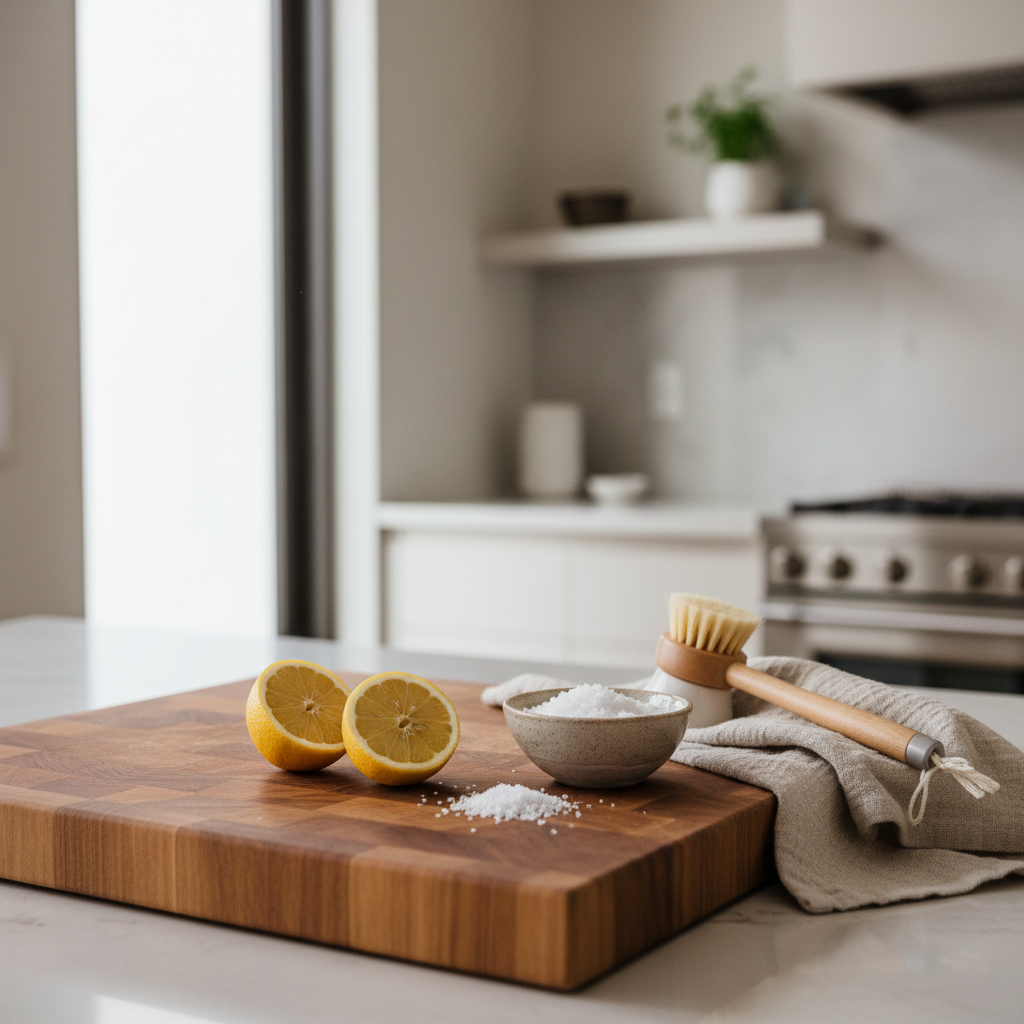
This guide keeps it practical: quick daily cleaning, a deeper deodorize-and-sanitize routine, and what to do when stains or rough spots show up. I will also flag a few common “natural” tips that can quietly ruin a board over time.
What “natural” cleaning really means for wood
In most kitchens, “natural” does not mean “throw everything from the pantry at it.” With wood, the safest approach usually looks like this: mild soap for routine cleaning, vinegar or hydrogen peroxide for occasional sanitizing, and salt plus lemon for deodorizing.
The big rule: keep contact time short and avoid prolonged soaking. Water is the fastest way to warp, crack, or raise grain.
According to USDA Food Safety and Inspection Service (USDA FSIS), cutting boards should be washed with hot soapy water after each use, and sanitized after contact with raw meat, poultry, or seafood. That advice applies even if you prefer natural products, you are just choosing gentler tools to reach the same hygiene outcome.
Why wooden cutting boards get smelly, stained, or rough
Most “my board is gross” moments trace back to a few patterns, and it helps to name them so you can fix the root cause.
- Moisture sits too long: leaving the board flat on the counter traps dampness underneath, which can lead to odor and mild warping.
- Protein and fat residue: meat juices and oils cling to knife marks, so a quick rinse is rarely enough.
- Aromatics stain and linger: garlic, onions, and some spices “stick” in the surface and require deodorizing, not just washing.
- Raised grain from hot water or long scrubbing: the surface gets fuzzy, then food particles cling more easily.
- Dry wood: when a board goes too long without conditioning, it can crack and hold more grime in the crevices.
Quick daily routine (5 minutes) for most meals
This is the everyday method I recommend most people stick with, because it is consistent and low drama. It also fits the “naturally” goal without sacrificing cleanliness.
Step-by-step
- Scrape off debris with a bench scraper or the dull side of a knife.
- Wash with hot water + a small amount of mild dish soap and a sponge or brush.
- Rinse quickly, do not let water pool on the surface.
- Dry immediately with a towel.
- Stand the board on edge or in a rack so air reaches both sides.
Key point: “Natural” can still include dish soap. A tiny amount used briefly and rinsed well is typically easier on wood than repeated aggressive scrubbing with acids.
Deep clean naturally: deodorize + sanitize (use as needed)
When the board smells like yesterday’s onion, or you just prepped raw meat, this is where a deeper routine earns its keep. You do not need to do all of these every time, pick the method that matches the problem.
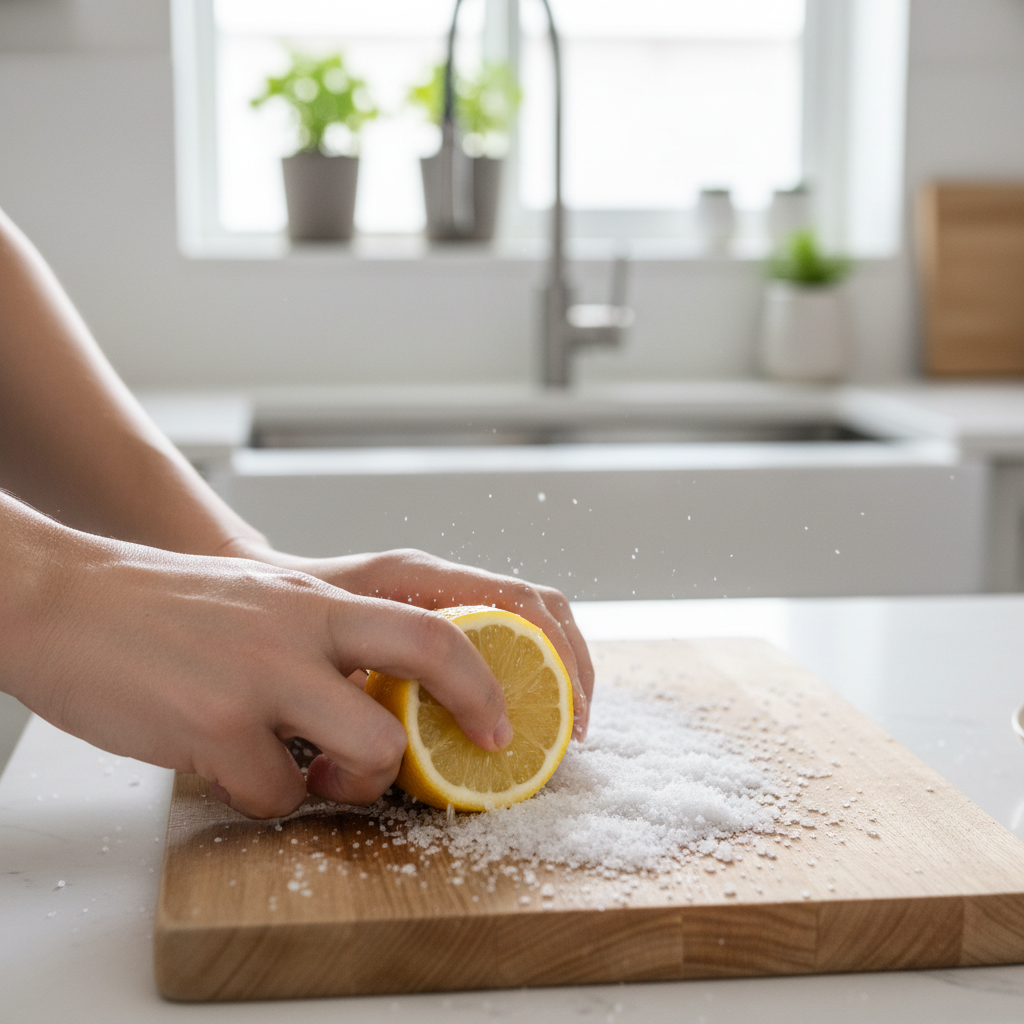
Option A: Salt + lemon (best for odors)
- Sprinkle coarse salt over the surface.
- Rub with a cut lemon, working with the grain, 1–2 minutes.
- Let it sit briefly, then scrape, rinse quickly, towel-dry, and air-dry upright.
This works because salt adds gentle abrasion and lemon helps break down odor compounds. If your board is very dry or has open cracks, keep this method occasional, acids can be a little drying.
Option B: White vinegar spray (light sanitizing)
- Spray 5% distilled white vinegar lightly over the board.
- Wait about 5 minutes.
- Rinse quickly, then dry well and stand it up.
Vinegar is popular because it is simple and food-safe in normal kitchen use, though it is not a magic bullet for every pathogen. If you are cleaning up after raw poultry or you are cooking for someone with higher risk, you may want a stronger sanitizing approach.
Option C: 3% hydrogen peroxide (stronger “natural-ish” sanitizing)
- Pour or spray a small amount of 3% hydrogen peroxide onto the surface.
- Let it sit 5–10 minutes.
- Rinse quickly, then dry and air-dry upright.
According to CDC guidance, household disinfectants such as hydrogen peroxide can be used on surfaces when used as directed on the label. Follow the product instructions, and avoid mixing peroxide with vinegar or bleach.
A simple decision table
| Situation | What to use | How often |
|---|---|---|
| Everyday veggie prep | Hot water + mild dish soap | Every use |
| Onion/garlic odor | Coarse salt + lemon | As needed |
| Raw meat/seafood contact | Soap wash, then vinegar or peroxide | Each time |
| Sticky or oily film | Soap wash + extra brushing in grooves | As needed |
| Light surface discoloration | Salt scrub, then condition | Occasional |
Self-check: do you need cleaning, sanding, or replacing?
Not every “dirty-looking” board needs a complicated routine, but some boards need more than cleaning.
- Cleaning is enough if the surface feels smooth, there are no deep cracks, and odor fades after washing.
- Light sanding helps if you can feel raised grain, fuzzy patches, or shallow stain rings that keep returning.
- Consider replacing if there are deep splits, pieces lifting, or a seam that traps moisture and never fully dries.
If you are unsure, trust your senses: persistent sour smell after deep cleaning is a real signal that something is living in places you cannot reach.
Maintenance that keeps boards cleaner (and makes “natural” easier)
Most people focus on cleaning products, but maintenance is what prevents the worst buildup in the first place.
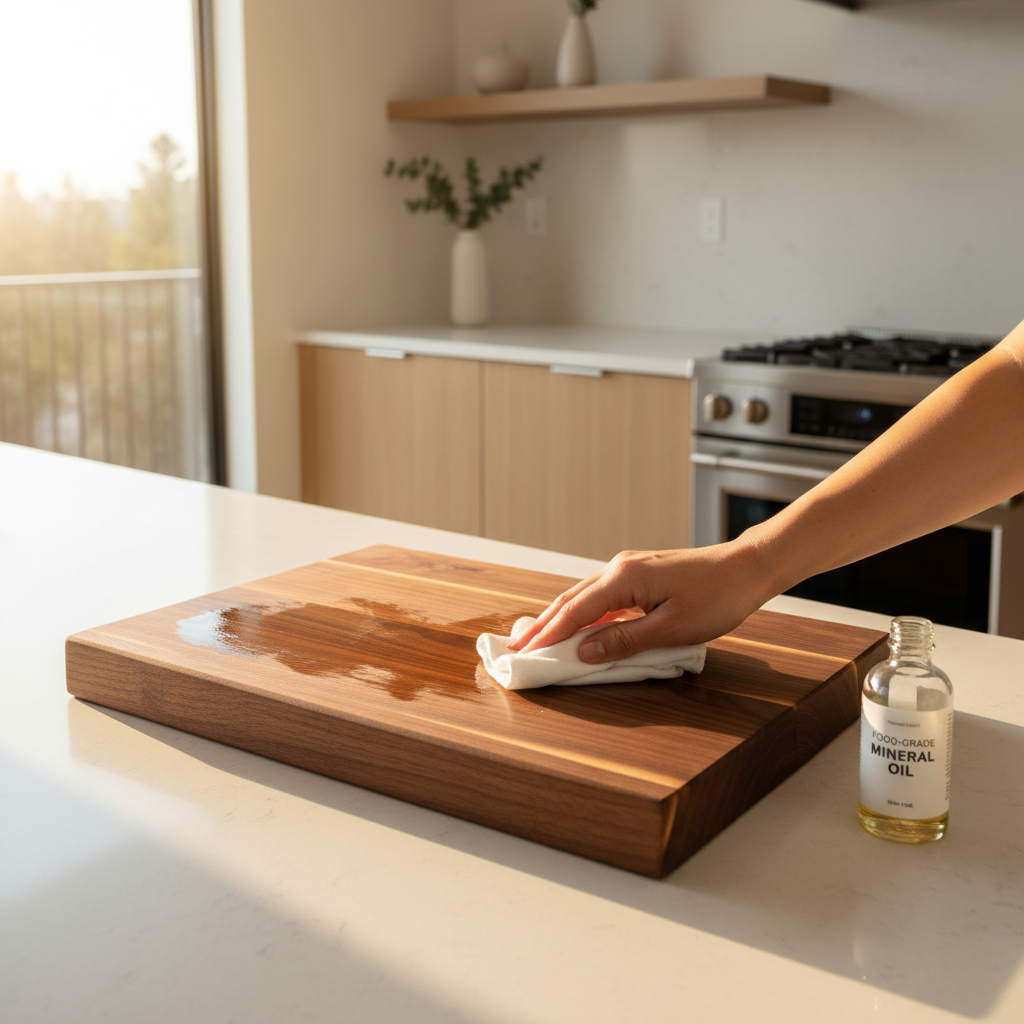
Oil and condition
- Use food-grade mineral oil or a board conditioner that combines mineral oil with beeswax.
- Apply a thin coat, let it absorb a few hours or overnight, wipe off excess.
- Most home kitchens do well conditioning every 3–6 weeks, more often in dry climates.
A well-conditioned board absorbs less water and releases odors faster, which makes it easier to clean wooden cutting boards naturally without escalating to harsher methods.
Drying habits matter more than you think
- Always dry right after washing.
- Store upright or with airflow on both sides.
- Do not leave it sitting in a damp sink, even “for a minute.”
Common mistakes that feel natural but backfire
- Soaking in the sink: warping and splitting risk goes up fast.
- Putting it in the dishwasher: heat + water exposure is usually too aggressive for wood.
- Using straight bleach without care: bleach can damage wood fibers and creates a stronger chemical exposure than most people want; if you choose it, follow label directions and rinse well.
- Mixing vinegar and peroxide: together they can create peracetic acid, which may irritate eyes and lungs, so keep them separate.
- Using cooking oils to “condition”: olive or avocado oil can turn rancid and cause a lingering smell.
Key takeaways and a simple weekly plan
If you want a routine you can actually keep, aim for boring consistency rather than occasional “hero” cleanings.
- Daily: hot soapy wash, quick rinse, towel-dry, store upright.
- As needed: salt + lemon for odor, or vinegar/peroxide after raw meat prep.
- Monthly-ish: condition with mineral oil to keep the surface sealed and stable.
If you do those three things, how to clean wooden cutting boards naturally stops being a recurring kitchen project and becomes a quick habit you barely think about.
When to get more help (or upgrade your setup)
If someone in your home is immunocompromised, pregnant, or very young, it may be worth asking a healthcare professional about food-safety precautions that fit your situation. And if you prep raw meat often, many cooks keep two boards: one dedicated for raw proteins, one for produce and bread, which reduces cross-contamination risk without over-sanitizing everything.
When a board has deep cracks or separated seams, replacing it is often the more sensible choice. No cleaning method, natural or not, can reliably reach into structural gaps.
Conclusion: clean, dry, condition, repeat
Natural cleaning works well for wood when you respect what wood hates: long water exposure and neglect. Keep the daily wash simple, use targeted deep-clean methods when odor or raw meat calls for it, and condition the surface so cleanup stays easy.
If you want one action to take today, wash your board, dry it fully, then stand it up to air out. Next time you shop, grab food-grade mineral oil, it is the quiet upgrade that makes everything else simpler.