
Best weather resistant outdoor rugs for balcony shopping gets confusing fast, because “outdoor” can mean anything from a covered porch to a fully exposed, rain-soaked, sun-baked high-rise ledge.
If your current rug fades in one season, stays damp after rain, or starts smelling musty, it’s usually not “bad luck,” it’s a mismatch between material, weave, and how much weather your balcony really gets.
This guide helps you pick a rug that holds color, dries faster, and stays put, plus a quick checklist to figure out what will work for your space before you buy.
What “weather-resistant” really means on a balcony
On balconies, weather damage usually shows up as fading, mildew, stiff fibers, or curled edges that turn into tripping hazards. A rug can be “outdoor rated” and still fail if it can’t drain and dry in your setup.
According to NOAA, UV exposure and weather conditions vary widely by region and season, which is a polite way of saying your balcony in Phoenix and your friend’s balcony in Seattle live totally different lives.
- UV resistance: helps slow fading and brittleness, especially on south- or west-facing balconies.
- Water resistance + quick-dry: matters more than “waterproof,” because trapped moisture leads to odor and mildew.
- Mold and mildew resistance: often depends on synthetic fibers and open weaves that breathe.
- Dimensional stability: edges stay flatter, less curling from heat swings and moisture.
Balcony reality check: a 2-minute self-assessment
Before you look at patterns, get clear about exposure. This is where most buyers get burned: they shop as if every balcony is a covered patio.
- Is your balcony covered? Fully covered, partially covered, or fully exposed?
- How many hours of direct sun? Under 3, 3–6, or 6+ hours?
- Does rain blow in sideways? Common on higher floors and corner units.
- Do you have drainage? If water pools, any rug will stay wet longer.
- Do you grill or eat out there? Grease and food spills change what “easy care” means.
- Are you allowed to hose things off? Some apartments restrict water runoff.
If you’re fully exposed with strong sun, prioritize UV-stable synthetic fibers and darker or patterned designs that hide small stains and uneven fading.
Materials that usually perform best outdoors (and what to avoid)
For most U.S. balconies, the “best” choice is the one that dries fast, resists UV, and won’t feed mildew. Here’s how common options stack up in real use.
Polypropylene (olefin): the go-to for most balconies
If you want a practical answer, polypropylene is often the safest bet. It tends to resist moisture, cleans easily, and comes in lots of styles.
- Best for: rain exposure, high traffic, families, pets
- Watch for: lower-end versions can feel plasticky; very tight weaves can trap grit
Recycled PET (plastic bottle fiber): softer feel, decent durability
Many PET outdoor rugs feel closer to indoor rugs, which is nice for bare feet. Drying speed depends a lot on weave and thickness.
- Best for: covered or partially covered balconies, comfort-focused setups
- Watch for: in constantly damp climates, thicker piles can hold moisture longer
Vinyl and foam-backed mats: great grip, not always great breathability
These can reduce slipping, but backing can trap moisture underneath. If your balcony stays damp, you’ll want to lift and dry them more often.
- Best for: small balconies, entry-style zones, high-slip areas
- Watch for: heat can warp some products; moisture can get trapped
Natural fibers (jute, sisal): usually a risky balcony pick
They look great in photos, but on balconies they often absorb water and can develop odor or mildew. If you love the look, consider synthetic “jute-look” weaves.
Quick comparison table: picking by weather and lifestyle
Use this table to narrow your shortlist fast. It won’t replace reading specs, but it usually prevents the most common mismatches.
| Balcony situation | Rug type that tends to work | What to prioritize |
|---|---|---|
| Fully exposed, strong sun | UV-stable polypropylene, flatweave | Solution-dyed color, tight edge binding, darker patterns |
| Rain blows in, humid climate | Polypropylene, open weave | Quick-dry, breathable construction, easy rinse/clean |
| Mostly covered, you want softness | Recycled PET outdoor rug | Lower pile, stain resistance, washable/spot-clean friendly |
| Small balcony, high slip risk | Textured outdoor rug + rug pad | Grip, drainage, corners that stay flat |
| Pets + muddy paws | Polypropylene flatweave | Hose-friendly cleaning, pattern that hides debris |
Size, weave, and edges: details that decide whether it lasts
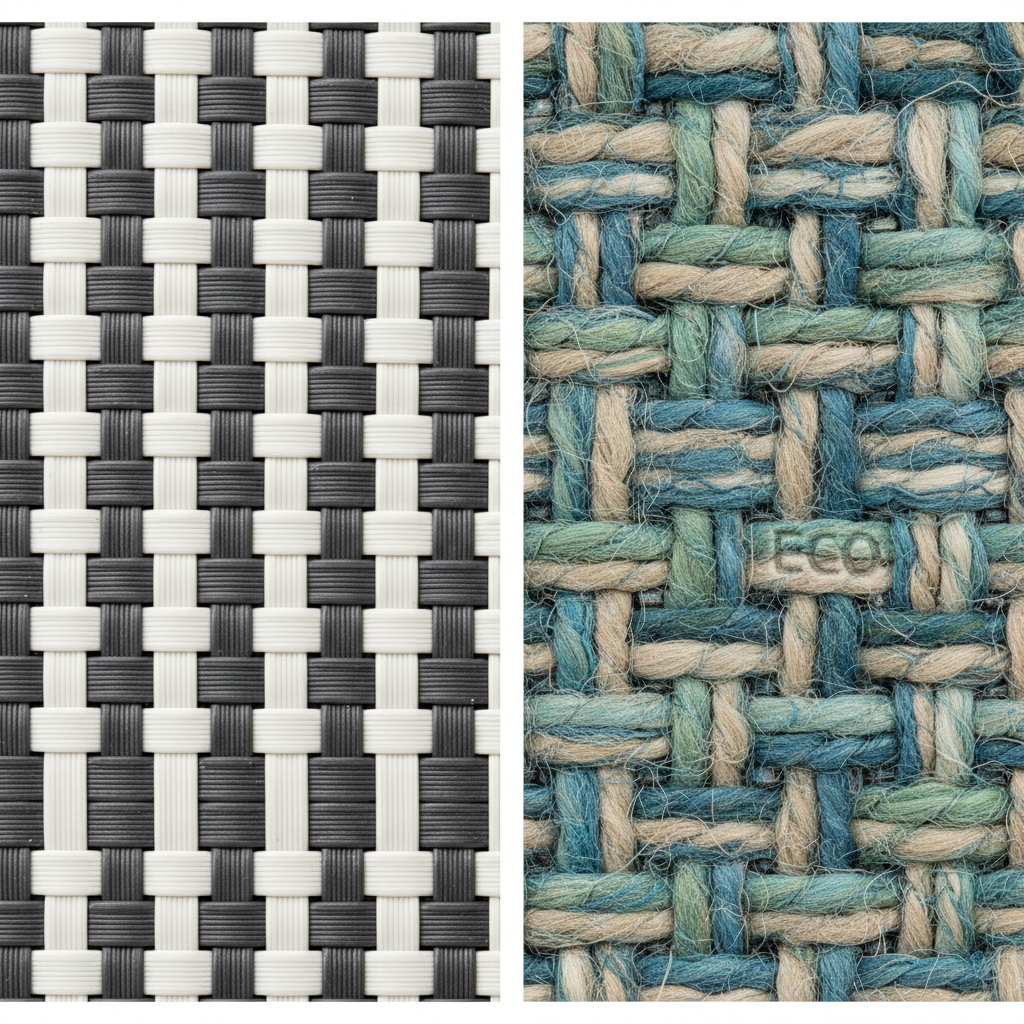
Two rugs can share the same material and behave totally differently. Construction details matter more on a balcony than most people expect.
- Flatweave vs. high pile: flatweaves usually dry faster and trap less dirt, high pile feels nicer but can hold moisture.
- Bound edges: look for neat binding and reinforced corners, curling edges are common failure points.
- Drainage and airflow: slightly looser weaves often handle damp climates better.
- Size choice: leave 2–6 inches of clearance from walls and railings so water and debris don’t get trapped along edges.
One more practical tip: if your balcony door swings outward, test clearance. A thick rug that blocks the door is an expensive annoyance.
Installation and maintenance that keeps a balcony rug looking good
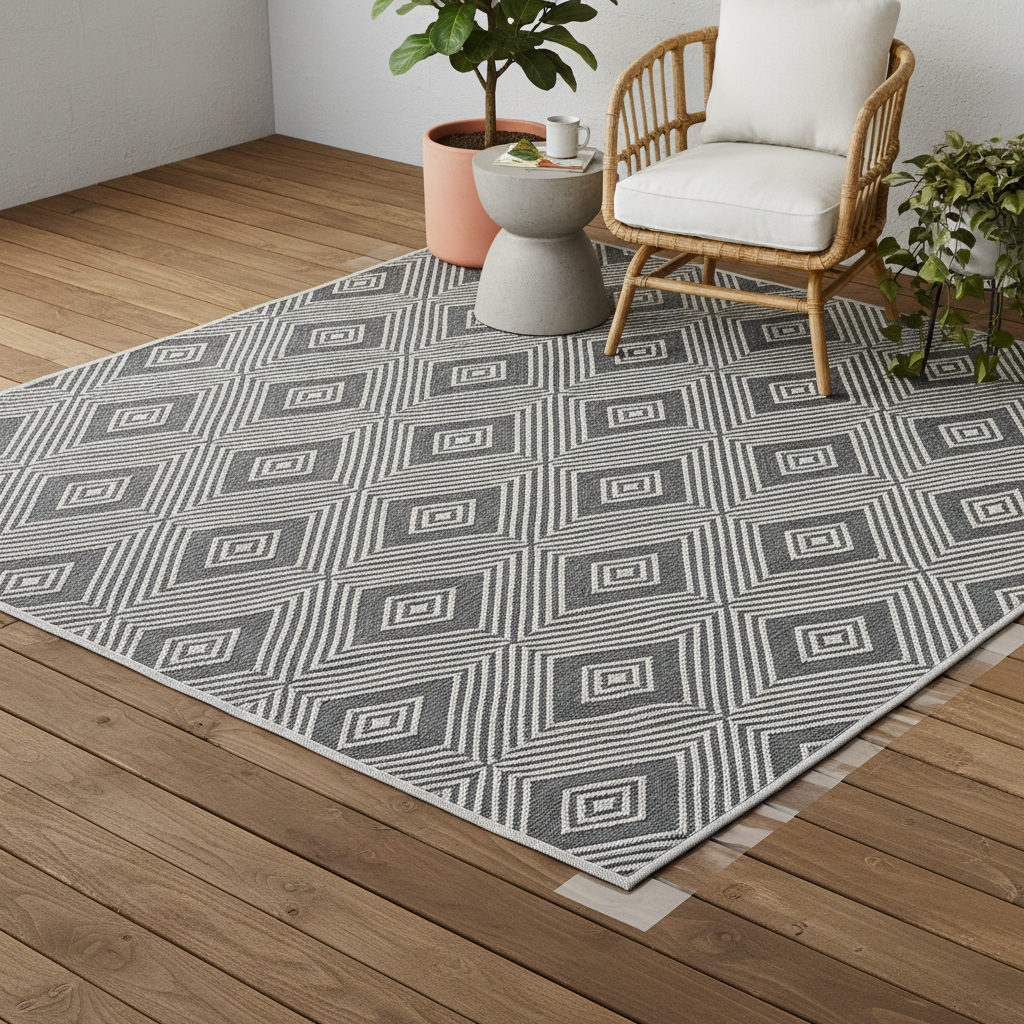
Even the best weather resistant outdoor rugs for balcony setups can fail early if they sit in trapped moisture or slide around. Small setup choices make a bigger difference than most product copy suggests.
Setup steps (simple, but worth doing)
- Start with a clean, dry floor, then let it fully air out if you recently hosed it down.
- Add a breathable rug pad if slipping is an issue, choose one designed for outdoor drainage rather than solid foam.
- Flatten corners early; if they curl, reverse-roll the rug for a day or use outdoor-rated rug tape in small sections.
- Plan for runoff; avoid blocking balcony drains with rug edges.
Cleaning that fits real apartment life
- Weekly: shake, broom, or vacuum (no beater bar if it snags).
- Spills: blot, mild soap, rinse lightly, then focus on drying.
- After heavy rain: lift one edge and check underneath, if it feels damp, air it out.
According to the EPA, controlling moisture is a key step in preventing mold growth indoors; the same logic applies on balconies where dampness can linger, especially in shaded corners.
Common mistakes buyers make (and how to dodge them)
- Buying “waterproof” and ignoring drying: if water can’t evaporate, odor and mildew become more likely.
- Going too light in full sun: pale solids show grime and uneven fading faster, patterns hide reality better.
- Skipping grip: a sliding rug is a safety risk, especially with kids, older adults, or quick door traffic.
- Assuming all outdoor rugs are UV-stable: if the listing is vague, expect faster fading.
- Letting leaves sit: organic debris holds moisture against fibers and can stain.
Conclusion: a balcony rug plan you can act on today
If your balcony gets real weather, prioritize UV-resistant synthetic fibers, a weave that dries fast, and edges that stay flat, then pair it with a breathable pad when slip risk shows up. That combination tends to outperform “pretty but delicate” picks, especially in humid or high-sun locations.
Your next step is simple: measure your usable floor area, decide how exposed your balcony is, and shortlist two materials that match that reality. From there, choosing a pattern and price point becomes much less stressful.
FAQ
- What are the best weather resistant outdoor rugs for balcony spaces with full sun?
Look for polypropylene (olefin) rugs described as UV-resistant or solution-dyed, and choose patterns or darker tones to make fading less noticeable over time. - Do outdoor rugs get moldy on a balcony?
They can, especially if water gets trapped underneath. In damp climates, an open weave and a breathable outdoor rug pad usually helps, plus lifting the rug to dry after storms. - Is polypropylene safe for balcony use with pets and kids?
In many cases, yes for general use, but product finishes vary. If you have specific sensitivity concerns, it may be worth checking manufacturer guidance and asking a professional for advice. - Should I use a rug pad under an outdoor rug on a balcony?
If your rug slides, a pad is often worth it. Pick an outdoor-rated pad designed to drain and breathe, solid backings sometimes hold moisture. - How do I stop my balcony rug corners from curling?
Start by reverse-rolling the rug, then consider small pieces of outdoor rug tape at corners. Persistent curling can also mean the rug is too thick for your temperature swings. - Can I leave an outdoor rug outside all winter?
Sometimes yes, but it depends on freeze-thaw cycles and how much water sits underneath. If your area gets snow or icy rain, storing it during the harshest stretch often extends its life. - What size outdoor rug works best on an apartment balcony?
Choose a size that leaves a bit of clearance around edges and does not block drains or doors. On narrow balconies, runners often fit better than large rectangles.
If you’re trying to choose between a few options and want a quicker shortlist, bring your balcony measurements, sun exposure, and whether rain blows in, then match that to material and weave before you get pulled into style photos, it saves time and usually saves returns.