
Best fabric shower curtains for small bathrooms usually come down to three things: the right size, a fabric that hangs neatly (not puffy), and a liner setup that stops water from escaping without making the room feel tighter.
If you have a compact bath, you already know the annoying part, one shower can turn into a wet floor, a clingy curtain, and a cramped, darker-looking space. A good fabric curtain won’t “create” square footage, but it can absolutely make the room feel calmer and easier to keep clean.
This guide focuses on what actually matters in small bathrooms, fabric weight, weave, light control, maintenance, and the little hardware choices that make a curtain behave. I’ll also point out the common “cute but wrong for small spaces” picks so you can avoid buying twice.
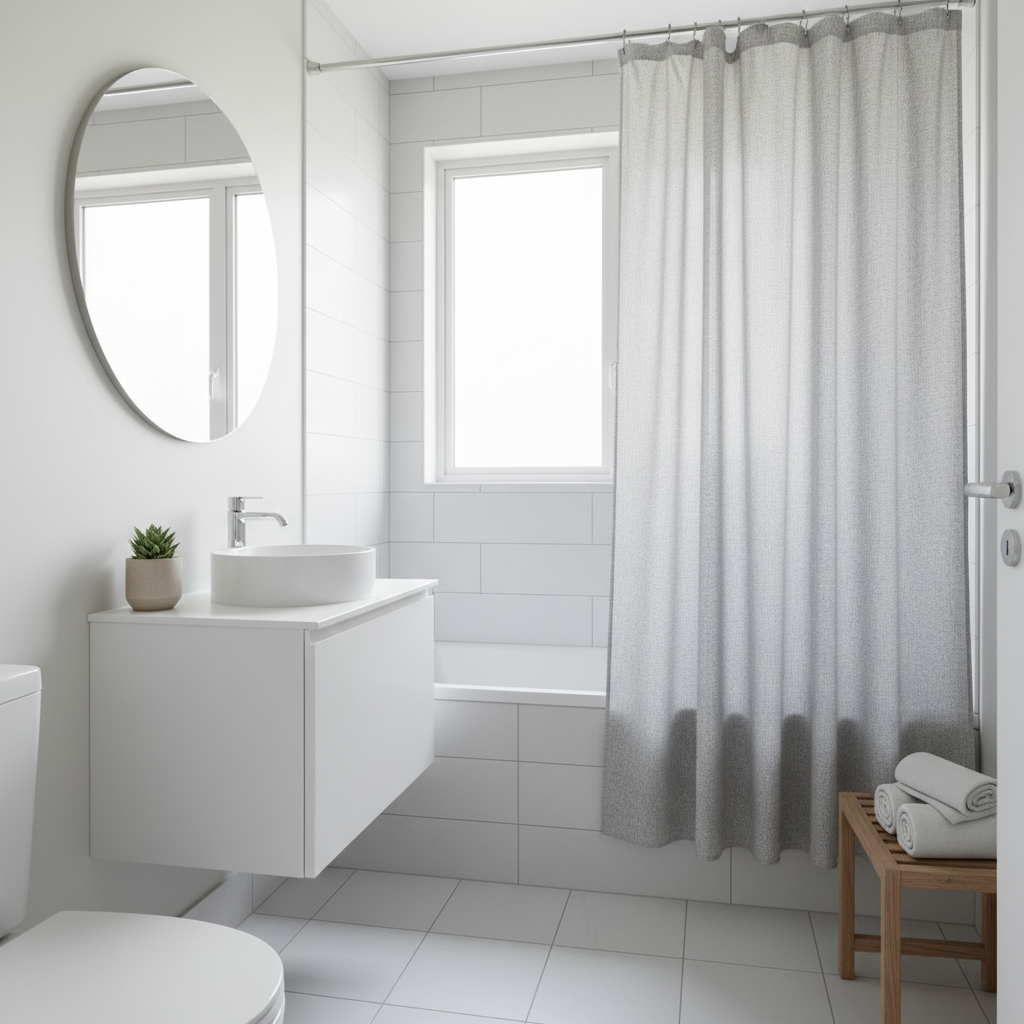
What makes a fabric shower curtain “best” for a small bathroom
In tight spaces, the curtain is not just functional, it becomes a big visual panel. The “best” option is the one that controls water, hangs straight, and doesn’t visually shrink the room.
- Proper sizing: Too wide bunches up and looks heavy, too narrow gaps at the ends and leaks water.
- Fabric weight: Lightweight fabric can billow and cling, heavier fabric hangs better but can feel bulky.
- Light behavior: Opaque dark curtains can make a small bath feel cave-like, while bright or lightly textured fabrics keep it open.
- Care routine: In small bathrooms, humidity lingers, easy-wash materials matter more than people think.
According to EPA (United States Environmental Protection Agency), controlling moisture helps reduce mold growth indoors, which is why washability and drying speed should be part of your “best fabric shower curtains for small bathrooms” checklist, not an afterthought.
Fabric types that work well (and which ones to skip)
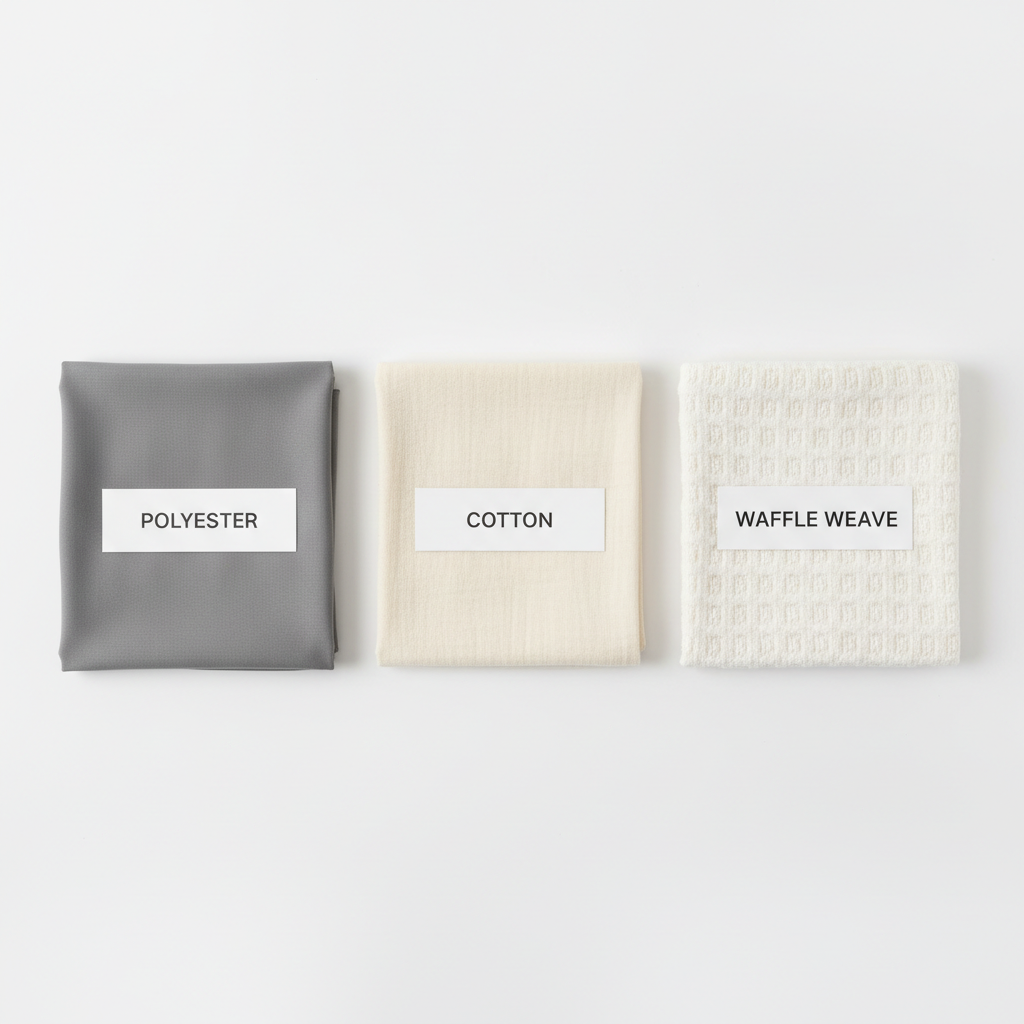
“Fabric” can mean a lot of things in product listings, polyester, cotton, blends, textured weaves, even waffle patterns. Here’s how they tend to behave in small bathrooms.
Polyester: the practical default
Polyester fabric curtains are popular because they usually dry faster than cotton and tolerate frequent washing. Many have a slightly stiffer hand that helps them hang straight, which is helpful when space is tight.
Cotton: great look, higher upkeep
Cotton can look elevated, but it tends to hold moisture longer. In a compact bathroom with limited ventilation, cotton may mildew faster unless you wash and dry it consistently, or pair it with a solid liner and good airflow.
Waffle weave and textured fabrics: good for hiding wrinkles
Texture is underrated in small spaces, it disguises water spots, minor wrinkles, and it reads “hotel” without loud prints. The key is picking a texture that stays light in color so it doesn’t visually crowd the room.
What to skip most of the time
- Very dark, heavy blackout-style fabric: often makes the room feel smaller.
- Extra-long curtains you don’t need: they puddle, stay damp, and can look sloppy fast.
- Loose, airy linen-look fabric without structure: pretty online, clingy in real showers unless you add weights and a good liner.
Quick self-check: choose the right curtain setup in 60 seconds
If you’re not sure what to buy, answer these quickly. Your choices will point toward the right fabric and liner approach.
- Do you often get water on the floor? If yes, prioritize a reliable liner and correct width, not “prettier fabric.”
- Is your bathroom low-ventilation? If yes, lean polyester or a quick-dry blend, and avoid extra-long lengths.
- Does the room feel dark? If yes, choose a light color, subtle texture, and skip busy prints that chop up the space.
- Do you want minimal maintenance? If yes, pick machine-washable fabric and a wipeable liner.
- Is your tub standard or a stall shower? This changes sizing and whether a curved rod helps.
If you’re shopping specifically for the best fabric shower curtains for small bathrooms, the “right answer” is usually less about the trend and more about matching your ventilation and splash behavior.
Size and fit: the mistake that ruins most small bathrooms
People buy a curtain based on pattern first, then wonder why it feels messy. In a small room, fit problems show immediately.
Common sizes (and what they imply)
| Use case | Typical curtain size | Small-bath tip |
|---|---|---|
| Standard tub | 72 x 72 in | Most reliable starting point, avoid “extra-wide” unless you truly need it |
| Long tub / taller ceiling look | 72 x 84 in | Only if it stays off the floor, damp hems in small baths get musty |
| Stall shower | 54 x 78 in (varies) | Measure the rod, a too-wide curtain bunches and eats space |
How wide should it be?
A good rule is enough width for a gentle drape, but not so much that the curtain stacks into a thick pile when open. Many people overshoot because product pages suggest “more fullness,” which can be true for styling, but in tight rooms it often reads cluttered.
If you’re between widths, pick the one that still lets the curtain open fully without blocking shelves, towel bars, or the toilet tank.
Best picks by small-bath scenario (what to look for)
I’m not going to pretend one curtain wins for every bathroom. Instead, match features to your situation, this is how pros often shop for small spaces.
1) Tiny bathroom that feels dark
- Go for: white, warm white, light gray, or soft neutral fabric with texture (waffle or subtle stripe).
- Look for: light-diffusing weave that still gives privacy.
- Avoid: high-contrast prints, they visually “slice” the room.
2) Bathroom where the curtain clings to you
- Go for: slightly heavier polyester fabric, plus curtain weights or magnets at the hem.
- Look for: a liner that hangs inside the tub cleanly.
- Optional: a curved shower rod to create a few extra inches of elbow room.
3) Rental bathroom, you want easy care
- Go for: machine-washable polyester fabric curtain plus a wipe-clean liner.
- Look for: reinforced button holes or grommets so rings don’t tear it up.
- Avoid: delicate cotton that needs babying in shared laundry.
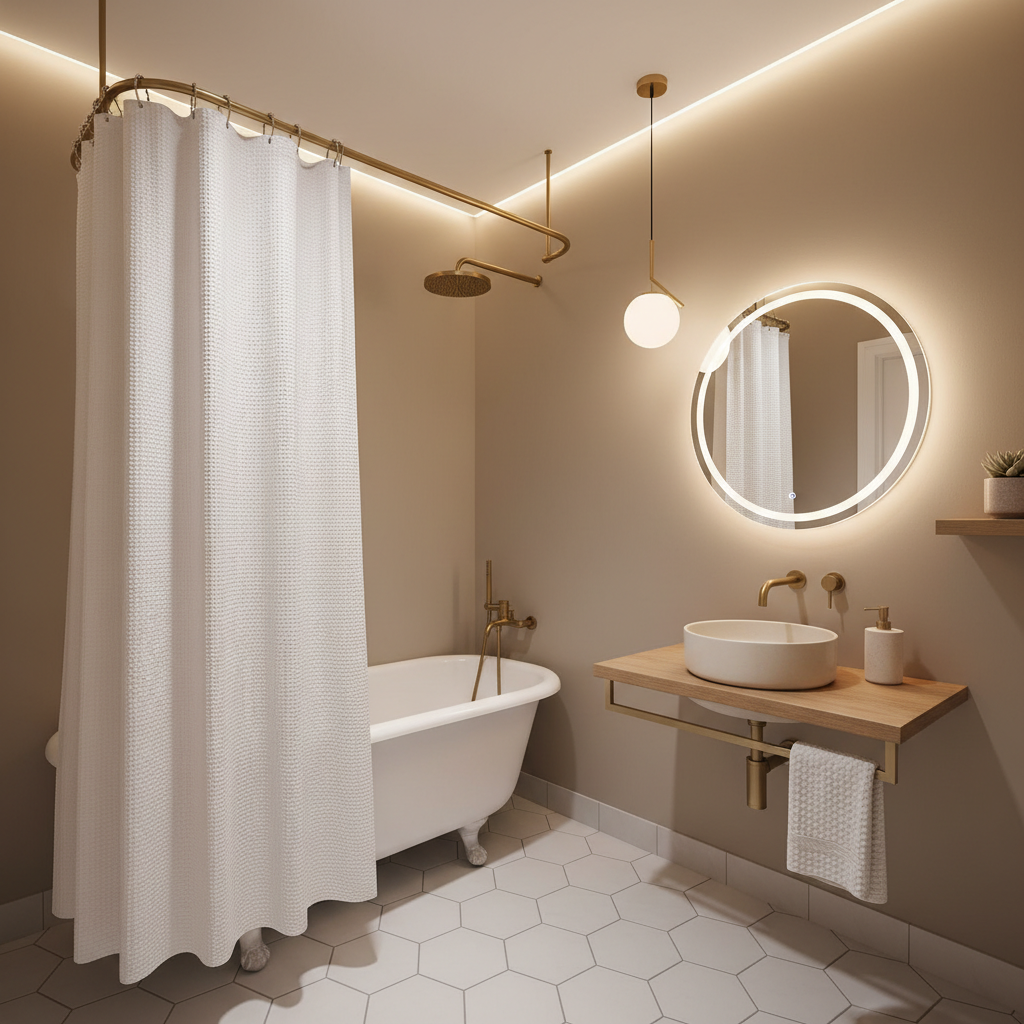
4) You want “hotel” vibes without making it tight
- Go for: white waffle weave fabric with a crisp liner and simple metal rings.
- Look for: a fabric that holds its shape, not flimsy.
Practical setup steps: make a fabric curtain work better in tight spaces
Even the best-looking fabric can behave badly if the setup is off. These small tweaks usually make the biggest difference.
- Use a liner, even with “water-repellent” fabric: Water-repellent coatings help, but a liner is what reliably keeps water in the tub.
- Hang it higher if possible: A few inches up can make the ceiling feel taller, just keep the hem clear of the floor.
- Choose low-profile rings: Bulky decorative hooks can snag and make the curtain bunch.
- Add weights or magnets: This helps reduce billowing, especially with lighter fabric.
- Keep the liner inside, curtain outside: It sounds obvious, but it’s a common reason for leaks.
After showering, a simple habit helps: spread the curtain and liner so they dry faster. In small bathrooms, trapped folds stay damp and that’s where odors usually start.
Mistakes to avoid (and when to get extra help)
Shopping for the best fabric shower curtains for small bathrooms can go sideways because product photos hide the practical stuff. A few pitfalls come up a lot.
- Buying “extra-long” for drama: In compact bathrooms, drama often becomes a wet hem and mildew smell.
- Ignoring ventilation: If the fan is weak or you don’t have one, prioritize quick-dry materials and regular washing.
- Using a fabric curtain as the only water barrier: This can work in low-splash showers, but many setups still need a liner.
- Over-patterning the smallest wall: Bold prints are fun, but in tight spaces they can feel busy fast.
If you’re dealing with recurring mold, persistent water damage, or peeling paint, it’s reasonable to ask a building professional or qualified contractor to assess ventilation and moisture control. In some cases, a stronger exhaust fan or sealing work matters more than any curtain choice.
Conclusion: the “best” choice is usually simple and washable
The best results in small bathrooms tend to come from a light, clean-looking fabric (often polyester or waffle weave), a dependable liner, and a fit that doesn’t bunch up. If you want an easy next step, measure your rod and tub, then pick a machine-washable curtain in a bright neutral, you’ll immediately reduce visual clutter and cut down on daily annoyance.
If you’re upgrading this weekend, start with sizing and a liner you won’t hate cleaning, then choose the fabric that matches how your bathroom handles moisture.
FAQ
What is the best fabric shower curtain for a small bathroom with no window?
Usually a quick-dry polyester or a polyester blend in a light color works best, because it dries faster and keeps the room from feeling darker. Pair it with a liner and keep airflow going after showers.
Are fabric shower curtains sanitary?
They can be, but it depends on how often you wash them and how well they dry between uses. If humidity stays trapped, odor and mildew become more likely, so washability matters.
Do I need a liner with a fabric shower curtain?
In many bathrooms, yes. A fabric curtain can be water-resistant, but a liner is what reliably blocks splash and reduces how much moisture soaks into the fabric.
What color shower curtain makes a small bathroom look bigger?
White, off-white, and light neutrals usually help. Soft texture can add interest without shrinking the space the way high-contrast patterns sometimes do.
Should a shower curtain touch the floor in a small bathroom?
Most of the time, no. A hem that drags stays damp and picks up grime, which can lead to odor. Aim for it to hover above the floor while still covering the tub edge.
How do I stop a fabric shower curtain from clinging?
Try weights or magnets at the bottom, use a liner that hangs cleanly, and consider a curved rod if you need more room. Very lightweight fabric tends to cling more in steamy showers.
How often should I wash a fabric shower curtain?
It varies with humidity and use, but if you notice musty smell, visible spots, or the curtain stays damp for hours, it’s time. Many people do better with a simple routine, washing regularly before it looks “dirty.”
If you’re shopping and want a more hassle-free setup, focus on a washable light-colored fabric plus a liner you can wipe down quickly, it’s a small change that often makes the whole bathroom feel easier to live with.