
Small space mudroom ideas with shoe storage are really about one thing, keeping the “drop zone” from spilling into your whole home. When the entryway is tight, shoes pile up fast, and everything else follows, backpacks, dog leashes, wet umbrellas, you name it.
The good news is you don’t need a dedicated room or a custom build to get a mudroom feel. A few well-chosen pieces, placed with intent, can create a functional landing strip that looks like it belongs, not like you’re storing your life by the front door.
What usually trips people up is planning for “average days,” not real days. Real days include muddy sneakers, two packages on the floor, and someone trying to find their other boot. This guide focuses on practical setups, quick ways to self-check your space, and a few 2026-friendly upgrades that still feel timeless.
What makes shoe storage hard in small mudrooms
In a compact entry, you’re fighting three constraints at once: depth, swing clearance, and visual clutter. Shoe storage fails when any one of those gets ignored.
- Depth steals the walkway: A 14–16 inch-deep cabinet sounds “small,” but in a narrow hall it can turn into a shoulder-bump zone.
- Doors and stairs compete for space: Front door swings, closet doors, and stair landings create dead areas you can’t block.
- Wet and grit: Shoes carry moisture and debris; closed storage without airflow often starts to smell.
- Family habits: If taking shoes off is optional in your household, you need a “parking lot” that works even when people don’t try hard.
According to the International Residential Code (IRC) adopted by many U.S. jurisdictions, stairs and landings have specific clearance and geometry requirements; if your entry connects to stairs, avoid installing anything that reduces safe movement, and when in doubt, consult a qualified contractor or local code guidance.
Quick self-check: pick the right layout for your space
Before you buy anything, measure and label your entry like a tiny floor plan. This saves money and prevents the classic “it looked smaller online” moment.
5-minute measuring checklist
- Clear walking path width (target what feels comfortable for your household, especially with kids or pets).
- Door swing arc: mark it with painter’s tape on the floor.
- Available depth: measure from wall to the edge of the walking path you want to keep.
- Vertical wall space: height to the nearest obstruction, thermostat, switch, window trim.
- Floor material: tile, wood, LVP, carpet edge, this affects mats and drip trays.
If you want a simple rule, go vertical when floor depth is limited, and go under-bench when you can spare a little depth without narrowing traffic.
Small-space mudroom setups that actually work (with shoe storage)
These are the configurations that show up again and again in real homes because they’re forgiving and easy to maintain.
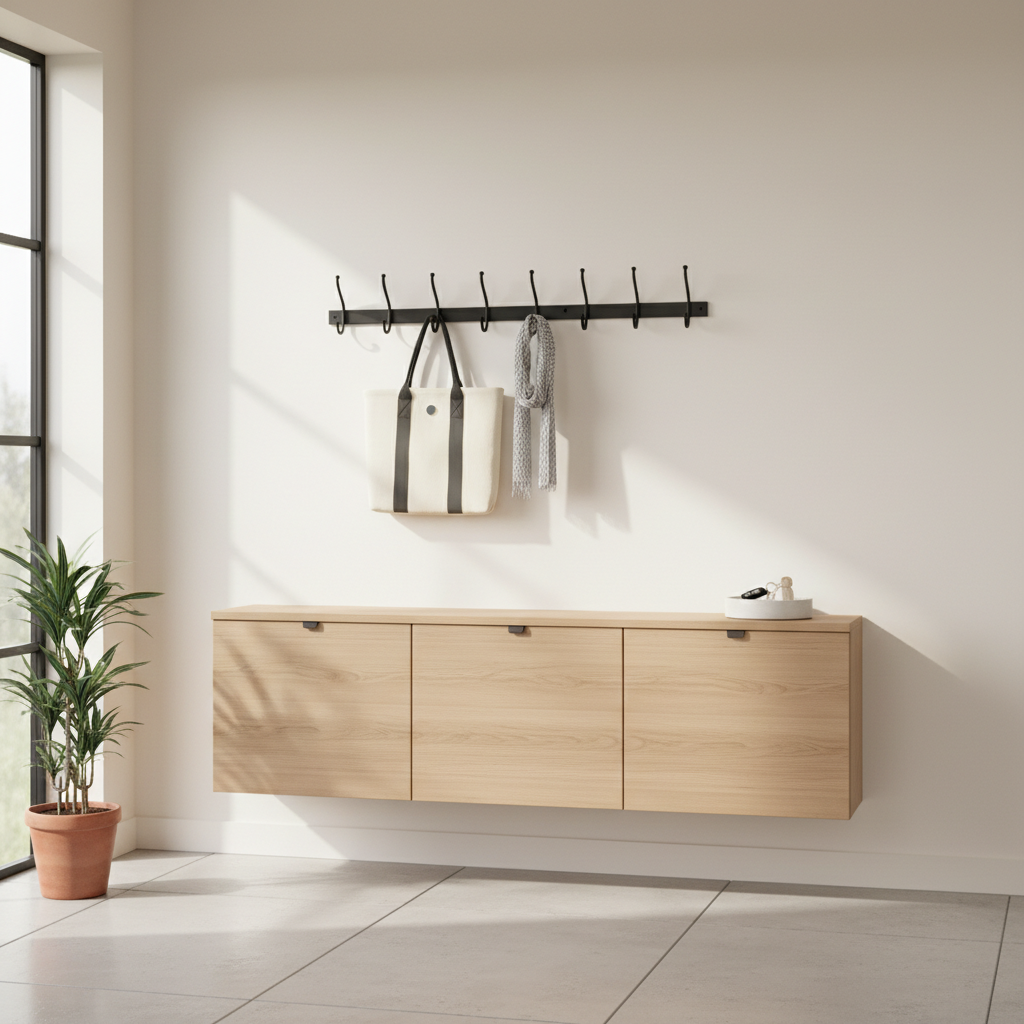
1) Slim shoe cabinet + hook rail (best for narrow halls)
If your entry is more hallway than foyer, a shallow, wall-mounted shoe cabinet keeps the floor clear and still hides visual clutter. Add a hook rail at adult shoulder height, plus one lower row for kids if needed.
- Why it works: shallow depth, high capacity, clean look.
- Watch-outs: confirm wall anchoring; loaded cabinets can be heavy.
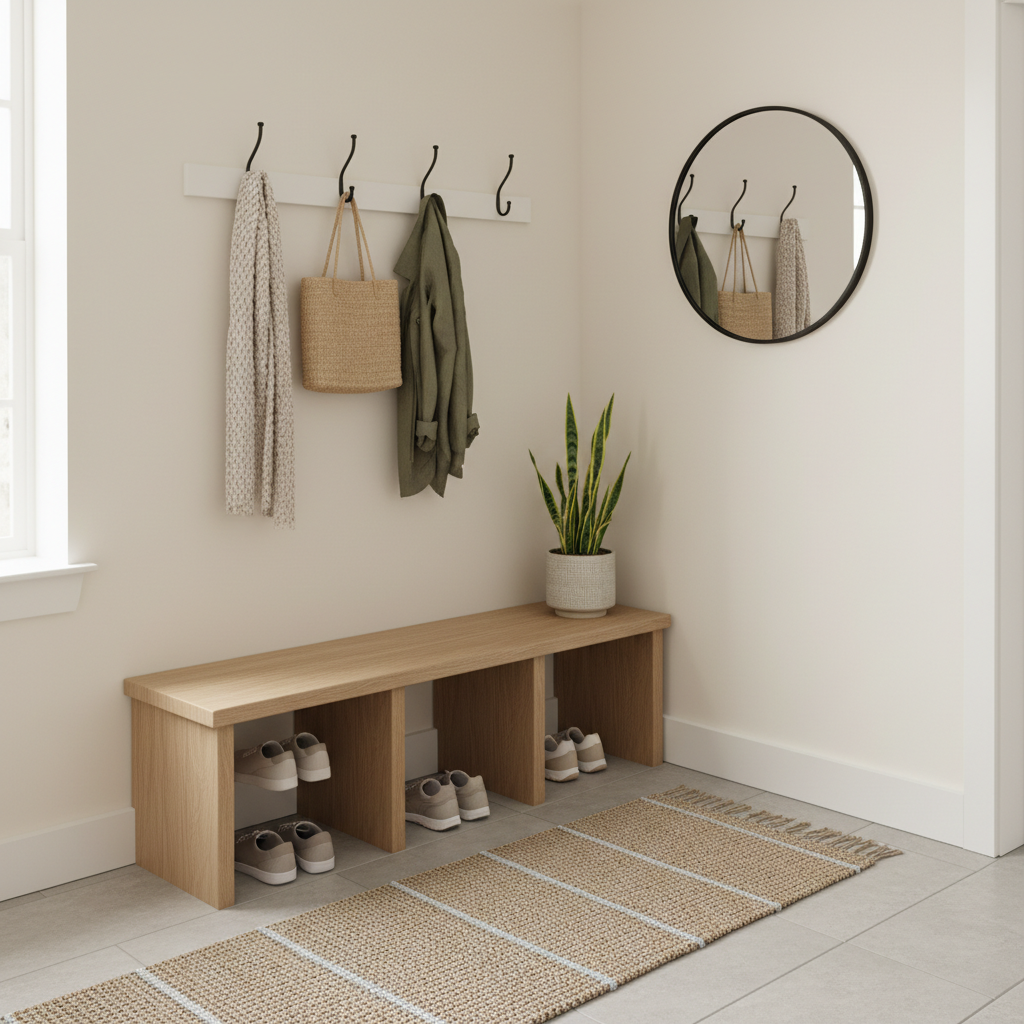
2) Storage bench with cubbies (best for “sit to put shoes on” households)
A bench changes behavior. People are more likely to put shoes away if sitting down is part of the routine, especially for kids and guests.
- Choose open cubbies for daily shoes, and one lidded bin for “random” items.
- Pair with a washable runner or boot mat to protect floors.
3) Double-duty coat closet: shoe zone on the floor, gear up high
If you already have a closet near the door, treat the bottom 18–24 inches as a mudroom. Add a second shelf, use stackable shoe racks, and keep a drip tray for wet pairs.
- Pro tip: reserve one “overflow” bin so the closet can still close on messy days.
- Airflow matters: avoid sealing wet shoes into airtight bins.
4) Corner drop zone with vertical cubbies (best for odd angles)
Corners often get ignored, but a tall, narrow cubby tower plus a small wall shelf can turn an awkward nook into a functional landing spot.
- Use labels if multiple people share the same tower.
- Keep frequently worn shoes at knee-to-waist height for easy access.
Shoe storage options compared (choose by pain point)
Not all shoe storage solves the same problem. If your issue is mess, you want “hide it.” If your issue is wet boots, you want airflow and drainage.
| Option | Best for | Space needed | What to watch |
|---|---|---|---|
| Flip-down shoe cabinet | Hiding clutter in narrow entries | Low depth, uses wall | Wall anchors, limited boot height |
| Open shoe rack | Fast grab-and-go | Floor depth required | Looks messy, needs regular tidying |
| Bench with cubbies | Families, kids, guests | Medium depth | Under-bench dust, needs a “rules” system |
| Boot tray + hooks | Wet climates, snow, rain | Minimal | Limited capacity, still visible |
| Closet-based racks/shelves | Clean look without new furniture | Uses existing closet | Closet can become chaotic without bins |
Make it feel intentional: materials, lighting, and 2026-friendly finishes
In small spaces, the “mudroom look” comes from consistency more than size. You’re aiming for a mini system that reads as part of the home.
- Easy-clean surfaces: semi-gloss paint, washable rugs, wipeable bench tops.
- Warm neutrals + one durable accent: light oak, matte black hooks, or a single color for baskets tends to age well.
- Layered lighting: if the entry feels dim, a brighter bulb (within fixture ratings) makes the area feel larger and less cramped.
- Quiet organization: matching bins and a single hook style reduces visual noise more than people expect.
According to the U.S. Consumer Product Safety Commission (CPSC), tip-over incidents are a safety concern for furniture; if you use tall cabinets or cubby towers, anchoring to studs is a common recommendation, especially in homes with kids or pets.
Practical setup plan: a 1-hour reset and a weekend upgrade
If you’re staring at a chaotic entry, don’t jump straight to renovations. Start with a reset that reveals what you truly need to store.
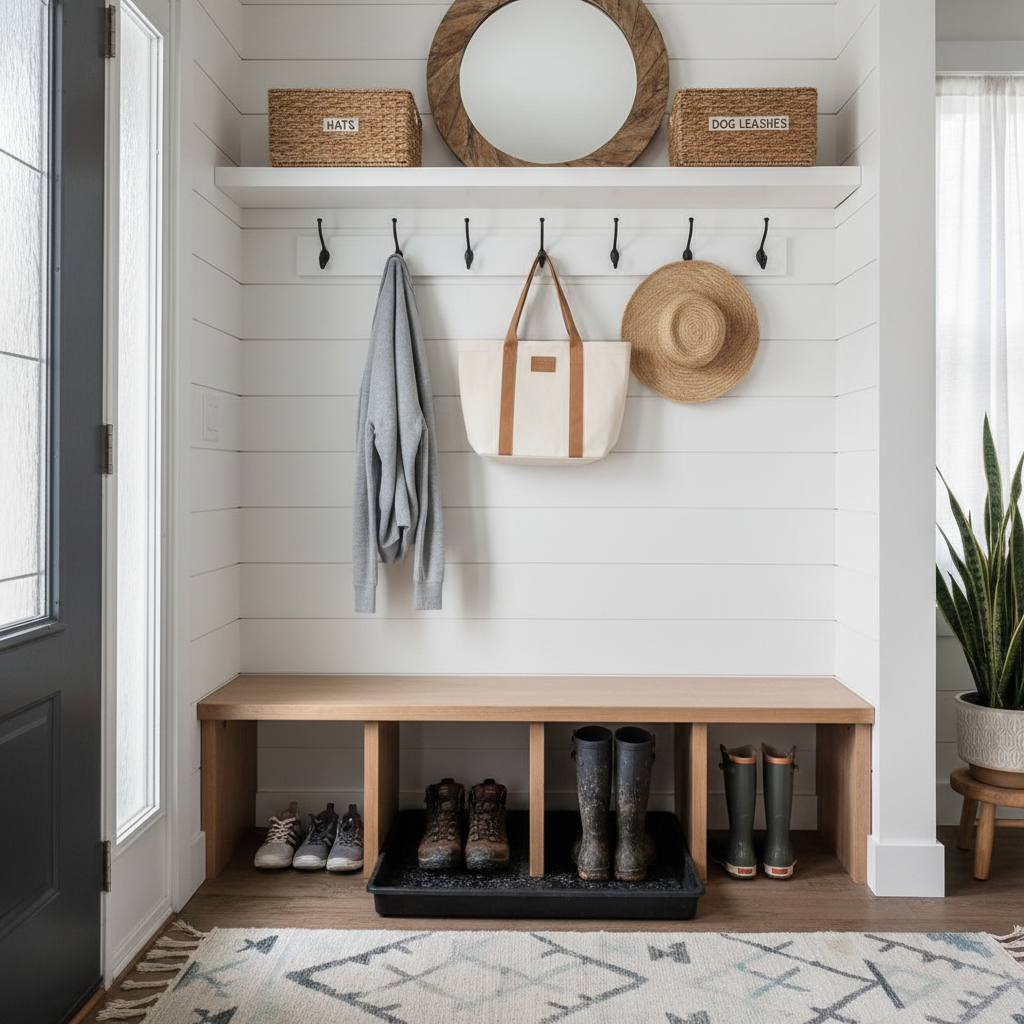
The 1-hour reset (no buying, just clarity)
- Pull every pair of shoes out, only put back what’s worn weekly.
- Create one temporary bin for “elsewhere” items, mail, toys, random gear.
- Add a boot tray or washable mat, even a basic one changes cleanup.
- Pick a rule: daily shoes live at the door, everything else relocates.
The weekend upgrade (target the real bottleneck)
- If the floor feels blocked: switch to a wall-mounted shoe cabinet or floating shelf plus hooks.
- If sitting helps compliance: add a bench with cubbies, then assign one cubby per person.
- If the closet is chaos: install a second shelf, add two bins, and a dedicated shoe rack.
- If wet shoes are the issue: prioritize trays, airflow, and a small towel hook, not closed boxes.
Many small space mudroom ideas with shoe storage fail because the “home” for shoes is too far from where shoes come off. Keep the storage within one step of the habit.
Mistakes that waste space (and what to do instead)
- Overbuilding storage for shoes you don’t wear: seasonal pairs belong elsewhere, otherwise your entry becomes a warehouse.
- All closed storage with no drying strategy: add ventilation gaps, cedar inserts, or rotate wet shoes to a tray first.
- Hooks too high or too few: if people can’t reach them quickly, coats end up on the bench and bury the shoes.
- No “catch-all”: a small bowl or tray for keys prevents the shoe cabinet top from becoming a junk shelf.
Saying it plainly, organization systems don’t fail because people are lazy, they fail because the system asks for too many steps when everyone is trying to get out the door.
When to bring in a pro (or at least ask for advice)
If you’re drilling into unknown walls, moving electrical, or adding built-ins near stairs, it can be worth asking a licensed contractor or handyman for guidance. In older homes, you might also run into uneven walls, hidden plumbing vents, or wiring that changes what’s safe and practical.
For renters, check lease terms before mounting heavy cabinetry. Even when wall anchors seem straightforward, repairs can get expensive if you hit something you shouldn’t.
Key takeaways to keep your entry calm
- Measure door swings first, then choose furniture depth.
- Use vertical space when the walkway feels tight.
- Plan for wet shoes with a tray and airflow, not just a prettier cabinet.
- Build around habits: storage should sit where shoes naturally land.
If you want one next step, do the 1-hour reset today, then buy only the piece that fixes your biggest bottleneck. That’s how small space mudroom ideas with shoe storage turn into a setup you actually keep.
FAQ
- What is the best shoe storage for a narrow entryway?
In many narrow entries, a slim wall-mounted shoe cabinet works well because it uses vertical space and keeps the floor path clearer than a deep rack. - How many inches deep should mudroom shoe storage be in a small space?
It depends on your hallway width and door swings, but many people find that “shallow” options feel better in tight areas. Measure your comfortable walking path first, then work backward. - How do I store wet boots without making the mudroom smell?
Start with a boot tray and let boots dry before moving them into closed storage. Airflow matters; fully sealed bins can trap moisture and odor. - Are benches with cubbies better than shoe racks?
If your household benefits from sitting to put shoes on, benches often improve follow-through. Shoe racks can hold a lot, but they tend to look messy faster. - What are renter-friendly small space mudroom ideas with shoe storage?
Try a freestanding bench, over-the-door hooks, and a boot tray. If you mount anything, use methods your lease allows and plan for patching holes later. - How do I keep kids from dumping shoes everywhere?
Give each child one clearly assigned spot at their height, a cubby or low bin, and keep “extra” pairs out of the entry so the choice is simple. - Can I put a shoe cabinet near stairs?
Sometimes, but be careful about clearance and safe passage. If the cabinet reduces comfortable movement, choose wall hooks plus a smaller tray instead, and consider professional input for stair-adjacent changes.
If you’re trying to plan a tighter, cleaner entry and want a more done-for-you direction, sketch your door swings and measurements, then build your shopping list around one layout style, slim cabinet, bench-cubbies, or closet zone, so every item you add earns its space.