
Modern coastal living room with neutral furniture works best when you treat “neutral” as a range of warm sands, soft stones, and creamy whites, not one flat beige, and when you build contrast through texture instead of loud color.
If your space keeps landing in the awkward middle, too plain to feel designed but too “beachy” to feel modern, it’s usually a materials and proportion issue, not a shopping issue. The good news is you can fix it without replacing everything.
This article breaks down what makes modern coastal look current in American homes, how to choose the right neutral upholstery, and what to add so the room feels layered, bright, and easy to live in, even with kids, pets, or a small footprint.
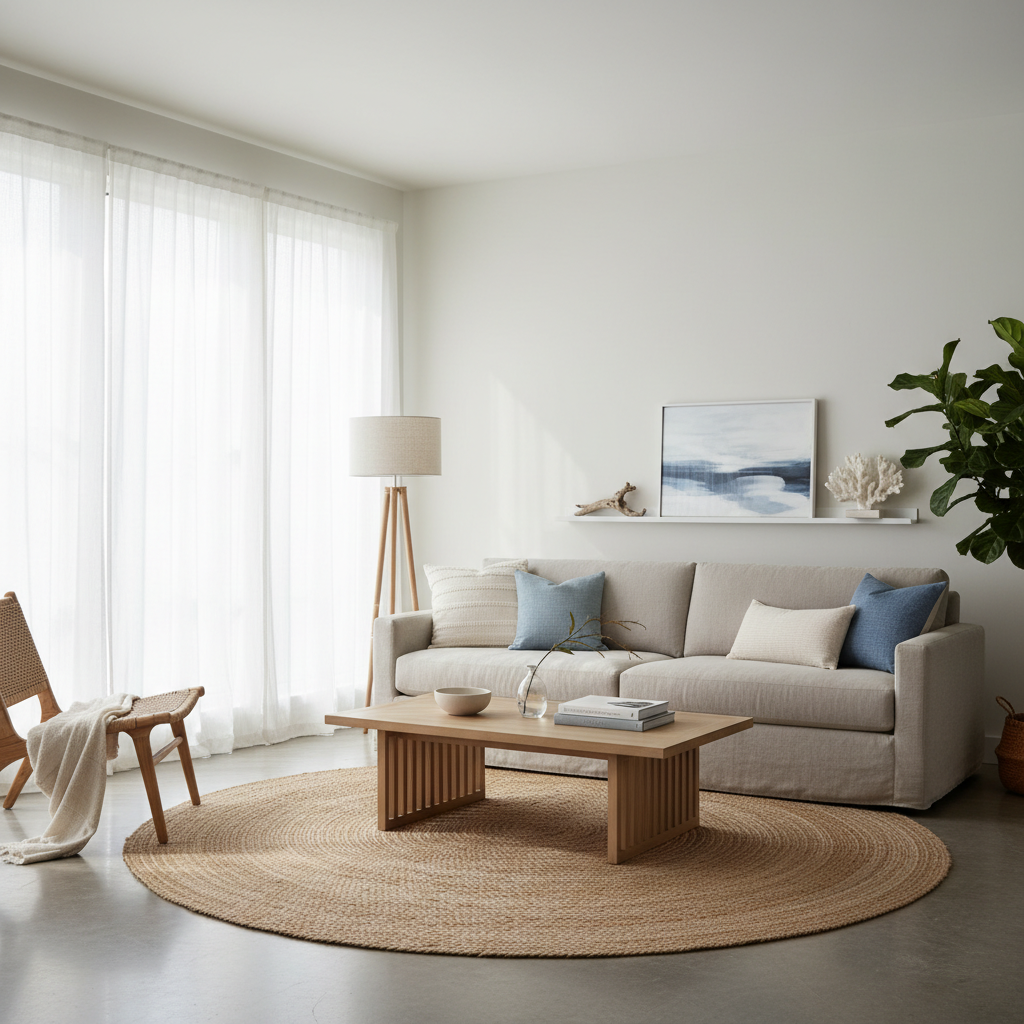
What “Modern Coastal” Really Means (and Why Neutrals Matter)
Modern coastal is less “nautical theme” and more “calm architecture.” Think clean lines, open breathing room, and finishes that feel sun-warmed rather than glossy. Neutrals do the heavy lifting because they keep the room bright and flexible, especially in spaces with strong natural light.
In practice, a modern coastal living room with neutral furniture usually leans on a few consistent rules:
- Simple silhouettes (track arms, low profiles, fewer frills)
- Natural materials (oak, rattan, linen, wool, stone, seagrass)
- Quiet contrast (matte black, aged brass, weathered wood)
- Color as an accent (ocean blues, sea glass green, clay, soft charcoal)
According to National Association of Realtors (NAR)... buyers tend to respond well to bright, uncluttered rooms with broadly appealing finishes, which is part of why neutral, coastal-leaning palettes show up so often in staging and listing photos.
Why Neutral Coastal Rooms Look “Flat”: Common Causes
Most “something is off” coastal rooms share the same few problems. It’s rarely that your sofa is wrong, it’s that the supporting cast never got cast.
- All neutrals are the same temperature: cool gray sofa, cool white walls, cool rug, and suddenly the room feels sterile.
- Too much smooth texture: performance velvet, shiny paint, flat-weave rug, and nothing catches light.
- Scale mismatch: tiny rug under a big sectional, or a coffee table that feels like an afterthought.
- “Coastal” décor takes over: shells, anchors, rope details, and the room reads themed rather than modern.
- Lighting stays builder-basic: one overhead fixture can make neutrals look dull at night.
If you recognize two or three of those, you’re in a good spot, because the fix is mostly layering and editing.
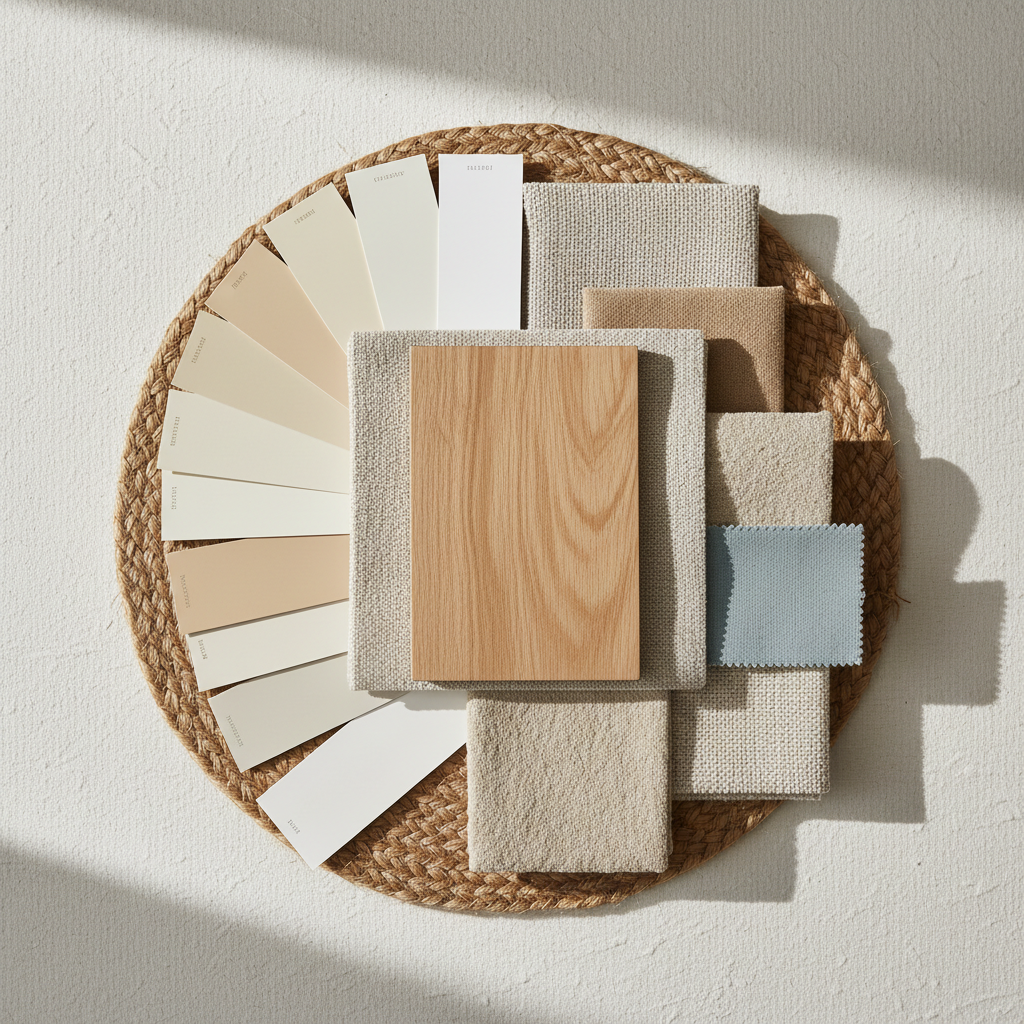
A Quick Self-Check: Which Neutral Are You Actually Using?
Before you buy anything, figure out your “dominant neutral” and its undertone. This is the quiet reason many modern coastal living room with neutral furniture setups feel slightly mismatched in real life.
Look at your biggest surfaces
- Walls (paint undertone shows strongest in the evening)
- Sofa/sectional (largest fabric block)
- Rug (controls the room’s warmth)
- Flooring (wood stain runs the background of everything)
Choose your lane
- Warm neutral lane: creamy white, ivory, oatmeal, sand, light tan, honey oak
- Cool neutral lane: crisp white, light gray, greige, ash wood, charcoal accents
- Balanced lane: a soft off-white + light greige, then warmth comes from wood and woven textures
Small tip that saves time: if your flooring is warm (common in many U.S. homes), a slightly warm sofa fabric often looks more “coastal” than a true gray.
Building the Room: A Practical Layering Formula
If you want a space that feels coastal but still modern, build from big to small, and add “touchable” materials early. Here’s a formula that tends to work in many rooms.
1) Anchor with a neutral sofa that has texture
- Linen blends, woven performance fabrics, subtle bouclé, or brushed cotton tend to photograph and live well.
- Keep the shape clean: squared arms, low back, minimal tufting.
2) Pick a rug that adds depth (not just color)
- Jute or seagrass for texture, but consider comfort if you sit on the floor often.
- Wool or wool-blend loops for softness while still feeling natural.
- Size matters: many living rooms need an 8x10 or 9x12 so the front legs of seating sit on the rug.
3) Add wood in two tones, max
- Light oak + one deeper tone (walnut, weathered oak, or matte black) keeps it modern.
- If everything is the same blond wood, the room can look unfinished.
4) Bring in coastal color as a “5% accent”
In a modern coastal living room with neutral furniture, color reads best in small, repeatable moments: one throw, two pillows, a piece of art, a ceramic vase. This keeps the room calm, not themed.
Furniture + Decor Picks That Feel Coastal Without Looking Cheesy
Coastal doesn’t need seashells to land. What reads “coastal” today is light, texture, and a little imperfection.
- Coffee table: light wood, limewashed finish, or a simple stone top; avoid overly rustic distressing if you want modern.
- Accent chairs: woven cane sides, slipcovered chairs, or a clean-lined chair in a slightly darker neutral for contrast.
- Window treatments: woven shades or airy linen panels; they soften the room more than people expect.
- Art: large-scale abstracts, coastal landscapes that aren’t literal, black frames to sharpen the look.
- Greenery: olive tree, rubber plant, or simple branches; it adds life without adding visual clutter.
According to American Lighting Association (ALA)... layered lighting (ambient, task, accent) improves comfort and usability, which is especially noticeable in neutral rooms that can feel flat under a single overhead fixture.
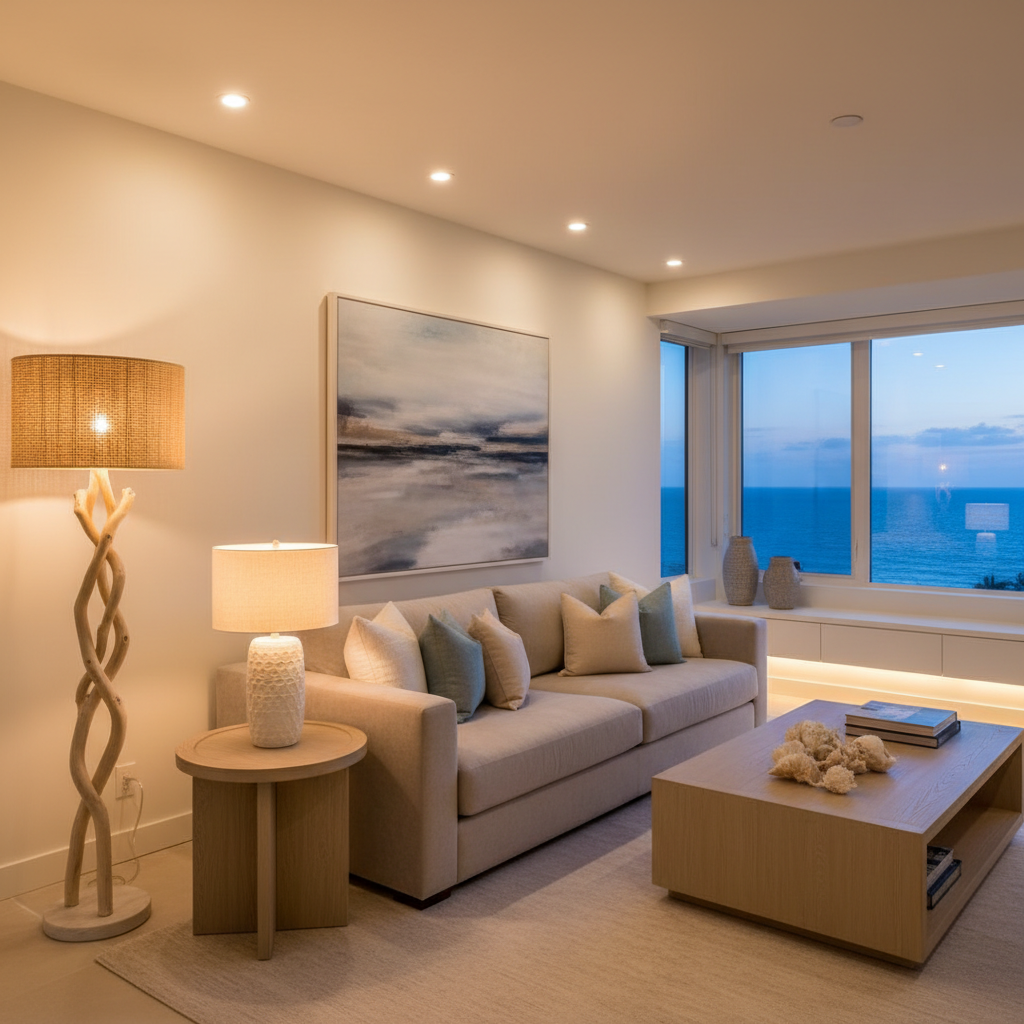
Room-by-Room Execution: Layout, Lighting, and Finishing Touches
This is the part people rush, then wonder why the room feels “fine” instead of finished. A few adjustments usually move the needle fast.
Layout rules that keep it airy
- Float furniture when possible: even 6–10 inches off the wall can make a room feel designed.
- Keep walkways clear: coastal looks best when circulation feels easy, not squeezed.
- Use one “visual anchor”: fireplace, large art, or media console, then arrange seating to face it.
Lighting that makes neutrals look rich
- Use at least two lamps in addition to overhead lighting.
- Many homes feel best with warm-white bulbs; if you’re unsure, test one lamp first.
- Add a dimmer when feasible; if electrical work is involved, it’s smart to consult a licensed electrician.
Finishing touches that don’t clutter
- Pillows: mix 2–3 textures (linen, knit, boucle) and vary sizes.
- Throws: one chunky knit or gauzy cotton, draped casually.
- Styling: a tray, a book stack, one organic object (coral-shaped ceramic or driftwood-inspired sculpture) and stop there.
A Simple Shopping Plan + Reference Table
If you’re updating in phases, prioritize pieces that change the room’s “read” the most: rug, lighting, then accents. Paint can come later if the undertones are already cooperating.
Key takeaways before you buy:
- Choose one dominant neutral temperature and support it.
- Texture beats extra décor for coastal warmth.
- Scale (rug size, art size) matters more than trendy objects.
| Element | What to Aim For | Common Mistake | Easy Fix |
|---|---|---|---|
| Sofa | Clean lines, textured neutral fabric | Flat, cool gray that fights warm floors | Add warm pillows/throw, or swap rug to balance undertone |
| Rug | Large size, natural weave or wool texture | Too small, thin, or overly patterned | Size up so front legs sit on rug |
| Wood tones | One main tone + one contrast tone | Everything matches exactly | Introduce matte black or darker wood through a table or frame |
| Lighting | Overhead + two lamps, warm ambiance | Single bright overhead light | Add floor lamp + table lamp, consider dimmer |
| Decor | Large art, a few sculptural objects | Small beach-themed items everywhere | Edit down, go bigger with fewer pieces |
Conclusion: Make It Feel Like a Breeze, Not a Theme
A modern coastal living room with neutral furniture should feel easy on the eyes and easy to live in, and that usually comes from smarter layering, better lighting, and a tighter edit, not from adding more “coastal stuff.”
Pick your neutral temperature, add texture in the rug and textiles, and give the room one or two bold-scale moves like oversized art or a statement light. If you do just those, the space tends to click into place.
FAQ
- How do I make a neutral coastal living room look modern, not farmhouse?
Keep lines cleaner, reduce distressing, and use a little contrast like matte black hardware or a crisp framed art piece. Farmhouse usually leans heavier on rustic finishes and more decorative silhouettes. - What colors work best as accents with neutral coastal furniture?
Muted ocean blue, sea-glass green, soft terracotta, and charcoal are common choices. If your base is warm, slightly dusty accents usually blend better than bright primaries. - Is a gray sofa okay for a modern coastal look?
It can be, especially if it’s a warm greige or has visible texture. True cool gray sometimes reads more urban than coastal unless you balance it with warm woods and woven materials. - What’s the fastest upgrade if my room feels flat?
Add layered lighting and a more textured rug. Those two changes often improve depth and warmth without redoing furniture. - How many pillows are too many for a modern coastal sofa?
Enough to look inviting, not staged. Many sofas look good with 3–5 pillows total, mixing sizes and textures; if you have to move a pile just to sit, it’s too many. - What wall art fits modern coastal style without being beachy?
Large abstracts, soft horizon photography, minimalist line art, or landscapes with subtle color. Avoid small clusters of literal seaside icons if you want a more grown-up look. - Are natural fiber rugs safe for kids and pets?
Often yes, but it depends on the weave and sensitivity. Jute can shed and feel rough; wool can be softer but may require different cleaning, so check care instructions and consider a rug pad for stability.
If you’re trying to pull the whole room together faster, it helps to build a simple “finish plan” for your neutral palette, lighting layers, and 2–3 accent materials so every new purchase supports the same modern coastal direction rather than competing with it.