
How to remove candle wax from table surfaces comes down to two smart moves: lift the bulk without smearing it, then treat the leftover film based on the tabletop material.
If you’ve ever scraped at wax and ended up with a cloudy patch or a greasy ring, you already know why this matters, a quick “just wipe it” approach can make finishes look tired fast.
In most homes, the safest options are either controlled heat (to soften wax) or controlled cold (to pop it off), then a gentle cleaner to handle dye, fragrance oils, or soot.
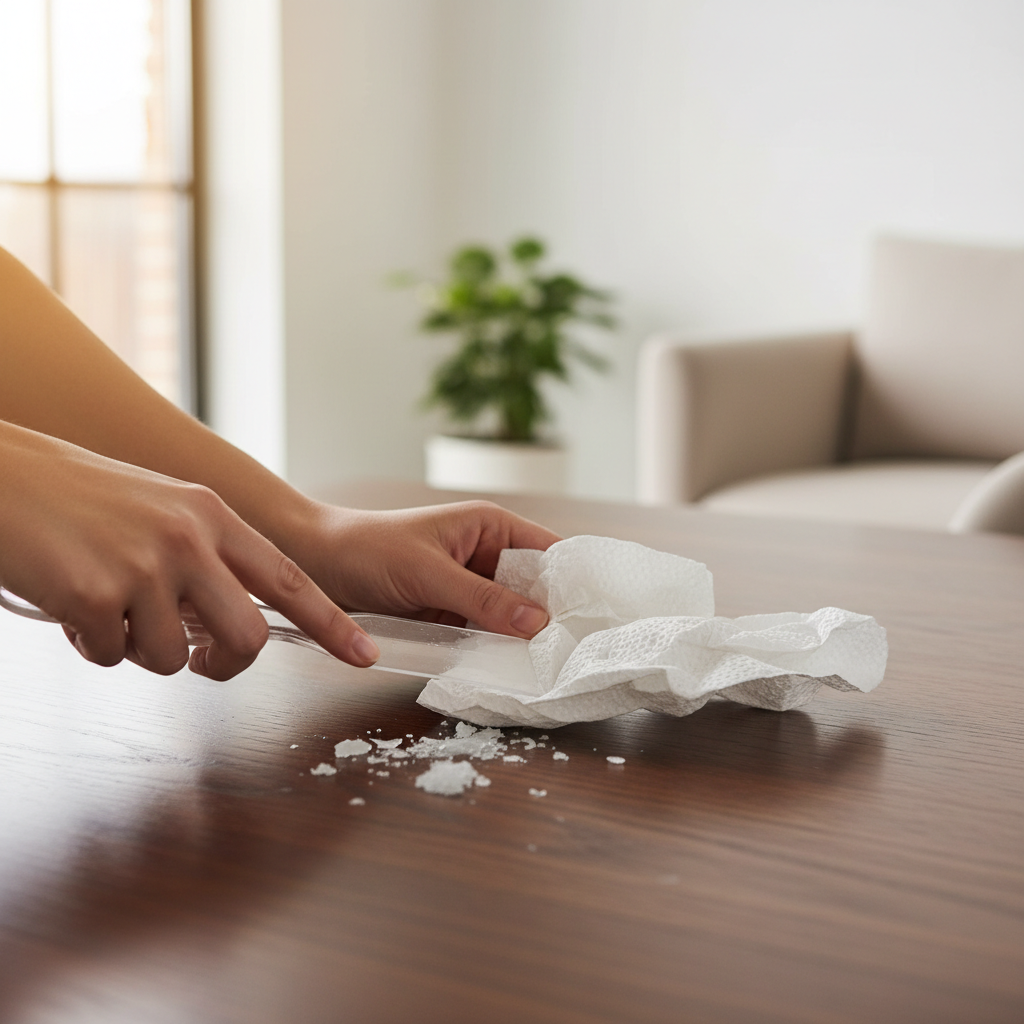
Before you start: identify your table surface (it changes everything)
Wax itself is usually easy, the trouble is what’s underneath, and what else is in the wax. Dyed candles, scented oils, and soot can leave residue that behaves differently on wood than on glass.
Use this quick guide, and if you’re unsure, treat it like finished wood and stay gentle.
| Surface | Best first method | What to avoid |
|---|---|---|
| Finished wood (sealed) | Cold pop-off, then mild soap | Metal scrapers, soaking, harsh solvents |
| Unfinished / raw wood | Cold pop-off, minimal moisture | Heat (can drive wax in), lots of water |
| Glass | Warm water + gentle scrape | Abrasive pads that scratch |
| Laminate / veneer | Cold pop-off, low heat if needed | High heat, aggressive scraping |
| Stone (marble/granite) | Cold pop-off, pH-neutral cleaner | Vinegar/acid (esp. marble), harsh degreasers |
Key point: when people damage tables, it’s often from tools (metal blades) or chemistry (wrong cleaner), not the wax itself.
Why wax sticks: what you’re really removing
Candle wax is basically a solidified oil, so it grabs texture and tiny pores, then hardens as it cools. That’s why a paper towel wipe usually just spreads a thin slick layer.
There are also “extras” that can linger after the chunk lifts:
- Fragrance oils that feel slightly greasy
- Dyes that tint the finish, especially on lighter wood
- Soot that creates a gray smudge near the drip line
So the goal is not only to remove the wax, it’s to remove the film without dulling the surface.
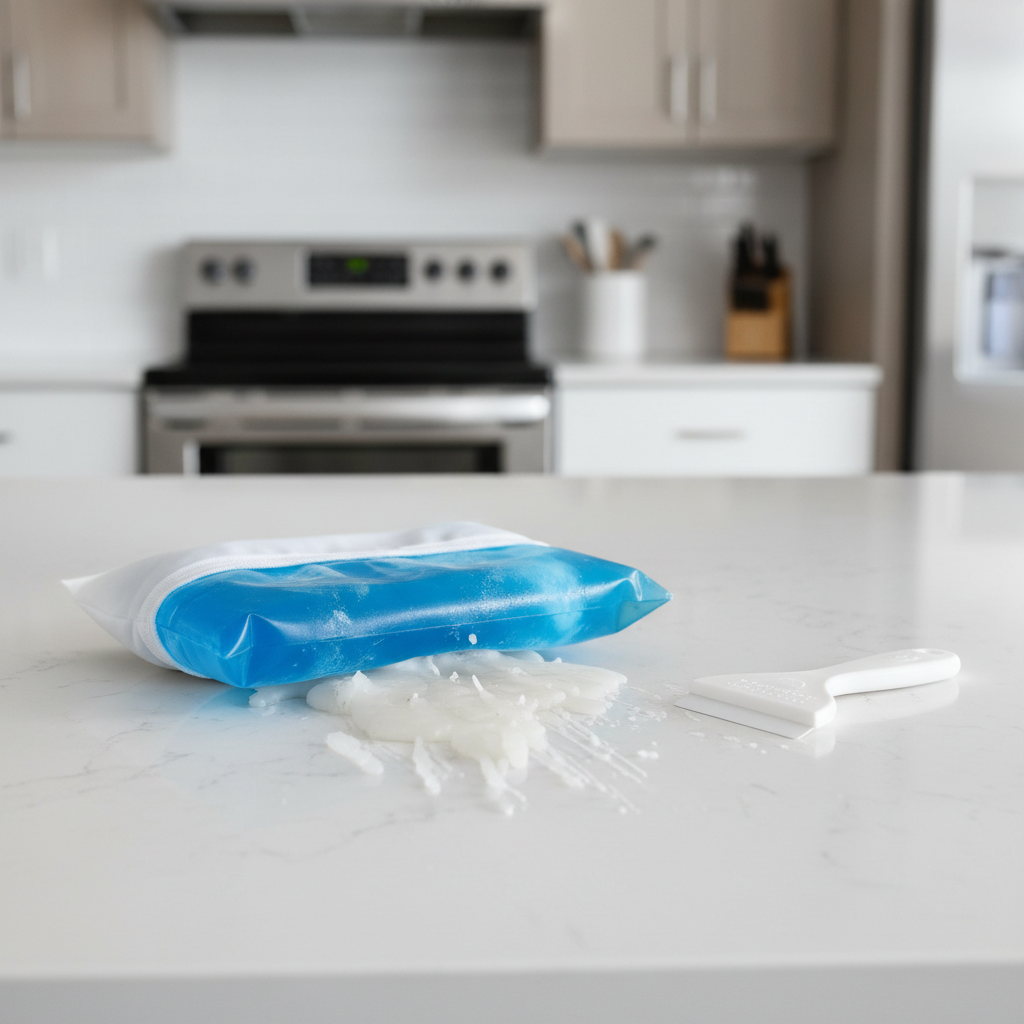
Quick self-check: pick heat or cold (and know when to stop)
If you want the least drama, decide your method with two questions: is the surface heat-sensitive, and is the wax thick and brittle or thin and smeary.
- Choose cold if the table is wood, laminate, veneer, or anything you worry about warping, whitening, or softening.
- Choose gentle heat if the surface is glass or very durable sealed stone, or if the wax is thin and refuses to “pop” off.
- Pause and reassess if you see haze, a lighter patch, or tacky finish, that’s usually the finish reacting, not “more wax.”
According to the U.S. Consumer Product Safety Commission (CPSC), burn and fire risks increase with candles, so it’s smart to work with unplugged heat tools carefully and keep flammables like paper towels controlled when warming wax.
Method 1 (cold method): harden, lift, then clean the film
This is the approach I’d default to for most dining tables and coffee tables because it keeps heat away from the finish.
What you’ll need
- Ice pack or a bag of ice wrapped in a thin towel
- Plastic scraper, old gift card, or plastic putty knife
- Soft microfiber cloth
- Mild dish soap + warm water
Steps
- Place the wrapped ice pack over the wax for 2–5 minutes, until the wax feels brittle.
- Lift the wax with the plastic edge, working from the outside toward the center so you don’t skid across the finish.
- Wipe crumbs away with a dry cloth, don’t rub hard yet.
- Mix a few drops of dish soap in warm water, dampen the cloth, and wipe the area to remove any waxy film.
- Dry immediately with a clean cloth, especially on wood and veneer.
If you’re trying to figure out how to remove candle wax from table surfaces without leaving a slick spot, this last “film wipe + dry” step is the one people rush.
Method 2 (gentle heat method): soften, blot, then finish with a safe cleaner
Heat works well when wax is thin or spread out, but keep it controlled, too much heat can soften finishes, loosen veneer glue, or create a cloudy patch on some wood coatings.
What you’ll need
- Hair dryer (preferred over a heat gun)
- Paper towels or clean cotton cloth
- Plastic scraper (optional)
- Surface-appropriate cleaner (see next section)
Steps
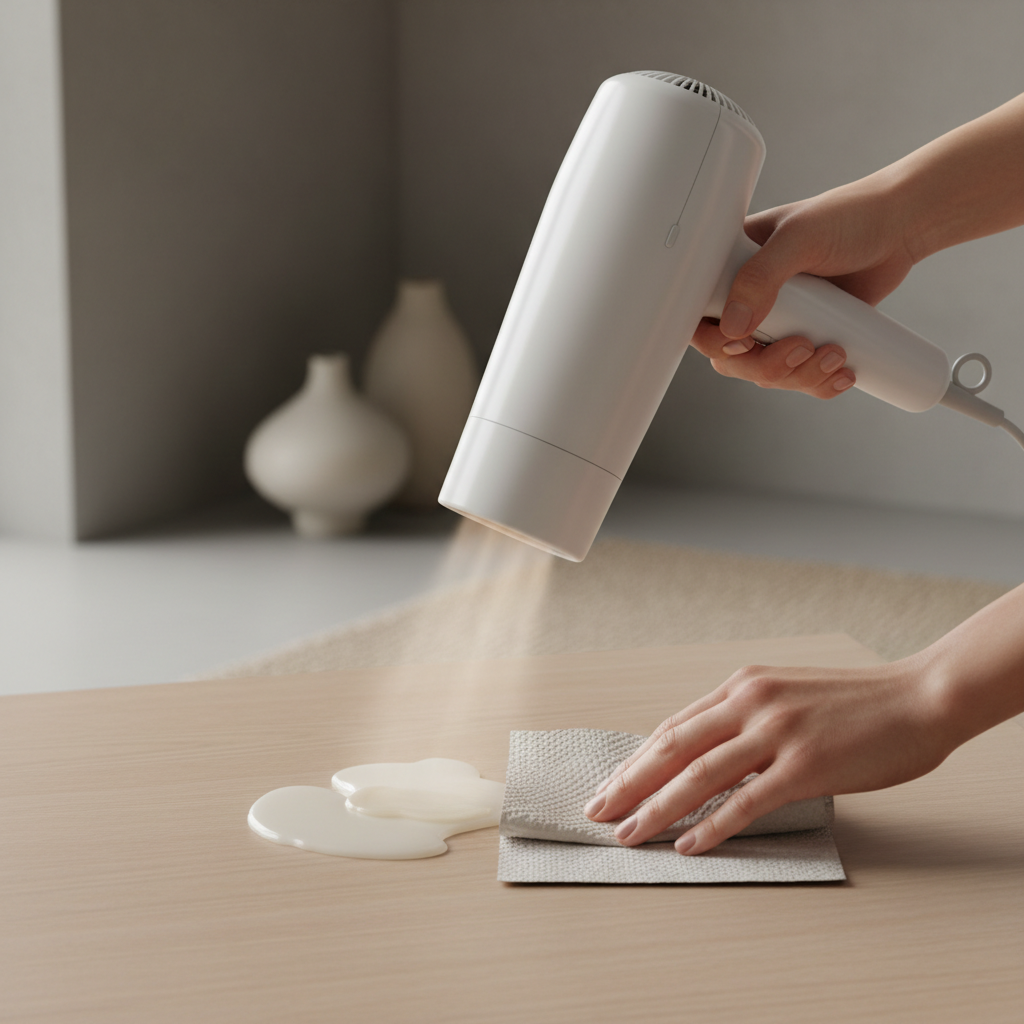
- Hold the hair dryer several inches away, use low to medium heat, and warm the wax just until it turns glossy.
- Blot, don’t wipe, press paper towel onto the softened wax and lift straight up.
- Repeat with fresh towel sections, if you smear it around, you’re basically re-coating the table.
- Finish by cleaning the faint residue with the right product for your surface.
Surface-specific cleanup: wood, glass, laminate, and stone
Once the wax chunk is gone, the remaining work is usually residue management. This is where you protect shine and avoid “mystery haze.”
Finished wood tables
- Start with mild dish soap and water on a barely damp cloth, then dry right away.
- If there’s still an oily feel, a tiny amount of mineral spirits can work in many cases, but spot-test first in an inconspicuous area because finishes vary.
- After cleaning, consider a manufacturer-approved polish, if your table brand recommends one.
Unfinished wood
- Use the cold method and keep moisture minimal.
- If wax has penetrated grain, you may need gentle sanding and refinishing, at that point, it’s often worth asking a wood refinisher rather than guessing.
Glass
- Warm the wax slightly or use warm water to loosen edges, then scrape gently with a plastic edge.
- Finish with glass cleaner or a mild soap solution, then buff dry to avoid streaks.
Laminate and veneer
- Cold method first, then a mild cleaner.
- Keep heat low and brief if you must warm residue, prolonged heat can cause bubbling or adhesive issues.
Stone (granite, quartz, marble)
- Pop wax off cold, then use a pH-neutral stone cleaner when possible.
- Avoid vinegar or acidic cleaners on marble and some natural stone, etching can look like a dull watermark.
Common mistakes that make wax removal harder (or damage the finish)
- Using a metal razor blade on wood or laminate, one slip can leave a permanent scratch.
- Pouring boiling water on a table, it can warp wood or create finish haze.
- Scrubbing with abrasives to “get the last bit,” this often trades a tiny residue for a big dull spot.
- Reheating and wiping instead of blotting, it spreads wax into a thin, stubborn layer.
- Jumping to strong solvents without a spot test, especially on unknown finishes.
When to bring in help (or at least stop experimenting)
If you’re dealing with an expensive dining table, an antique finish, or a stone surface you can’t identify, it’s reasonable to slow down. The wax is rarely the expensive part, the finish repair is.
- Stop DIY if the area turns cloudy, sticky, or lighter in color after cleaning.
- Consider a furniture repair pro if wax soaked into unfinished wood or if dye left a visible stain.
- For marble or specialty stone, a stone-care professional can advise on safe poultices and polishing, products vary widely.
Practical wrap-up: a simple, repeatable routine
For most households, how to remove candle wax from table surfaces is easiest when you treat it as two jobs, lift the wax with cold or gentle heat, then remove the invisible residue with a surface-safe cleaner and a quick dry.
If you want a quick plan, keep a plastic card and microfiber cloth in your cleaning drawer, and use ice first unless you’re working on glass.
Action you can take today: spot-test any “stronger” cleaner on the underside of the table, and stick to plastic tools, that one choice prevents most cosmetic damage.
FAQ
How do I remove candle wax from a wood table without ruining the finish?
Use the cold method first, harden with an ice pack, lift with a plastic card, then wipe with a barely damp soapy cloth and dry immediately. Avoid metal scrapers and high heat, both can mark finishes.
Can I use vinegar to clean wax residue off my table?
On many sealed surfaces it may be fine in small amounts, but it’s risky on natural stone like marble and can be harsh on some finishes. If you don’t know the surface, mild dish soap and water is usually the safer starting point.
What if the candle wax has dye and left a color stain?
Lift the wax first, then try mild cleaning. If color remains on wood, stronger cleaners can also lift finish, so spot-test and consider professional help for valuable furniture, dyed wax can be surprisingly stubborn.
Is a hair dryer safe to use on a dining table?
Often yes if you keep it on low to medium, hold it several inches away, and heat briefly while blotting. If the finish starts to look cloudy or feels tacky, stop and switch to cold removal.
How do I remove wax from a glass table fast?
Warm the wax slightly, then lift it with a plastic edge, finish with glass cleaner and buff dry. Glass tolerates heat better than wood, but scratches still happen if you use abrasive tools.
What’s the best way to remove wax from a stone tabletop?
Cold pop-off is the safest start, then use a pH-neutral stone cleaner. Skip acidic cleaners on marble or limestone, etching can look like a permanent dull ring.
Why does the spot look cloudy after wax removal?
Cloudiness is often finish reaction or micro-scratching, not “leftover wax.” Try gentle cleaning and buffing first, and if it doesn’t improve, a refinisher may be able to blend or restore the sheen.
If you’re dealing with frequent candle drips, or you’d rather avoid trial-and-error each time, it can help to keep a small “wax kit” ready, a plastic scraper, microfiber cloths, and a surface-appropriate cleaner chosen for your specific table material.