
How to organize wrapping paper supplies in a small space comes down to one thing: stop storing “gift wrap stuff” as a pile, and start storing it as a kit you can grab, use, and put back in under five minutes.
If you’ve ever bought ribbon twice because you couldn’t find the first spool, or watched a roll of paper get crushed behind a coat rack, you already know why this matters. Small spaces punish messy storage, not because you’re doing it “wrong,” but because every inch needs a job.
This guide walks you through a practical system: a fast sort, a storage plan that fits closets and apartments, and a maintenance routine that keeps your supplies from creeping back into chaos.
Why wrapping supplies get messy in small spaces
Most clutter here isn’t “too much stuff,” it’s mismatched shapes. Long rolls, floppy tissue, tiny tags, and bulky bows do not stack nicely, so they end up in random corners where they get damaged.
- No single home for the category: supplies spread across drawers, bags, and closet shelves, so you can’t see what you own.
- Packaging lies: ribbon spools look tidy until they unravel, and gift bags look flat until they crease and collapse.
- Vertical space gets ignored: small homes often have tall closets, but wrapping paper sits horizontally and eats shelves.
- “Seasonal” becomes “permanent”: holiday wrap stays out all year because putting it away feels like a project.
According to OSHA, good housekeeping reduces trip hazards and helps keep walkways clear. You don’t need a perfect craft room, but it’s worth treating loose rolls and bins in tight hall closets as a safety and sanity issue.
A quick self-check: what kind of wrapping stash do you have?
Before buying containers, decide what you’re actually storing. This takes ten minutes and saves you from the classic mistake: choosing a bin that fits the space but not the items.
Pick your stash type
- Minimalist: 3–6 rolls, one small ribbon set, a handful of tags, mostly for birthdays.
- Family + holidays: 10–25 rolls, multiple bag sizes, tissue in bulk, tape refills, gift labels.
- Gift-giver / crafty: specialty papers, extra bows, multiple ribbon widths, tools like scissors, corner punch, double-sided tape.
Answer these two questions
- Do you need roll storage (paper) more than small-item control (tags, tape, gift toppers)?
- Will you wrap gifts where the supplies live, or do you need a portable kit?
Once you know your type, how to organize wrapping paper supplies becomes a layout problem, not a willpower problem.
Sort first, then store: the 15-minute reset
Don’t start by “organizing” inside the closet. Pull everything out and sort on the floor or a table so you can see duplicates and damaged items.
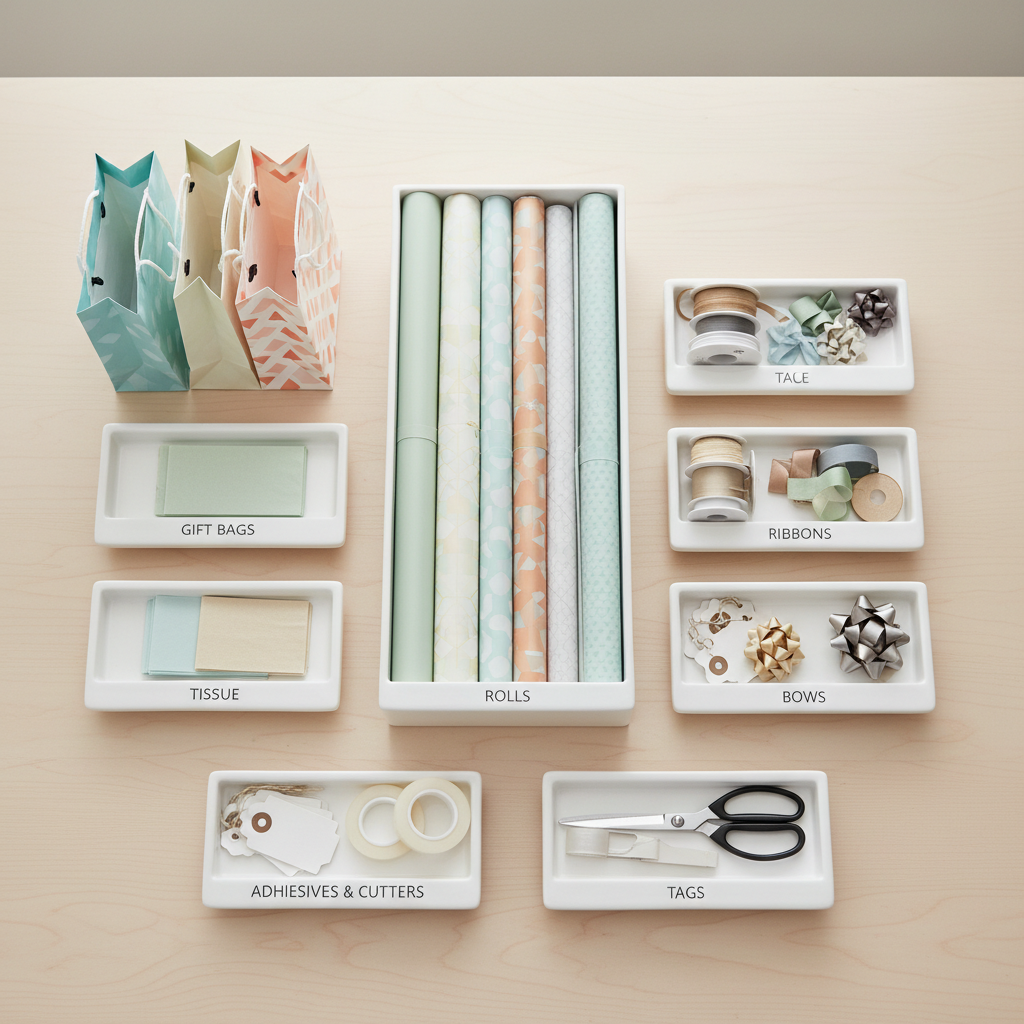
Use 5 simple categories
- Rolls: wrapping paper, kraft paper, cellophane
- Flat sheets: tissue, gift wrap sheets, cardstock
- Bags & boxes: gift bags, boxes, mailers
- Small accessories: ribbon, bows, tags, twine, stickers
- Tools: scissors, tape, double-sided tape, ruler, pen/marker
Do a quick “keep” filter
- Crushed rolls that won’t lay flat: recycle if your local program accepts it, or cut into smaller sheets for small gifts.
- Half-used tape that won’t stick: toss, it will only slow you down.
- Gift bags with ripped handles: keep a couple for storage, donate or discard the rest.
Small spaces reward editing, but keep it realistic. If you wrap gifts monthly, you’ll feel the pain of over-decluttering fast.
Small-space storage options (with a simple decision table)
You can organize supplies in almost any home if you commit to one “zone” and store by shape. The goal: rolls stand up, flat items stay flat, small items get contained.
| Space you have | Best approach | Why it works |
|---|---|---|
| Coat/hall closet | Vertical roll bin + clear accessory box | Keeps rolls from crushing, accessories stay visible |
| Under-bed storage | Low rolling bin for rolls + flat file for tissue | Uses dead space, easy to slide out for wrapping |
| Apartment shelf or cube unit | Magazine holders for rolls + labeled pouches | Controls odd shapes without needing a deep closet |
| Behind a door | Over-the-door organizer for small items | Turns “tiny stuff” into quick-grab storage |
| No dedicated storage | Portable wrapping caddy + one roll case | You can pack it away, and still find everything |
When people ask how to organize wrapping paper supplies without a closet, the answer is usually “store less air.” Choose containers that match the item shape closely, not oversized tubs.
Set up your wrapping station (even if it’s just a corner)
You don’t need a permanent desk. You do need a repeatable setup so wrapping doesn’t turn into a scavenger hunt.
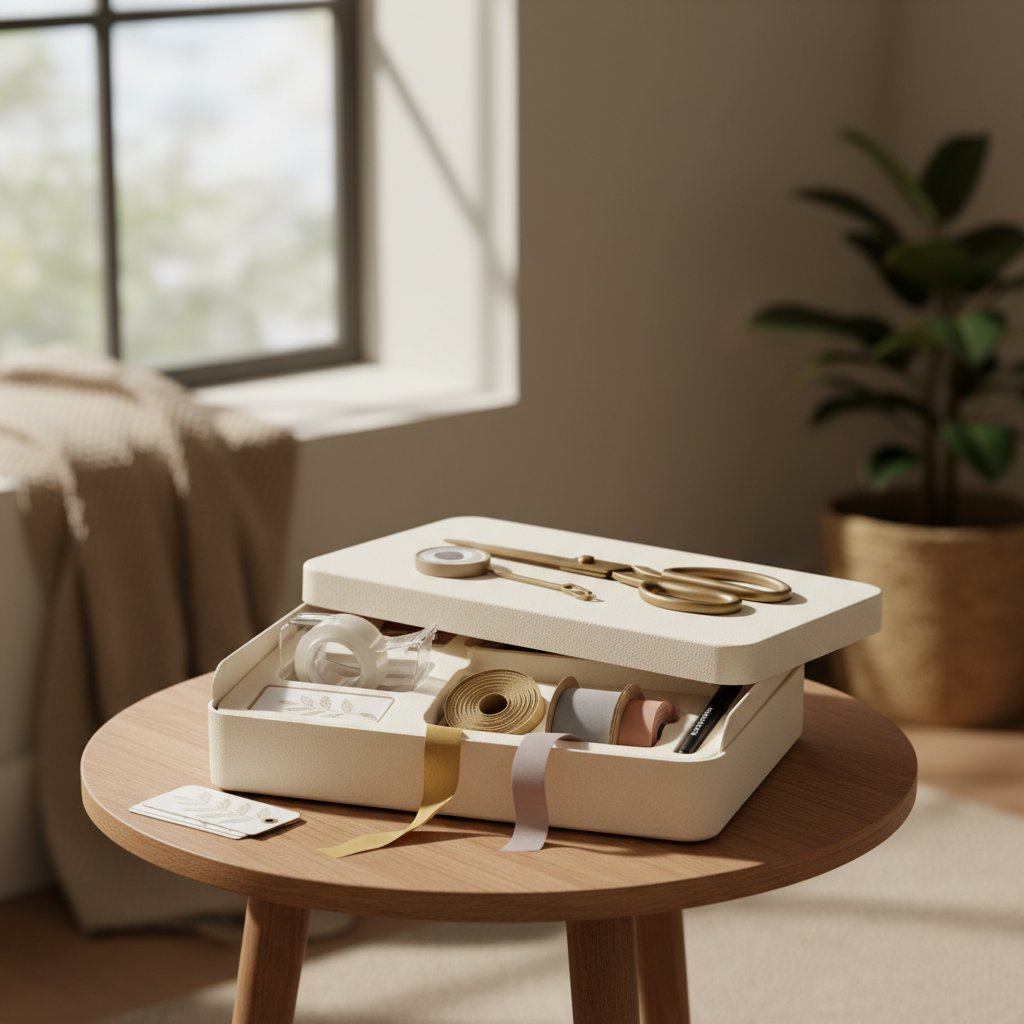
Build a basic “wrap kit”
- One cutting tool: scissors or a small craft knife if you’re comfortable using it safely
- Two tapes: clear tape + double-sided (optional, but makes gifts look cleaner)
- One marker: for tags and last-minute labels
- Backup basics: a spare tape roll, a few blank tags, a neutral ribbon
Keep this kit in a small pouch or lidded box. If you only do one thing from this article, do this. It’s the difference between tidy storage and storage that actually gets used.
Practical layouts for tight closets and apartments
Here are setups that work in real homes, including the awkward ones with one shallow closet and too many jackets.
Layout A: The “vertical roll zone”
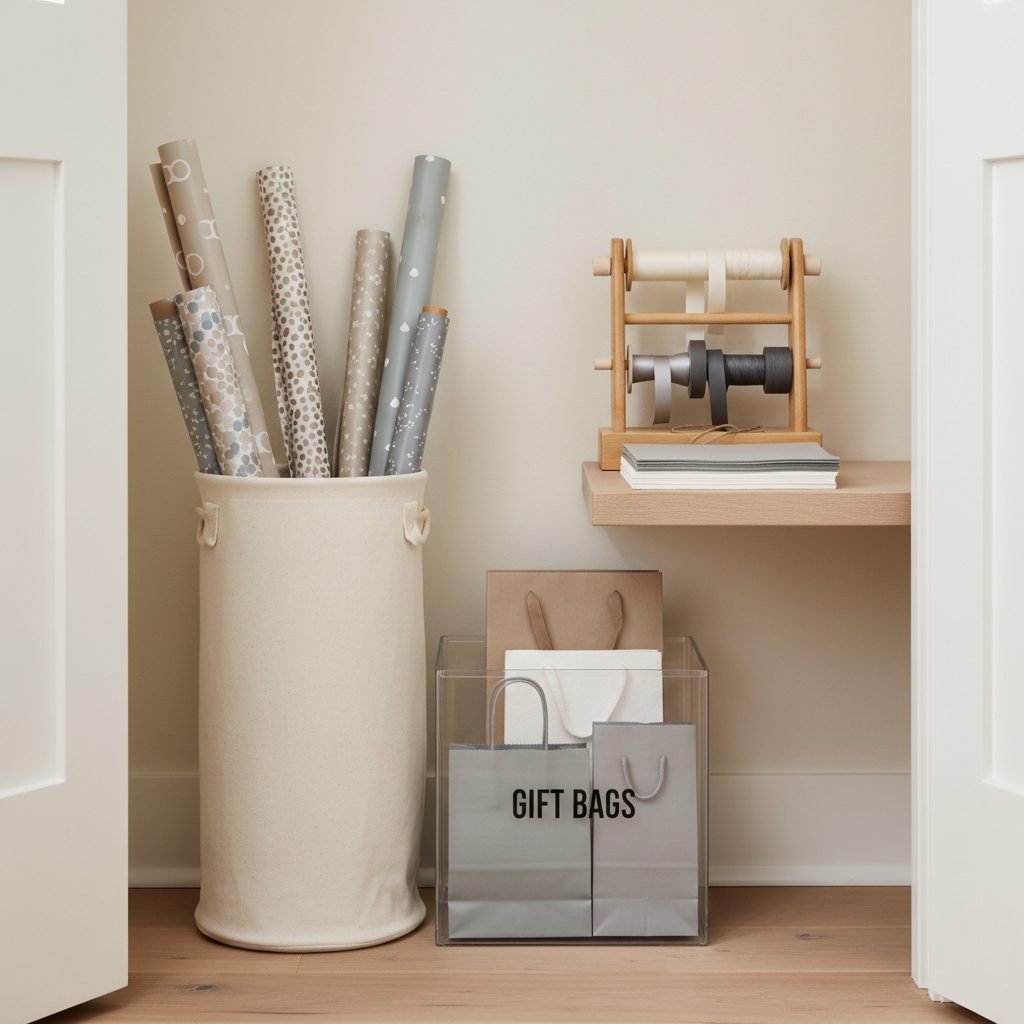
- Stand rolls upright in a tall bin, laundry sorter, or purpose-built wrapping paper container.
- Put tissue and flat sheets in a slim file box or document case, stored upright like folders.
- Use one clear box for accessories, with small cups or divider inserts so ribbon doesn’t tangle.
This layout protects paper edges and makes it obvious when you’re running low, which is exactly what you want in a small space.
Layout B: The “under-bed wrap drawer”
- Choose a low-profile bin that fits full-length rolls, ideally with wheels.
- Add a flat tray for tags and tape so small items don’t migrate to corners.
- Store bags folded by size, with one or two “daily drivers” on top.
If your living space doubles as your wrapping space, under-bed storage keeps the mess out of sight, but still close.
Layout C: The “no closet” approach
- One roll case (or a tall tote) for paper
- One portable caddy for tools and accessories
- One slim folder for tissue and gift wrap sheets
This is the simplest way to organize in a studio apartment, and it keeps you from expanding into multiple random drawers.
Common mistakes that make your system fail
- Storing rolls flat on a shelf: they dent, slide, and become a mini avalanche every time you grab one.
- Mixing tools with supplies: scissors and tape get buried under bows, then you quit mid-wrap.
- Keeping every gift bag “just in case”: bags take more volume than people expect, so set a limit by size.
- No label, no return: if a box isn’t labeled, it becomes a junk box within a month.
One more that’s easy to miss: buying a container before you pick a home for it. In small spaces, the location is the strategy.
When to upgrade storage or ask for help
If supplies routinely spill into walkways, or you’re stacking heavy bins overhead, consider a safer setup. You might prefer lighter containers, lower shelves, or relocating supplies to a more accessible area.
If you have mobility limitations, back pain, or balance concerns, it may be worth asking a family member or a professional organizer to help set up storage at a comfortable height. The “best” system is the one you can maintain without strain.
Key takeaways (save this)
- Store by shape: rolls upright, flat items flat, small items contained.
- Create a wrap kit so tools never disappear.
- Choose one zone in the home, even if it’s under the bed.
- Limit gift bags by size and quantity, they expand fast.
Organizing gift wrap isn’t about being “crafty,” it’s about making the next gift easy. Pick a layout that matches your space, set up your kit, and you’ll feel the difference the next time a birthday sneaks up.
If you want a quick action step today, do this: gather everything, sort into the five categories above, and assign each category a single container. That’s the moment how to organize wrapping paper supplies stops being a project and starts being a habit.
FAQ
How do I organize wrapping paper supplies in a small apartment with no closet?
Use a two-piece system: a tall tote (or roll case) for paper and a small caddy for tools and accessories. The key is portability so you can pack it away after wrapping.
What’s the best way to store wrapping paper rolls so they don’t get crushed?
Keep rolls upright in a tall bin or purpose-made wrapping paper container. Upright storage protects edges better than stacking them flat, especially on crowded shelves.
How should I store tissue paper so it stays flat?
Slide tissue into a document case, magazine file, or a slim lidded box. Avoid deep bins where it folds and crumples under heavier items.
How do I keep ribbon from tangling in storage?
Store ribbon in a divided box or on a small spool rod, then secure the loose end with a clip or a small piece of tape. If you toss spools into a bin loose, tangles are almost guaranteed.
How many gift bags should I keep in a small space?
Keep a small mix of sizes you actually use, plus a couple neutral bags for emergencies. If you’re constantly digging through a mountain of bags, it usually means you’re keeping too many medium sizes “just in case.”
How often should I reorganize my wrapping supplies?
A full reset once or twice a year works for many households, with a 2-minute put-back after each use. If holidays are your busy season, do a quick check right after to prevent damage and duplicates.
Is it worth buying a dedicated wrapping paper organizer?
Sometimes, especially if you have many rolls and limited closet space. But a tall bin plus a small accessory box often works just as well, as long as everything has a consistent home.
If you’re trying to simplify gift wrap in a tight home and would rather not guess which bins or cases fit your mix of rolls, bags, and accessories, a ready-to-go organizing set can be a calmer option, you get a defined “home” for each category without overbuilding a system.