
Best budget ceiling lights for bedroom shopping usually goes wrong in the same two ways: the light ends up too harsh at night, or it looks great online but feels cheap and flat once it’s on your ceiling.
The good news is you can get a cozy, “hotel-ish” bedroom vibe on a realistic budget if you pick the right fixture type, bulb color, and sizing. Most of the ambiance comes from light quality and placement, not price tags.
This guide breaks down what actually matters, a quick self-check to narrow your options, and a practical shortlist of budget-friendly ceiling light types that tend to work well in U.S. bedrooms.
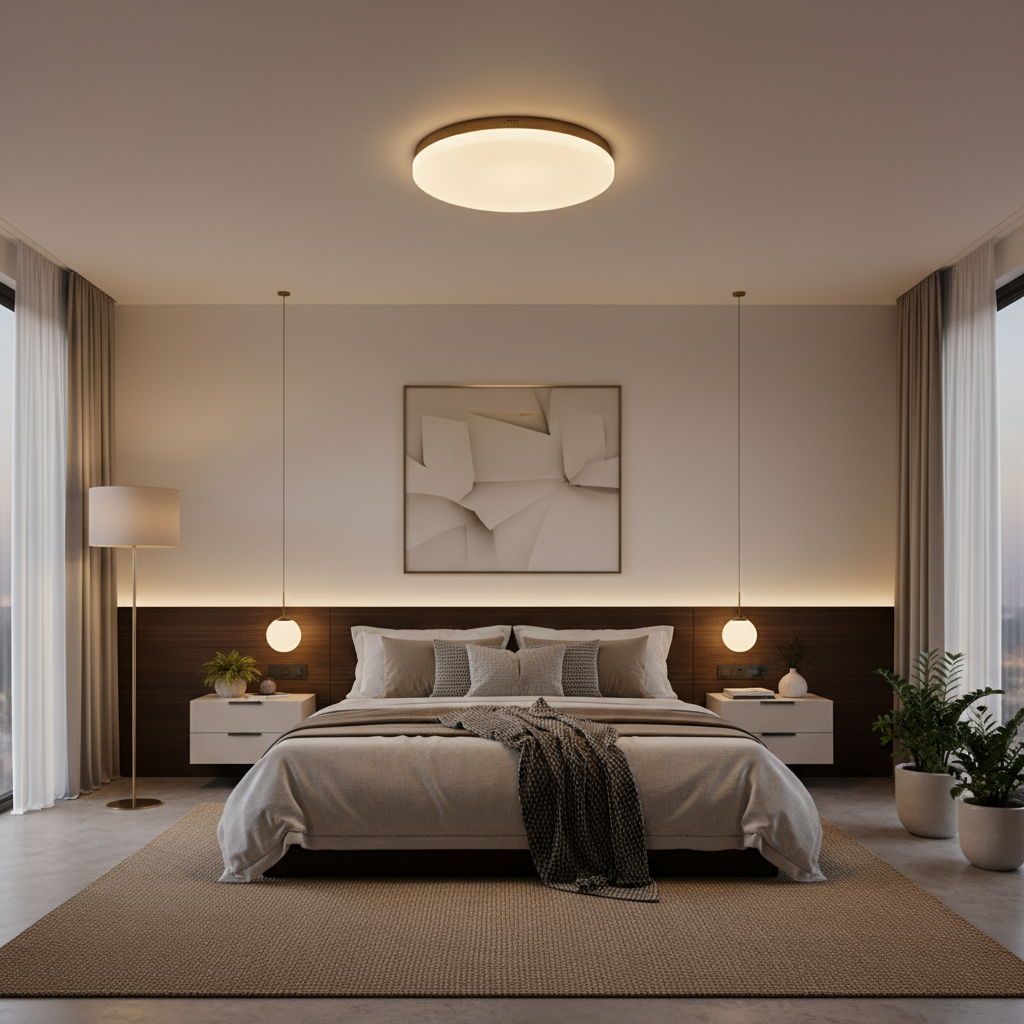
What “bedroom ambiance” really means (and why ceiling lights matter)
Ambiance is basically how your room feels at night when you’re winding down. In bedrooms, that usually means low glare, warm color temperature, and smooth dimming. A ceiling fixture sets the baseline, then lamps do the “fine tuning.”
Ceiling lights matter because they’re the most dominant source in the room. If the overhead is cold-white or exposes a bare bulb, the whole space can feel clinical even if everything else is soft and cozy.
- Glare control: diffusers, shades, or indirect designs reduce “hot spots.”
- Color temperature: warm white (often around 2700K–3000K) tends to read as relaxing in bedrooms.
- Brightness range: you want enough light to clean and dress, but not so much that bedtime feels like a hallway.
Why budget ceiling lights disappoint: the common failure points
Most complaints about affordable fixtures come down to a few predictable issues. If you spot these early, you’ll avoid a lot of returns.
- Bad diffuser materials: thin plastic can create uneven light or yellowing over time, especially with higher-heat bulbs.
- Wrong bulb pairing: a decent fixture with a cool 5000K LED bulb still looks harsh. The bulb choice can make or break “ambiance.”
- Undersized fixtures: a small light in a bigger bedroom pushes you to use brighter bulbs, which often increases glare.
- Flicker or noisy dimming: not all LEDs and dimmers play nicely. You may get flicker, buzzing, or a narrow dimming range.
- Cheap finishes: thin plating on “brass” or “nickel” can look off in warm bedroom lighting, even if it seemed fine in daylight photos.
According to the U.S. Department of Energy, LED lighting is widely used for efficiency and long life, but compatibility between LEDs and dimmers can vary by product, so checking dimmable ratings and dimmer lists often saves frustration.
Quick self-check: pick your best budget ceiling light type in 2 minutes
If you want the best budget ceiling lights for bedroom comfort, start with these questions. Your answers usually point to one or two fixture styles.
1) How much ceiling height do you have?
- 8 ft or lower: flush mount or low-profile semi-flush reduces head-bump risk and visual clutter.
- 9 ft+: you can consider a small chandelier or deeper semi-flush for more character.
2) Are you sensitive to bright overhead light?
- Yes: prioritize fabric shades, frosted glass, or drum fixtures that hide the bulb.
- No / you want maximum brightness: an integrated LED panel or clear glass can be fine, but still aim for warm white.
3) Do you need dimming?
- Yes: choose “dimmable” on both the fixture (if integrated LED) and bulb, and confirm dimmer compatibility if using a wall dimmer.
- Maybe later: pick a fixture that takes standard bulbs, so you can switch to smart bulbs without replacing the whole light.
4) What vibe are you trying to create?
- Soft, cozy: drum shade, fabric, warm diffusion.
- Modern clean: low-profile LED, matte black or white.
- Classic: frosted glass dome, simple metal trim.
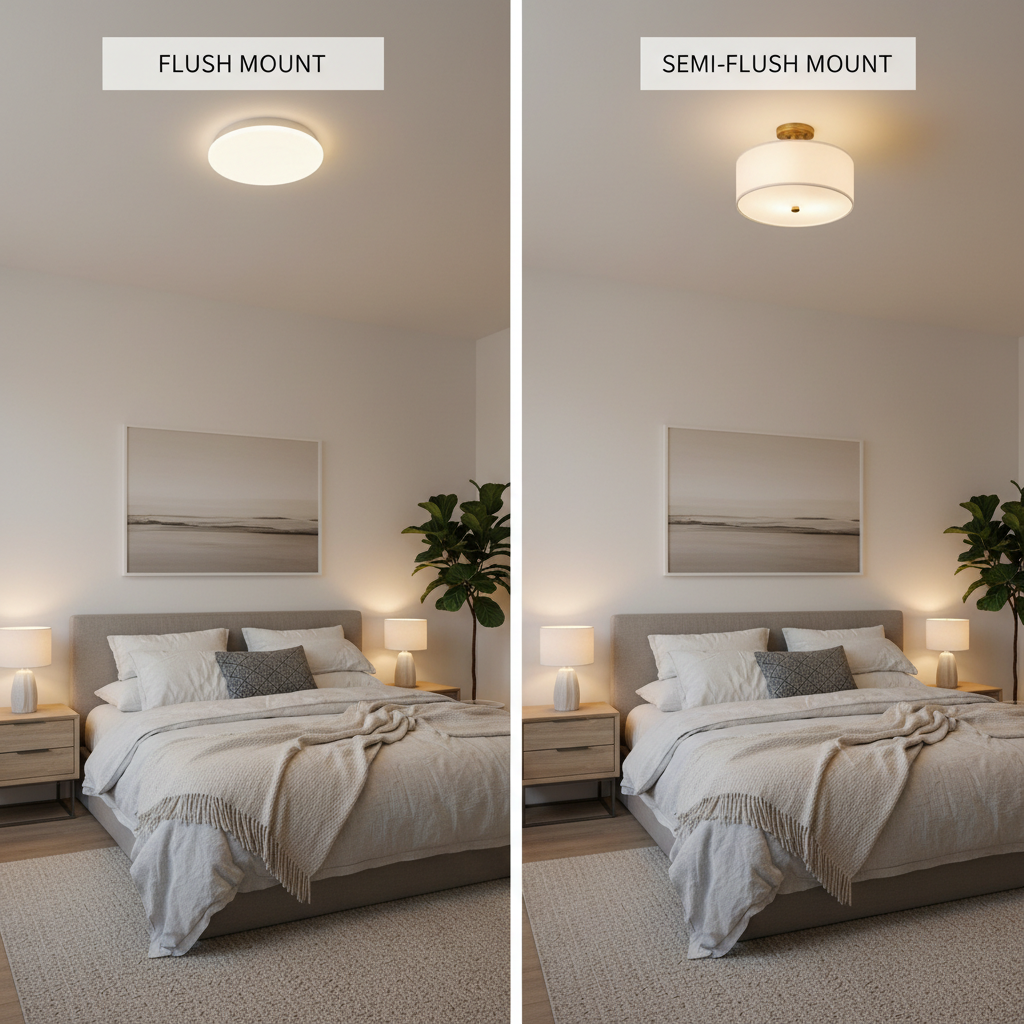
Budget-friendly ceiling light types that usually work well in bedrooms
You don’t need a “designer” fixture to get a calm look. These categories tend to perform well for the money, especially when paired with the right bulbs.
| Type | Why it’s bedroom-friendly | Watch-outs |
|---|---|---|
| Flush mount (frosted glass) | Low glare, fits low ceilings, spreads light evenly | Some domes look “builder basic”; choose warmer finishes |
| Drum shade (semi-flush) | Soft diffusion, more decorative, hides bulbs | Can trap dust; check shade height for low ceilings |
| Low-profile integrated LED | Clean modern look, very even light, slim | Dimming/failure means replacing unit; verify warranty terms |
| Schoolhouse-style globe | Classic, good diffusion if frosted | Clear glass globs can be glary unless bulb is fully frosted |
| Small chandelier (simple arms) | Adds character fast in higher ceilings | More shadows; can look busy in small rooms |
If your priority is pure comfort, a frosted flush mount or a drum shade semi-flush is hard to mess up. If your priority is “sleek and flat,” low-profile LED can look great, just be more careful about dimming and color quality.
How to choose bulbs and color temperature for a calmer feel
A lot of “best budget ceiling lights for bedroom” lists forget this part, but bulbs are where ambiance is won or lost.
- Color temperature: many bedrooms feel best around 2700K (warm) to 3000K (soft white). 4000K+ often feels more “task lighting.”
- Brightness (lumens): for general bedroom lighting, a common target is “enough to function” without blasting the room. If you like a dimmer room, plan on dimming or using lower-lumen bulbs.
- Color rendering (CRI): higher CRI usually means colors look more natural. If you care about how paint, bedding, and skin tones look, don’t ignore this spec.
- Bulb shape: for exposed-bulb fixtures, choose fully frosted bulbs to reduce sparkle and glare.
According to ENERGY STAR, certified lighting products are evaluated for performance and efficiency, and their program guidance can help when you’re comparing LED quality claims that otherwise feel vague.
Practical buying checklist: what to read before you click “Add to Cart”
Here’s the stuff experienced shoppers tend to check, even for a simple overhead light.
- Mounting type: flush vs semi-flush, and whether the canopy covers your existing electrical box cleanly.
- Max wattage / bulb base: common bases are E26 in the U.S. If it’s integrated LED, look for stated lumens and color temp.
- Shade/diffuser: frosted glass and fabric often read more “bedroom” than clear glass.
- Dimming notes: “dimmable” is not enough if you already have a specific dimmer switch, compatibility lists matter.
- Return reality: glass shipping damage happens, check return windows and packaging feedback.
- Finish undertone: warm brass vs bright gold vs champagne can look very different under 2700K light.
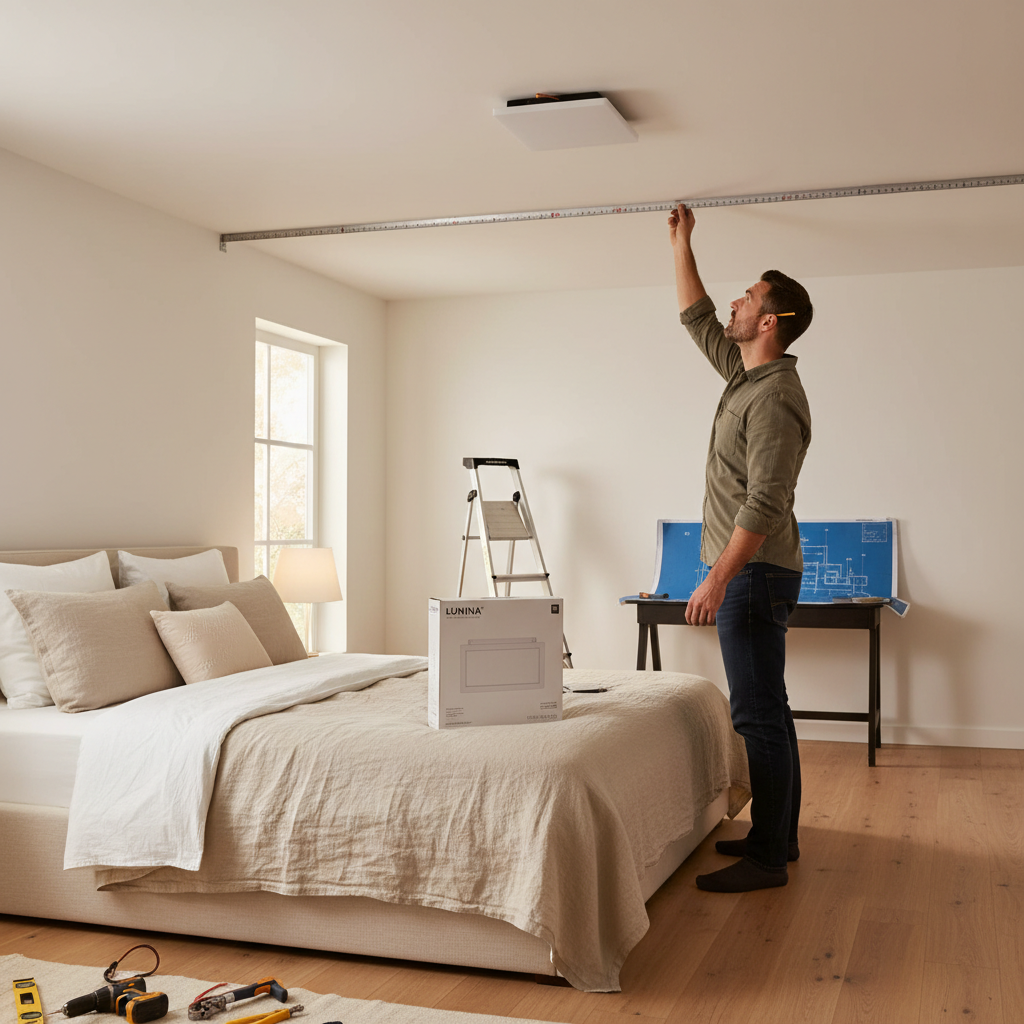
Setup tips that change the vibe fast (even with a cheap fixture)
If you install a budget fixture and it still feels “off,” it’s usually fixable without buying a new light.
Make the overhead a background light
A bedroom tends to feel better when the ceiling light isn’t the only source. Aim for a layered setup: overhead for general use, then bedside lamps or wall sconces for evening.
- Use dimming or lower-lumen bulbs so the ceiling light can sit at a comfortable baseline.
- Add two bedside lamps with warm bulbs so you can avoid overhead glare at night.
Avoid “spotlight on the bed”
If the fixture throws strong downlight right over the pillow area, the room can feel tense. A diffuser, a drum shade, or simply rotating the bed layout (when possible) often helps.
Match bulb warmth across the room
Mixing a cool overhead with warm bedside lamps creates a weird split-zone effect. Pick one warmth range and keep it consistent for the fixtures you use at night.
Safety and install notes (what’s DIY-friendly vs when to call an electrician)
Swapping a basic ceiling light can be a straightforward DIY project for many homeowners, but wiring conditions vary by home age and prior work quality. If anything feels uncertain, it’s reasonable to pause and get help.
- Turn off power at the breaker, not just the wall switch, and verify with a tester.
- If you see damaged insulation, brittle wires, or odd splices, an electrician may be the safer next step.
- For heavy fixtures or questionable ceiling boxes, confirm the box is rated to support the weight.
- If you’re adding a dimmer, check LED compatibility; mismatches can cause flicker or buzzing.
According to the Consumer Product Safety Commission, using products as directed and addressing electrical hazards promptly can reduce safety risks at home, so it’s worth taking wiring concerns seriously instead of “making it work.”
Key takeaways (so you can choose with confidence)
- Ambiance is mostly about glare control + warm light, not fancy hardware.
- For many rooms, frosted flush mounts and drum shade semi-flush fixtures deliver the easiest cozy upgrade on a budget.
- Plan for dimming or a layered lighting setup so the overhead doesn’t dominate your evenings.
- When in doubt, pick a fixture that takes standard bulbs so you can adjust color and brightness later.
If you’re choosing this week, pick your fixture type based on ceiling height, then decide on warm bulbs and a dimming plan. That combo gets you most of the “bedroom ambiance” people are really after.
FAQ
What color temperature is best for bedroom ceiling lights?
Many bedrooms feel most relaxing around 2700K to 3000K. If you read in bed or want a slightly “cleaner” look, 3000K often stays comfortable without turning too yellow.
Are integrated LED ceiling lights a good budget choice for bedrooms?
They can be, especially if you want a slim modern look and even light. The tradeoff is repair flexibility: if the LED driver fails, replacement may mean swapping the unit, so checking warranty details helps.
How bright should a bedroom ceiling light be?
It depends on room size and how much you rely on the overhead. A practical approach is to choose a fixture that can be dimmed or uses multiple bulbs, then tune brightness to your routine instead of guessing one perfect number.
Do I need a dimmer switch for better bedroom ambiance?
You don’t have to, but it’s one of the fastest ways to make an overhead light feel “softer.” If you rent or don’t want electrical work, dimmable smart bulbs can sometimes accomplish the same goal, assuming the fixture supports them.
What’s the best ceiling light style for a low ceiling bedroom?
Flush mounts and very low-profile semi-flush fixtures usually look proportional and keep clearance. A frosted diffuser is especially helpful to avoid a bright hotspot overhead.
Why does my new ceiling light flicker when dimmed?
Flicker often comes from LED bulb and dimmer incompatibility, or a bulb that isn’t truly dimmable. Trying a known-compatible bulb brand or swapping to an LED-rated dimmer often fixes it, but persistent issues may be worth discussing with an electrician.
How do I avoid a “cheap-looking” brass finish in warm light?
Look closely at customer photos taken at night, not just studio images. In warm 2700K light, some bright gold finishes can skew yellow; brushed or “champagne” tones usually look calmer.
Can a budget ceiling light still look high-end?
Yes, if the proportions are right and the light quality is warm and diffused. A simple drum shade, a clean frosted globe, and consistent bulbs across the room often read more “finished” than a busy fixture.
If you’re trying to narrow down options quickly, make a short list by ceiling height and glare tolerance, then filter for warm color temperature and dimming support. If you want a more hands-off route, bringing your room size, ceiling height, and a quick photo to a lighting pro or knowledgeable retailer can save time and reduce mismatched purchases.