
how to remove water stains wood usually comes down to one thing: figuring out whether you’re seeing moisture trapped in the finish, or damage that has already moved into the wood itself.
If you’ve ever set down a cold glass and found a cloudy ring the next morning, you’re not alone, and in many cases you can fix it at home with gentle heat or mild polishing, without stripping or sanding.
But not every mark is the same, and the fastest way to make it worse is to jump straight to harsh abrasives or strong solvents, especially on veneer or older finishes.
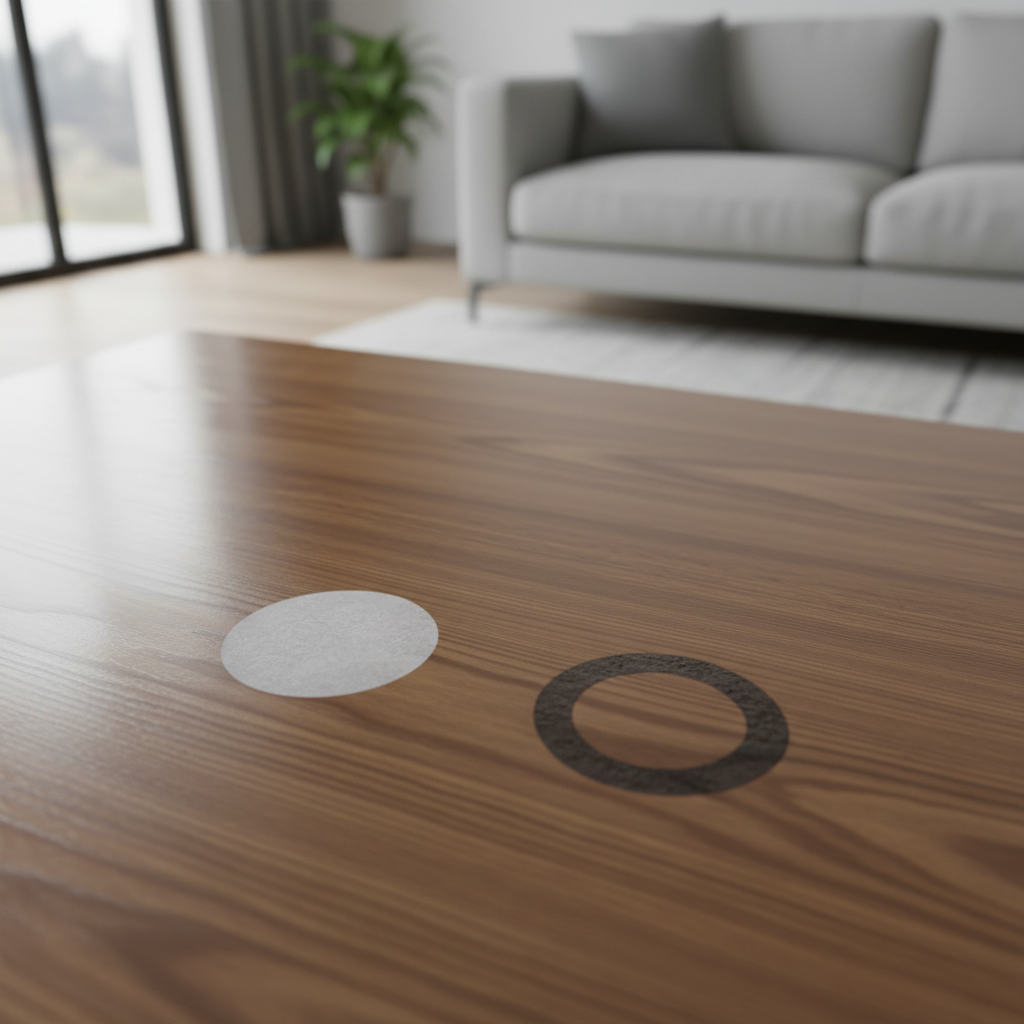
What water stains on wood actually are (and why the color matters)
Most “water stains” on furniture are really finish issues, not structural wood problems, at least at first. The finish is the protective top layer, such as polyurethane, lacquer, shellac, varnish, or oil-wax blends.
- White or cloudy rings usually mean moisture got trapped in the finish. This is the best-case scenario and often reversible.
- Dark brown/black marks often mean water penetrated deeper and reacted with tannins in the wood, or the finish failed and moisture reached the fibers. These can be harder and may need refinishing.
- Rough, raised grain suggests swelling in the wood or a softened finish, so aggressive rubbing can leave a permanent dull spot.
According to the U.S. Forest Service, wood is hygroscopic, meaning it naturally absorbs and releases moisture, which helps explain why prolonged moisture exposure can change the surface and sometimes the wood beneath it.
Quick self-check: identify your finish and how risky your next step is
You don’t need a lab test, but you do need a basic read on what you’re working with, because some finishes tolerate heat and mild polishing better than others.
Two-minute checklist
- Is it veneer? Look at the edge or underside. Veneer is thin and sanding can cut through fast.
- Does the stain feel raised or rough? If yes, skip heavy rubbing and start with the gentlest method.
- How old is the piece? Antique or unknown finishes can be delicate, so test in a hidden spot.
- What’s the stain color? White/cloudy usually responds to heat; dark stains often need deeper treatment.
Simple (optional) finish test
If you’re comfortable doing it, dab a tiny amount of rubbing alcohol on a cotton swab and touch an inconspicuous area for a few seconds. If it gets tacky, the finish may be shellac, which is more sensitive to alcohol and heat. If you’re unsure, treat it as “delicate” and stay conservative.
At-a-glance methods table (choose the least aggressive option first)
Here’s the practical decision tree most people wish they had before grabbing sandpaper.
| Stain type | Best first try | Why it works | Main risk |
|---|---|---|---|
| White/cloudy ring | Warm iron + cloth | Gently drives moisture out of finish | Overheating can haze or soften finish |
| White haze over a larger area | Hair dryer on low + movement | Even heat reduces trapped moisture | Holding heat in one spot can dull sheen |
| Light discoloration, not raised | Mild polish (non-abrasive) | Restores gloss, blends minor damage | Abrasive products can create swirl marks |
| Dark ring/black stain | Oxalic acid wood bleach (spot) | Targets tannin/iron-type darkening | Can lighten surrounding area, needs care |
| Finish is peeling or bare wood exposed | Refinish/repair the finish | Stain will return unless sealed | DIY refinishing can mismatch color/sheens |
How to remove white water rings (the “trapped moisture” fixes)
When people search how to remove water stains wood, they usually mean the classic white ring. Good news, these often respond to controlled warmth and patience more than elbow grease.
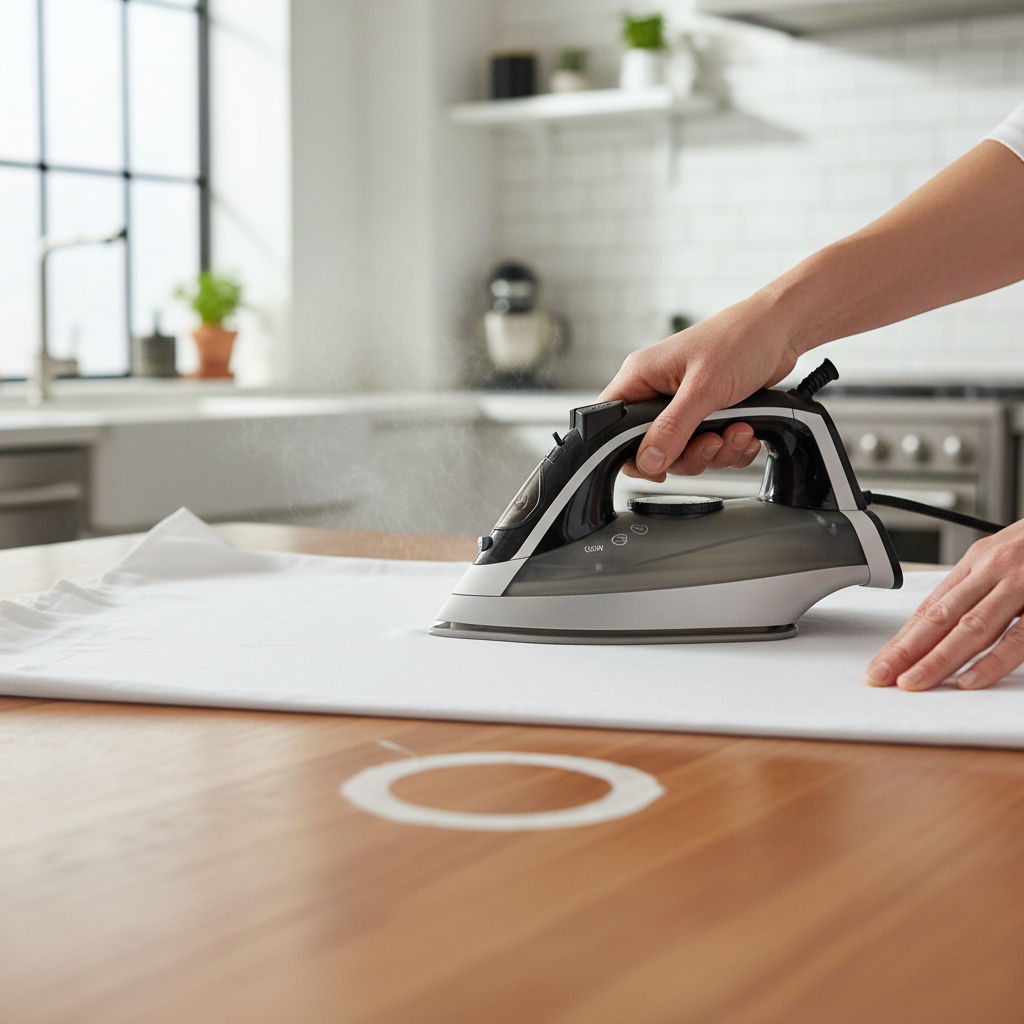
Method 1: Warm iron + cotton cloth (controlled, fast)
- Use a clean, plain cotton cloth, no texture, no prints.
- Set the iron to low heat, no steam.
- Place the cloth over the ring, then press the iron lightly for 5–10 seconds.
- Lift, check, and repeat in short passes until the cloudiness fades.
- Finish with a small amount of furniture polish or paste wax to even out sheen.
If you see the surface getting tacky, stop and let it cool. That’s your sign the finish is softening.
Method 2: Hair dryer on low (gentler, slower)
- Hold the dryer 6–10 inches away and keep it moving.
- Work in 30–60 second rounds, then pause to check progress.
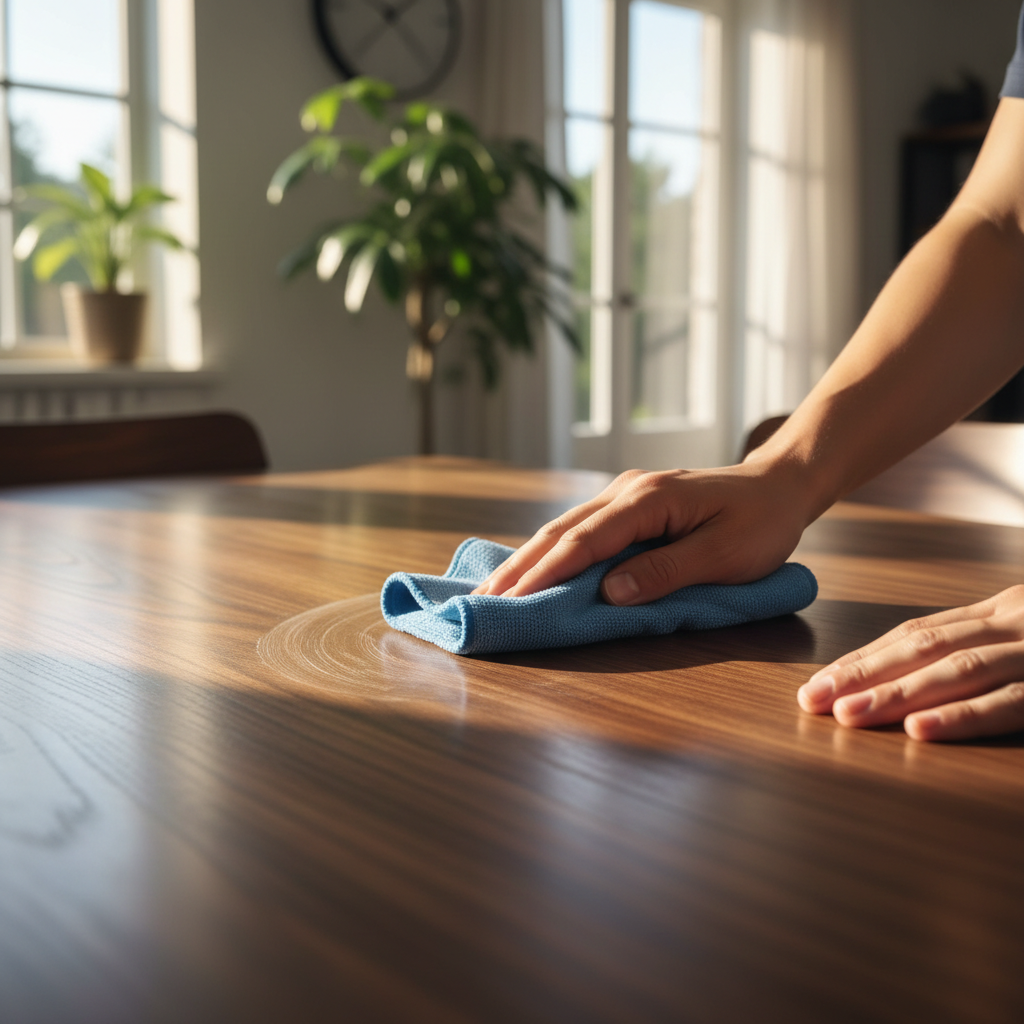
- Once improved, buff lightly with a microfiber cloth.
This approach tends to be forgiving on broader hazy patches, like after a hot pizza box or a humid day.
Method 3: Non-gel white toothpaste (only if you’re careful)
Toothpaste is mildly abrasive. On some finishes it helps; on others it leaves a dull spot that looks worse than the ring. If you try it, use a tiny amount, rub lightly along the grain, and stop the moment you see change.
How to handle dark water stains (when the wood is involved)
Dark stains often mean moisture got past the finish. You can still improve them, but expectations matter, and sometimes the “perfect” fix is refinishing.
Spot treatment with oxalic acid (wood bleach)
Oxalic acid is commonly used for dark water marks and some iron/tannin discoloration on wood. It’s not the same as chlorine bleach, and it needs careful handling.
- Work in a ventilated area, wear gloves and eye protection.
- Mix and apply according to the product label, then test in a hidden area first.
- Apply only to the stained area with a small brush, avoid flooding the surface.
- Let it work, then neutralize/rinse as directed, and allow full drying.
- Re-seal the spot afterward, because the finish protection likely failed there.
According to the National Park Service, conservation guidance often emphasizes testing cleaning methods in inconspicuous areas first, especially on historic finishes and sensitive materials, which applies here even for everyday furniture.
When a dark ring keeps coming back
If the finish has tiny cracks or worn-through spots, moisture keeps entering, so the mark returns. In that case, a local finish repair or full topcoat refresh is usually the real solution, not more stain remover.
Step-by-step: a safe workflow that avoids making the finish worse
This is the order that tends to minimize regret. You’re stacking gentle steps, not throwing everything at the table at once.
- Clean first: a slightly damp cloth, then dry immediately, so you’re not polishing grime into the finish.
- Start with heat for white haze: hair dryer or iron method, short intervals.
- Restore sheen: light buffing, then a conservative furniture polish or paste wax.
- Escalate only if needed: mild abrasive like non-gel toothpaste, only spot use.
- Dark stains: consider oxalic acid spot treatment, then repair the finish.
One small mindset shift helps: you’re not just removing a ring, you’re rebalancing a finish that got pushed out of its comfort zone by moisture and temperature.
Common mistakes that create bigger, uglier spots
- Steam ironing: steam adds more moisture, which is the opposite of what you want.
- Scrubbing in circles: many finishes show swirl marks; follow the grain if you rub at all.
- Jumping to sanding: on veneer, sanding can go from “small ring” to “exposed substrate” fast.
- Using strong solvents blindly: acetone, lacquer thinner, or alcohol can dissolve certain finishes.
- Over-oiling: “more oil” can leave a sticky surface that attracts dirt and looks blotchy.
If you’re unsure what a product will do, test on the underside or inside edge. That tiny detour saves a lot of frustration.
When it’s time to call a pro (or choose refinishing)
DIY methods are great for common rings, but some situations deserve a furniture repair shop or refinisher, especially if the piece is valuable or hard to replace.
- Antiques or sentimental pieces with unknown finish chemistry
- Large dark stains that spread beyond the ring shape
- Veneer bubbling, lifting, or cracks that suggest water got underneath
- Finish flaking, peeling, or widespread whitening across the top
- You tried gentle methods and the area now looks dull or uneven in sheen
If mold is suspected under a finish or inside joints, that can be a health concern, and it’s reasonable to consult a professional for inspection and safe remediation.
Key takeaways (save this before you start)
- White rings are often moisture trapped in the finish, heat methods usually help.
- Dark stains may be in the wood, expect a slower fix and possible refinishing.
- Go gentle first, because it’s easy to turn a ring into a permanent dull patch.
- After improvement, protect the area with a suitable polish or wax, and use coasters going forward.
Conclusion: get the stain out, then prevent the repeat
Once you know whether you’re dealing with a white haze or a dark water mark, how to remove water stains wood becomes much less mysterious, and a lot more about controlled, low-risk steps. Start with gentle heat for cloudy rings, reserve stronger options for deeper discoloration, and don’t ignore finish damage, because that’s usually why the stain happened in the first place.
If you want one simple action today, put coasters where you actually sit and add felt pads under plant trays, then spot-check your table under bright light, you’ll catch new marks while they’re still easy.
FAQ
How do you remove water stains from wood without sanding?
For white rings, use low heat with a cloth barrier, like a warm iron with no steam or a hair dryer on low. Light buffing and a mild polish often finishes the job without removing material.
Does mayonnaise really remove water rings from wood?
Some people see improvement because the oil can temporarily change how light reflects off a hazy finish, but it can also leave residue that attracts dirt. If you try any oily method, use a tiny amount and clean it off thoroughly afterward.
Will toothpaste damage a wood finish?
It can. Non-gel white toothpaste is mildly abrasive, so it might help a small spot, but on glossier finishes it may create a dull patch. Test first and rub very lightly along the grain.
How long does a white water stain take to disappear with heat?
Sometimes it fades in a minute or two of short passes, other times it takes multiple rounds with cooling breaks. If you’re seeing no change after several cautious attempts, stop and reassess rather than escalating force.
What removes dark water stains from wood furniture?
Dark marks often respond better to oxalic acid wood bleach than to heat. You’ll still need to re-seal the area after treatment, because the original finish protection likely failed.
Can I use vinegar to remove water stains from wood?
Vinegar is acidic and can dull or etch some finishes. In many cases it’s not the first choice for furniture tops; you’re usually safer starting with controlled heat for white haze or a finish-appropriate polish.
Why did a water ring come back after I removed it?
That usually points to a worn or micro-cracked finish that keeps letting moisture in. The stain may fade, then reappear with humidity or another cold glass, so adding protection or repairing the finish matters.
If you’re dealing with recurring rings, a large tabletop, or a finish you don’t want to gamble on, a wood-safe care kit and a simple prevention routine can be the more stress-free route than trial-and-error fixes.