
Rental friendly home decor ideas work best when you treat your apartment like a “temporary” space without settling for temporary-looking style. The goal is simple: make it feel like you, while keeping walls, floors, and fixtures as close to move-in condition as possible.
Why this matters is obvious the moment you think about your security deposit, move-out inspections, and the awkward back-and-forth about “normal wear and tear.” Most renters don’t want to gamble on what a landlord will consider “damage,” so they avoid decorating at all, and the place never feels finished.
This guide focuses on realistic swaps that look intentional, not like you’re hiding from the lease. You’ll get a quick self-check, room-by-room ideas, a comparison table, and a few “don’t do this” notes that can save you time and patching later.
Start here: what “no damage” usually means in rentals
In most leases, “no damage” really means no permanent changes. You can decorate, but you shouldn’t leave behind holes, torn paint, adhesive residue, warped floors, or altered electrical/fixtures.
Two quick reality checks help keep you out of trouble:
- Paint + drywall: Small nail holes may be acceptable in some buildings, but many property managers still charge for patch/paint, especially if holes are large or scattered.
- Adhesives: “Removable” products vary a lot depending on wall paint quality, humidity, and how long you leave them up. Test first, remove slowly, and follow the brand’s directions.
According to the Federal Trade Commission (FTC), reading and keeping copies of contracts is key when disputes come up, which applies to leases too. Translation: skim less, document more.
A quick self-check before you buy anything
If you want rental friendly home decor ideas that truly stay low-risk, take two minutes and answer these. It’s boring, but it prevents expensive “oops” moments.
- Wall finish: Is it flat/matte paint that scuffs easily, or satin/eggshell that wipes cleaner?
- Humidity: Do you run a humidifier, or does the bathroom stay steamy? High humidity can weaken adhesives.
- Move-out timeline: Are you leaving in 3 months or 3 years? Longer timelines demand more durable solutions.
- Landlord tolerance: Some buildings allow small picture nails, others want zero holes. If it’s unclear, ask in writing.
- Cleaning habits: If you rarely deep-clean walls, avoid products that need spotless paint to remove cleanly.
Key point: When you’re unsure, choose ideas that rely on weight and tension (rugs, lighting, freestanding storage) instead of glue and screws.
No-damage wall decor that doesn’t scream “temporary”
Walls are where renters get nervous, and fair enough. The good news is you can create height, color, and personality without drilling into studs.
Removable hooks and strips (used strategically)
- Use removable hooks for light frames, small mirrors, and calendars, not heavy shelves.
- Clean the wall first, let it dry, then apply. Rushing this step is how paint peels.
- For removal, pull tabs straight down, slowly, keeping tension close to the wall.
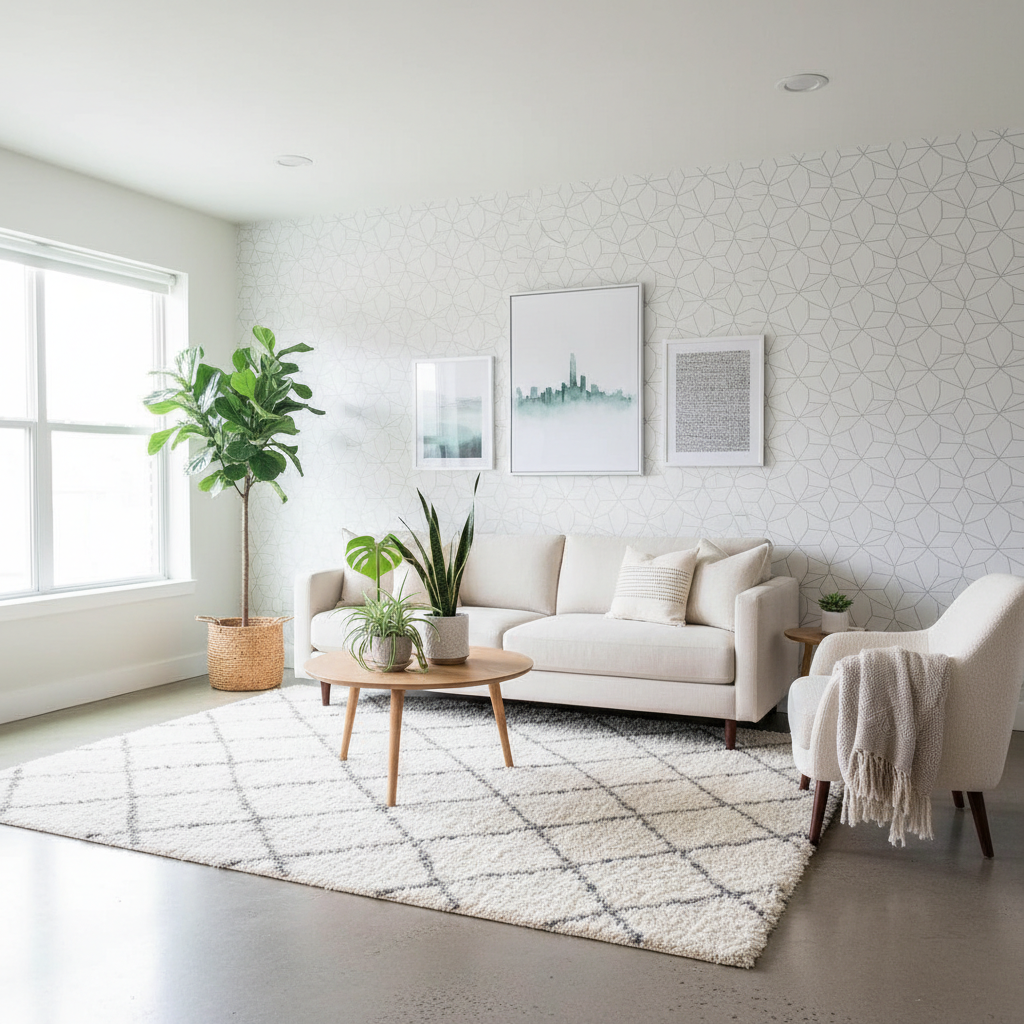
Peel-and-stick wallpaper and decals (test before committing)
- Do a 24–48 hour test patch behind a door or in a closet, then remove it.
- Use it on a single accent wall or inside a nook to avoid visual overload.
- Skip heavily textured walls; adhesion tends to fail, and edges curl.
Leaning art, ledges, and oversized pieces
- Large framed art looks expensive when it’s simply leaning on a console or shelf.
- Try a layered look: one big piece plus a smaller photo frame in front.
Textiles do the heavy lifting: rugs, curtains, and bedding
If your rental has bland flooring and builder-grade blinds, textiles can change the entire mood fast, and they’re easy to take with you.
- Rugs: Go bigger than you think. A too-small rug makes even good furniture look awkward. Use a rug pad to reduce slipping and help protect floors.
- Curtains: If you can’t drill, use tension rods for lighter curtains, or ask permission to swap hardware and store the originals.
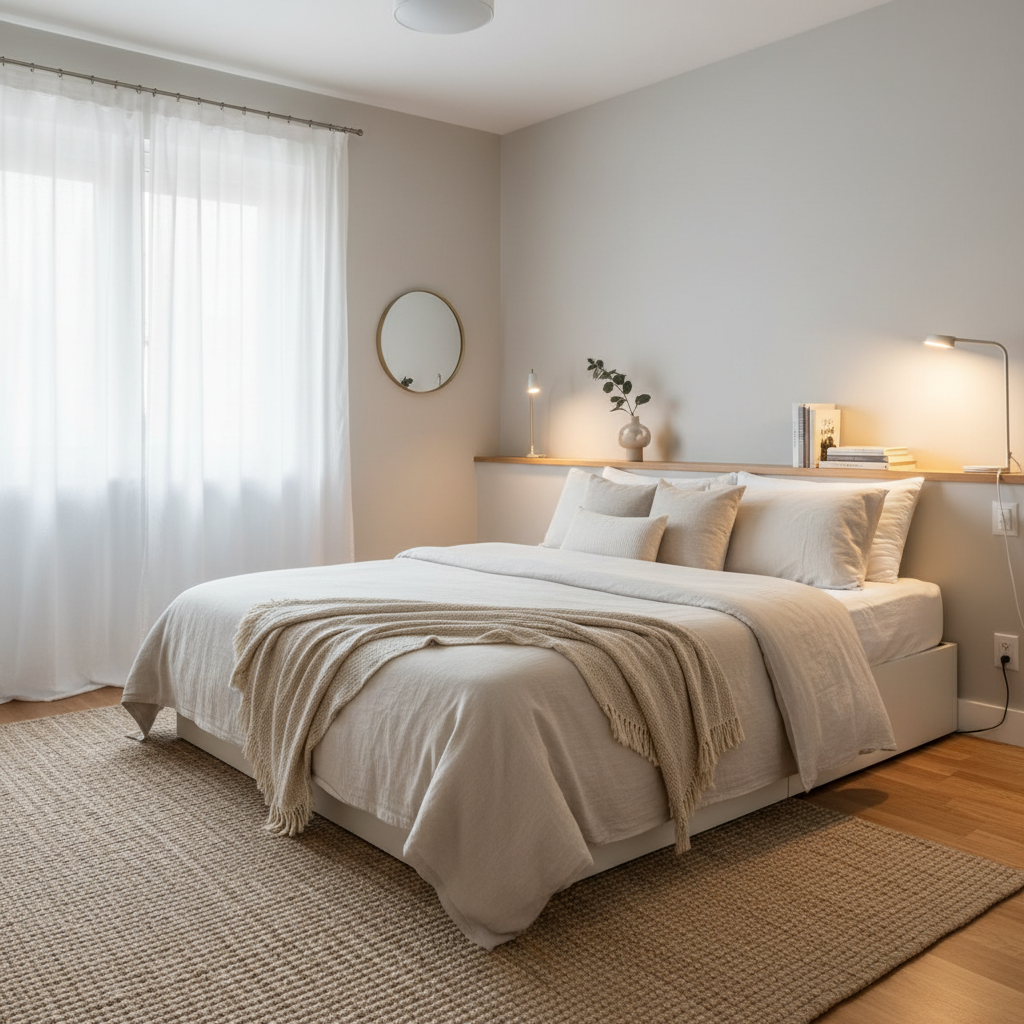
- Bedding: One cohesive palette (2–3 main colors) looks calmer than a pile of “cute” mismatched sets.
Lighting upgrades that are renter-safe (and actually flattering)
Lighting is where many apartments feel harsh. You don’t always need to touch wiring to fix it.
- Floor and table lamps: Add two light sources per room when possible, and mix warm bulbs for a softer feel.
- Plug-in sconces: Great for bedside lighting, and you can hide cords with paint-safe cable covers if your wall finish allows.
- Battery picture lights: Low commitment, high impact for art corners.
For anything involving wiring, fixture swaps, or uncertain electrical boxes, it’s safer to follow your building rules and consider a licensed electrician. According to the U.S. Consumer Product Safety Commission (CPSC), improper use of electrical products can create hazards, so if you feel unsure, don’t “DIY through it.”
Furniture and storage that add style without altering the unit
Some of the most effective rental friendly home decor ideas have nothing to do with walls. They rely on layout, height, and hiding clutter.
Choose pieces that do two jobs
- Storage ottomans that work as seating
- Bed frames with drawers if your closet space is tight
- Entry benches with shoe shelves to stop the “pile by the door” problem
Go vertical with freestanding solutions
- Tall bookcases create visual height and can act as room dividers.
- Over-the-door organizers add storage without adding holes.
- Tension pole shelving sometimes works in bathrooms or closets, but measure carefully and avoid over-tightening.
Quick comparison table: common no-damage options
This is the practical part: what’s easy, what lasts, and what tends to backfire.
| Decor option | Best for | Risk level | Pro tip |
|---|---|---|---|
| Removable hooks/strips | Frames, light decor, keys | Low to medium | Test on a hidden spot and remove slowly |
| Peel-and-stick wallpaper | Accent walls, backsplashes (non-heat areas) | Medium | Avoid textured paint and high-humidity corners |
| Tension rods | Curtains, under-sink curtains | Low | Choose the right diameter to prevent slipping |
| Large area rug + pad | Covering ugly floors, zoning spaces | Low | Size up so furniture legs sit on it |
| Plug-in lighting | Cozy ambience, task lighting | Low | Use cable management to keep it clean |
Practical room-by-room steps (so you don’t overbuy)
If you’ve ever ordered a cart full of decor and still felt “meh,” it’s usually because the plan was missing. Try this lighter sequence.
Living room
- Anchor with a rug, then add curtains or a throw to tie colors together.
- Add one statement piece: oversized art leaning on a console, or a large plant.
- Use a floor lamp to soften overhead lighting, then adjust bulb warmth.
Bedroom
- Upgrade bedding first, then add two bedside light sources if possible.
- If you want a “headboard moment,” try peel-and-stick behind the bed or a tall upholstered headboard that leans or attaches to the frame.
Kitchen and bathroom
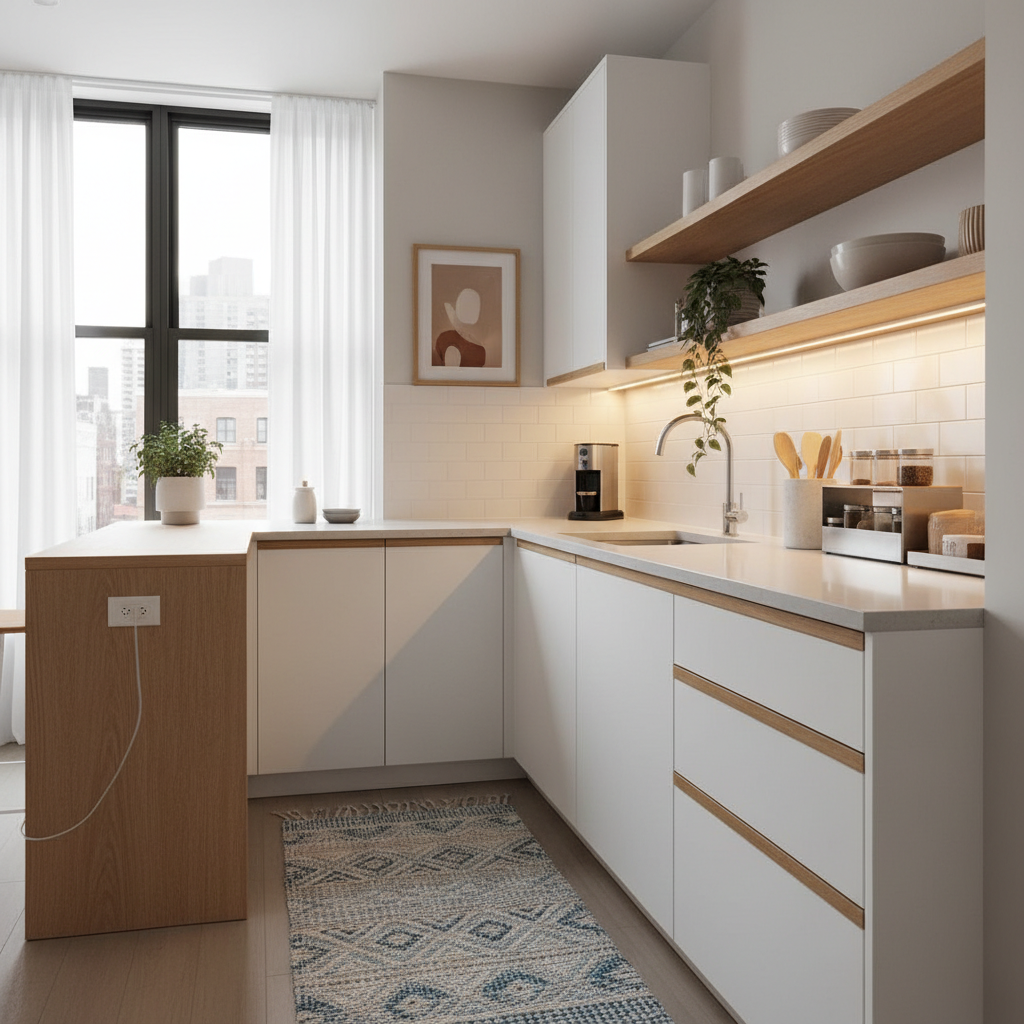
- Use removable organizers, trays, and bins before you attempt adhesive upgrades.
- Avoid anything near heat or constant steam unless the product is designed for it.
- Swap in nicer textiles: hand towels, a bath mat, a washable runner.
Common mistakes that cost deposits (or just look messy)
- Assuming all “removable” adhesives behave the same. Paint type, wall age, and time matter a lot.
- Hanging too much, too high. A few larger pieces often look cleaner than many small ones.
- Using contact paper on fragile finishes without testing. Some laminates and older cabinets can lift or discolor.
- Skipping cleaning before applying anything. Dust and oil create edge-curling and early failure.
- Ignoring floor protection. Furniture without pads can scratch, and some rubber backings can mark certain floors over time.
When it’s worth asking for permission or calling a pro
Sometimes the best “no damage” move is simply getting approval, especially if a small change improves the unit without risk.
- Ask in writing if you want to swap curtain rods, light fixtures, or paint.
- Consider a professional for electrical work, heavy mounting, or anything you can’t confidently reverse.
- If you’re dealing with mold, peeling paint, or crumbling drywall, decorating won’t solve the underlying issue, and you may want to flag it to management.
Conclusion: a rental can feel personal without leaving a trace
The best rental updates usually come from a few high-impact moves: textiles that change the tone, lighting that flatters, and wall decor that respects the paint. If you keep your plan simple and test materials before committing, you can get a homey look without stress at move-out.
Two actions that pay off fast: pick one color palette for the whole place, and choose one “hero” upgrade per room instead of chasing dozens of small fixes.
FAQ
- What are the safest rental friendly home decor ideas if my walls are fragile?
Prioritize rugs, lamps, curtains on tension rods, leaning art, and freestanding shelving. These rely less on adhesives and won’t pull paint. - Do Command strips always come off clean?
Not always. Many cases go fine, but removal depends on paint quality and whether the strip is pulled correctly. A hidden test spot helps reduce surprises. - Is peel-and-stick wallpaper actually removable?
Often, yes, but results vary by wall texture, humidity, and how long it stays up. A test patch and slow removal are the difference between “easy” and “ugh.” - How can I hang curtains in a rental without drilling?
Tension rods work well for lighter curtains. If you need heavier drapes, asking permission to install a rod and saving original hardware is usually the cleaner route. - What’s the fastest way to make a rental living room look better?
A larger rug, warmer lighting, and one oversized art piece (even leaning) usually changes the vibe more than small decor scattered everywhere. - Can I use contact paper on countertops or cabinets?
Sometimes, but test first. Some finishes react poorly to adhesives or removal, and heat/moisture can cause lifting. If the surface is already delicate, skip it. - How do I protect floors from furniture scratches?
Use felt pads on chair and sofa legs, and consider a rug pad under area rugs. If you have unusual flooring, your property manager may have specific guidance.
If you’re trying to decorate quickly and want a more “done” look without risking damage, it can help to start with a simple plan: one palette, one focal point per room, then add removable pieces that you can take to the next place.