
small space furniture multi functional is worth considering in 2026 because most “space-saving” pieces only work if they match your real layout, habits, and storage needs, not just the product photos.
If you live in a studio, share a small apartment, or you just want one room to do two jobs, multi-use furniture can be the difference between “always cluttered” and “actually livable.” But it can also backfire if you pick the wrong mechanisms, wrong sizes, or the wrong “one piece does everything” promise.
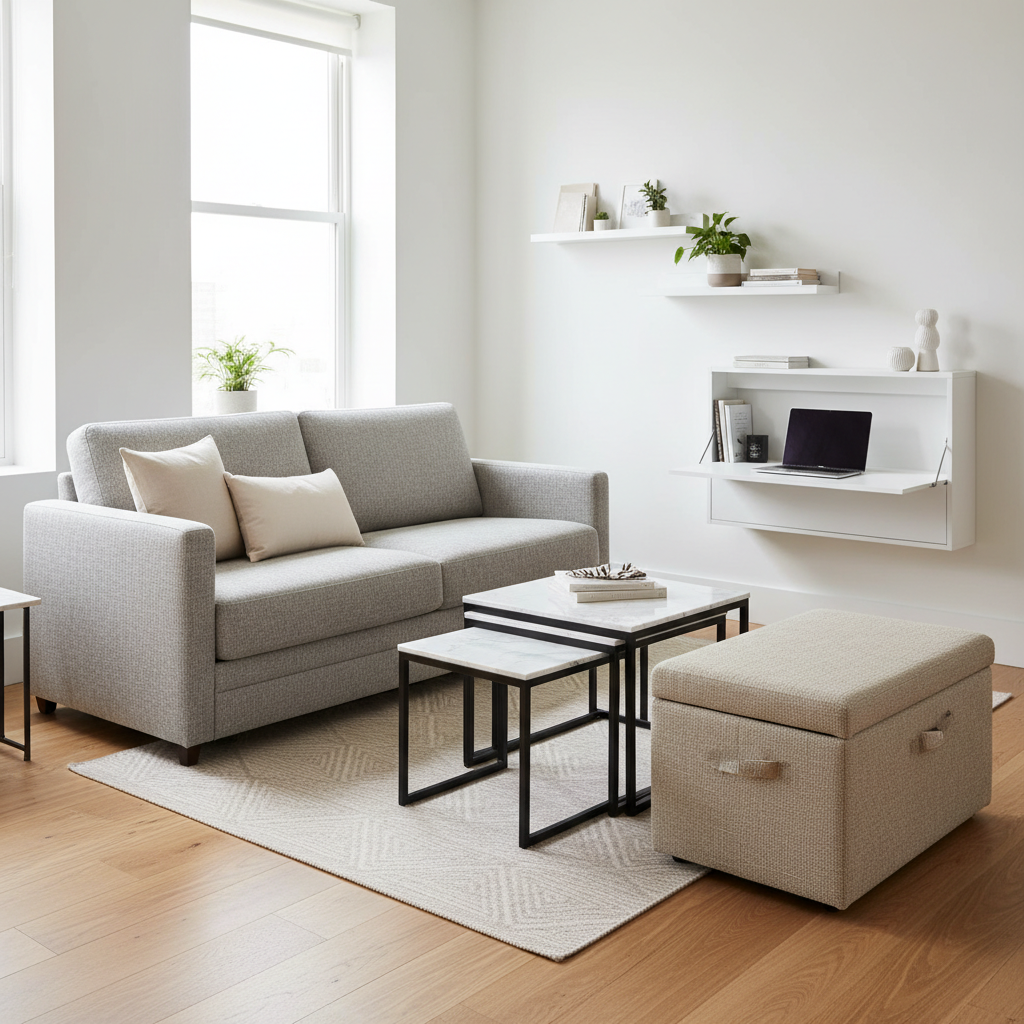
This guide focuses on what tends to work in real homes: how to decide which functions matter, what to measure, where quality shows up, and how to set up a room so it stays easy to use. You’ll also get a quick comparison table and a buying checklist you can screenshot.
What “multi functional” really means in a small space
In practice, multi functional furniture falls into a few categories, and each category solves a different pain point. Mixing them thoughtfully usually works better than chasing one “transformer” item.
- Convertible: changes form, like a sofa bed, daybed, fold-out dining table, or Murphy bed.
- Storage-integrated: hides volume, like lift-top coffee tables, storage beds, benches with compartments, or drawers under seating.
- Modular: reconfigures, like sectional pieces you can rearrange, stackable seating, or expandable shelving.
- Wall-mounted or fold-down: clears floor area, like a fold-down desk, wall table, or vertical bike storage paired with a narrow console.
One useful rule: if you’ll transform it more than a few times per week, the mechanism must be simple and comfortable to operate. If it’s annoying, you’ll stop using the “second function,” and the piece becomes dead weight.
Why small-space pieces fail (and how to avoid the usual traps)
Most disappointment comes from mismatched expectations. The furniture isn’t “bad,” it just doesn’t match the constraints of your room or your routine.
Common failure points you can predict
- Wrong scale: a “compact” sleeper sofa can still be too deep for a narrow living room, blocking circulation.
- Mechanism friction: heavy lift-tops, tricky latches, or mattress frames that pinch fingers. If kids are around, be extra cautious.
- Comfort tradeoffs: a dining bench with storage might look great but feel cramped for long meals.
- Storage that’s hard to access: if you have to move three items to reach one item, you won’t keep it organized.
- Weight limits and wall reality: wall-mounted desks and Murphy beds depend on studs and proper anchoring.
According to the U.S. Consumer Product Safety Commission (CPSC), tip-over incidents and furniture stability remain a safety concern in homes. In small rooms where you bump into things more often, stability and anchoring matter even more.
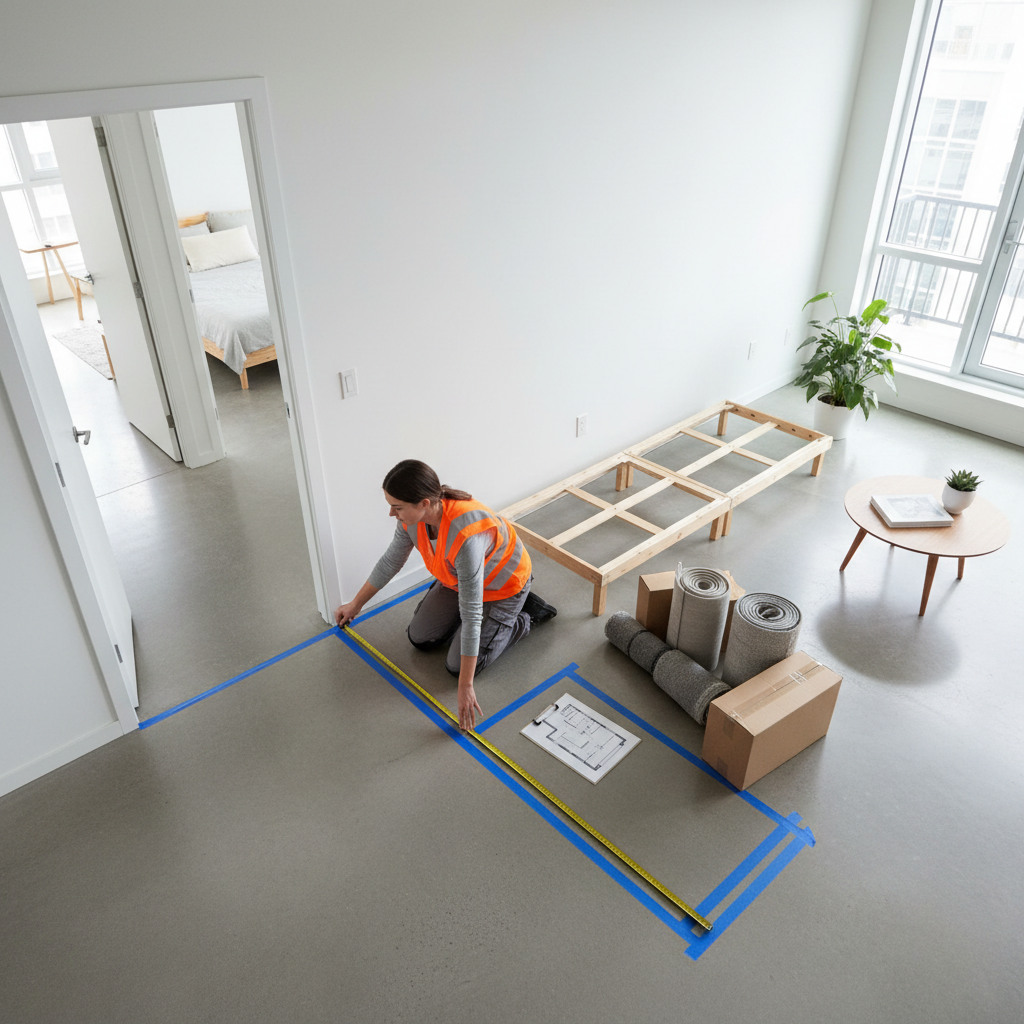
Another trap is buying too early. People often pick a product first, then try to “make it fit.” It’s usually cheaper to decide the room’s priorities, then shop with strict dimensions.
Quick self-check: what type of multi-use furniture do you actually need?
Before you browse, answer these quickly. You’ll narrow choices fast and avoid paying for features you won’t use.
- Do you host overnight guests? If yes, prioritize a sleeper that’s easy to deploy and comfortable enough for a full night, not just naps.
- Do you work from home 3+ days/week? A stable desk and ergonomic chair beats a “cute” fold-away setup.
- Is clutter mostly visual or functional? Visual clutter needs closed storage; functional clutter might need better zoning and access.
- Do you move often? Modular and lighter pieces travel better than built-ins or heavy lift mechanisms.
- What’s your biggest bottleneck: seating, sleeping, dining, or storage?
If you can name one bottleneck clearly, you’re already ahead. Many 2026 collections are designed to be “Instagram-flexible,” but your bottleneck decides what truly earns its footprint.
2026-friendly options that tend to perform well (with tradeoffs)
These categories show up year after year because they solve real constraints. The key is picking the right version for your lifestyle.
| Furniture type | Best for | Watch-outs | What to measure |
|---|---|---|---|
| Sleeper sofa / sofa bed | Guest-ready living rooms | Depth, mattress comfort, deployment space | Clearance in front + doorway path |
| Lift-top coffee table | Eating/working on the couch | Wobble, pinch points, heavy tops | Sofa seat height + knee clearance |
| Storage bed / ottoman | Hiding bulky items | Access friction, hinge quality | Open-lid swing space |
| Drop-leaf or extendable table | Small dining or craft areas | Stability, chair storage | Expanded size + walkways |
| Fold-down wall desk | Occasional WFH, homework | Install quality, cable management | Stud locations + chair tuck-in |
Where 2026 trends help: better soft-close hardware, more modular sizing, and cleaner cable routing on desks and media consoles. Where they don’t: “ultra-thin” profiles sometimes sacrifice durability.
How to measure and plan so the room still feels open
Buying small space furniture multi functional works best when you plan for movement first, then layer functions second. In tight rooms, flow is the luxury.
Do these measurements before you shop
- Doorway and hallway widths (including tight turns). If delivery can’t make the turn, nothing else matters.
- Primary walk paths you use daily: bed to bathroom, kitchen to couch, entry to closet.
- Clearance for transforms: how far a sofa bed pulls out, how high a lift-top rises, how far a leaf swings.
- Window and vent interference: avoid blocking HVAC returns or radiators where applicable.
Then do a low-tech test: mark the footprint with painter’s tape. It feels silly for five minutes, and then it saves you from months of “why does this room feel tight?”
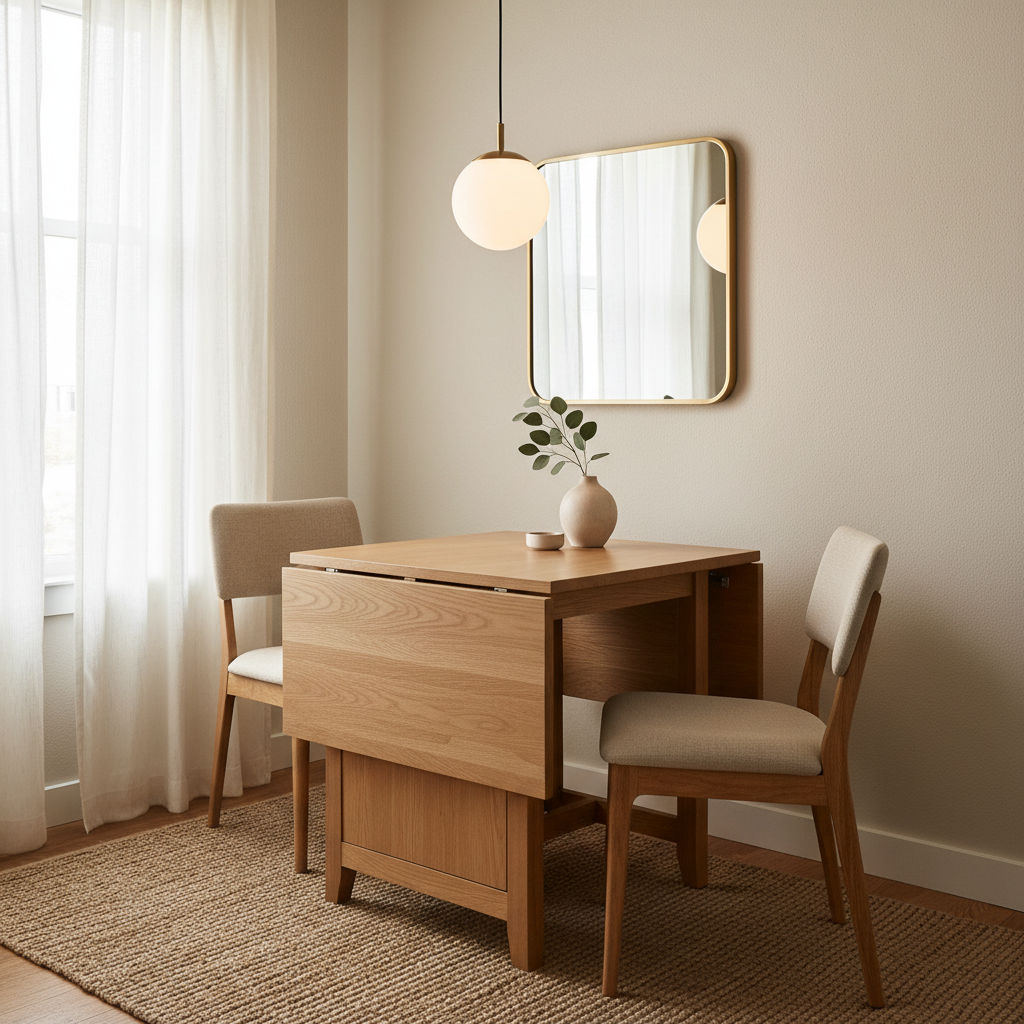
According to National Fire Protection Association (NFPA) guidance on home fire safety, keeping exits and pathways clear supports safer evacuation. In small spaces, avoid layouts that pinch the route to the door, even if the furniture technically “fits.”
Practical setups: choose a primary function per zone
Here’s the move most people resist: you can’t optimize every square foot for everything. Pick a primary job for each zone, then add a secondary function only if it stays easy.
Studio apartment
- Sleep zone: daybed with drawers, or a Murphy bed if the wall and install allow.
- Work zone: narrow desk plus vertical storage, keep cables controlled so teardown isn’t a daily chore.
- Dining zone: wall-mounted drop-leaf table, or an expandable table that also works as a prep surface.
One-bedroom with a “working living room”
- Living zone: modular loveseat + nesting tables, easier than one oversized coffee table.
- Guest plan: sleeper sofa or a high-quality air mattress stored in an ottoman, depending on frequency.
- Media/storage: low console with closed storage, avoid open cubbies if you hate visual noise.
Small family space
- Seating: storage bench for toys, but ensure lids are soft-close and not slam-prone.
- Table surfaces: rounded corners reduce bumps in tight walkways.
- Anchoring: tall shelving should be secured, especially with kids or pets.
In many homes, the simplest “multifunctional” win is adding closed storage and a truly usable table surface, not buying a complicated conversion piece.
Buying checklist: what to look for in quality (without overpaying)
Price is not a perfect quality signal, but certain details tell you quickly if a piece will hold up.
- Mechanisms: smooth motion, minimal wobble, and no grinding sounds. Ask how replacement parts work.
- Weight capacity: look for clearly stated limits for sleepers, lift-tops, and wall-mounted items.
- Materials that match the use: performance fabrics for daily seating, durable laminates for desks, and reinforced joints for modular pieces.
- Return policy reality: multi-piece items can be expensive to return, confirm what “free returns” actually means.
- Assembly complexity: if the piece needs perfect alignment to function, budget time or consider professional assembly.
If you’re investing in small space furniture multi functional for daily use, prioritize reliability over novelty. A boring piece that works smoothly beats a clever one you avoid using.
Key takeaways and a simple next step
The most successful small-space setups in 2026 usually share two traits: they protect walking paths, and they make the “second function” genuinely easy. If a transformation feels like a project, you’ll stop doing it.
Action idea: pick one bottleneck (sleep, work, dining, storage), measure for that function, then shop only within those dimensions. You’ll buy fewer pieces, and you’ll like them more.
FAQ
What is the best small space furniture multi functional choice for a studio?
For many studios, a storage bed or daybed plus a drop-leaf dining table delivers the most day-to-day value. Sleeper sofas can work, but only if you truly need couch seating and guest sleep in the same footprint.
Are Murphy beds safe in apartments?
Many are safe when installed correctly into studs with proper hardware, but installation quality is the whole game. If you rent or have questionable walls, it may be worth asking building management or a qualified installer for guidance.
How do I know if a lift-top coffee table will feel stable?
If possible, test it with weight on the lifted surface and gently lean like you would while typing or eating. Wobble often shows up right away, and it tends to get worse over time.
Is modular furniture actually better for small rooms?
Often, yes, because you can reconfigure for guests or cleaning and you’re less likely to be stuck with one oversized block. The downside is more seams and connections, so check how pieces lock together.
What measurements matter most before buying a sleeper sofa?
Measure the full pull-out length, the clearance in front, and the path it takes to enter your home. Depth matters too, because a deep sofa can shrink the room even when it’s “small.”
How can I make a small living room feel less cluttered without buying new furniture?
Start by hiding the mess you see every day: add baskets, closed bins, or swap one open shelf for a closed cabinet. Then reduce surface “stuff,” because clear tabletops create instant visual breathing room.
What are the most common mistakes people make with multi functional pieces?
Buying for the fantasy use case, ignoring transform clearance, and choosing storage that’s annoying to access. If you feel friction during a 30-second test in a showroom, that friction will grow at home.
If you’re trying to furnish a small apartment and you want a more streamlined path, it can help to share your room measurements and priorities with a retailer or designer service that focuses on compact layouts, so you compare options that actually fit your constraints instead of browsing endlessly.