
The best bamboo kitchen utensils set is the one that survives daily stirring, scraping, and washing without splintering, staining fast, or feeling flimsy in your hand.
That sounds obvious, but most people shop bamboo utensils like they shop decor, they look at the photos, count the pieces, and call it a day. Then the set shows up, the spatula edge is too thick to slide under eggs, the spoon cracks after a few weeks, or the holder grows a weird smell because it never really dries.
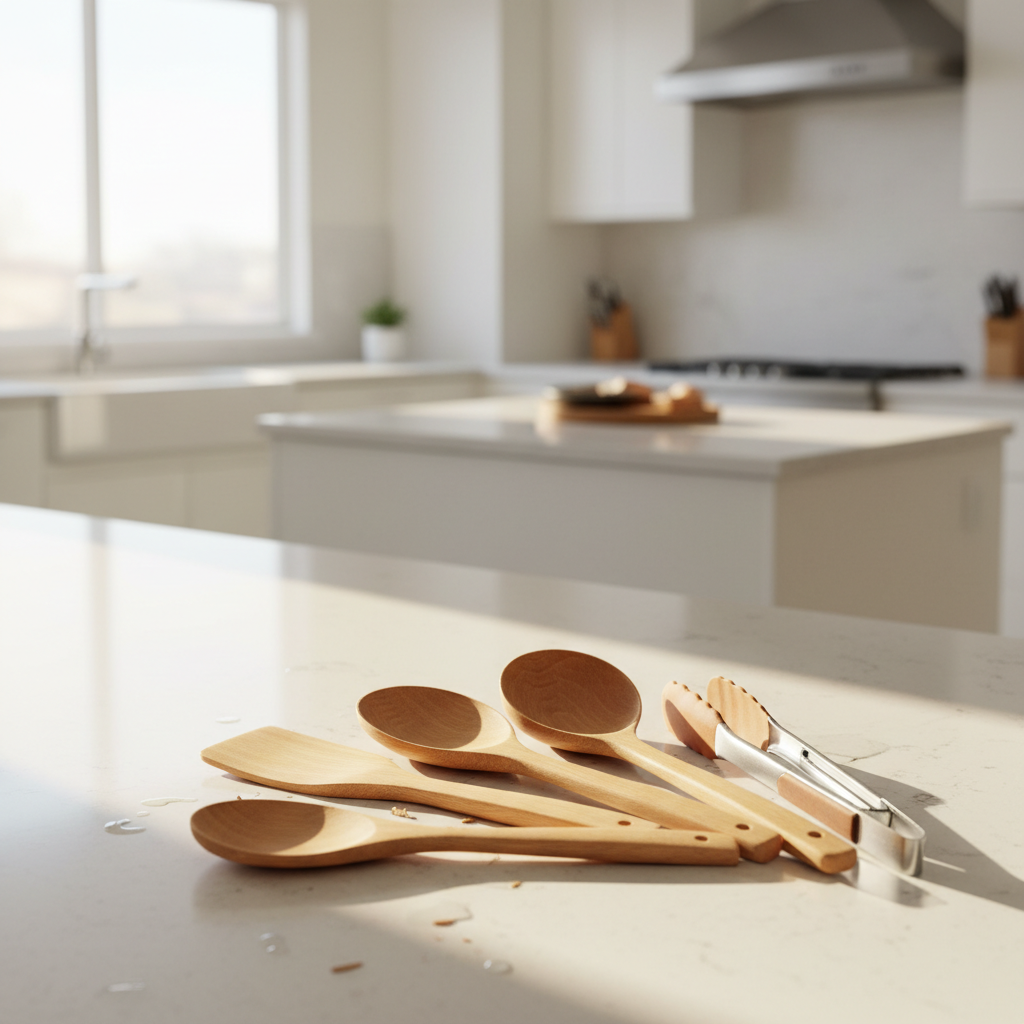
This guide breaks down what actually matters: how bamboo is finished, which tools you will use, how to spot quality before buying, and how to care for bamboo so it lasts. I’ll also share a quick comparison table and a short checklist so you can decide in minutes, not hours.
Why bamboo utensils are popular (and where people get disappointed)
Bamboo hits a sweet spot for many kitchens: it’s lightweight, comfortable to hold, and typically safe for nonstick cookware because it won’t scratch like metal can. It also looks “clean” on the counter, which honestly matters to a lot of people.
Disappointment usually comes from mismatched expectations. Some sets are made to look nice in a listing photo, not to handle heat, sauces, and daily washing. And bamboo is still a natural material, so build quality and finishing make a bigger difference than most shoppers expect.
- Finish quality affects splintering, water absorption, and staining.
- Tool shape affects usability more than piece count.
- Care habits often decide whether bamboo lasts months or years.
What “best” really means for a bamboo kitchen utensils set
When people search for the best bamboo kitchen utensils set, they usually mean one of three things, even if they don’t say it directly: safe on cookware, durable enough for everyday cooking, and “eco-friendly” without weird chemical smells or questionable finishes.
Core quality markers to look for
- Smooth edges with no fuzz: run your fingers along the working edge in photos if possible, and check reviews for “splinters.”
- Dense, consistent grain: bamboo with patchy light/dark areas can be fine, but very uneven pieces sometimes absorb water faster.
- Solid one-piece feel: many bamboo tools are laminated from strips, which is normal, but weak glue lines can split over time.
- Comfortable handle thickness: too thin feels cheap, too thick feels clumsy, especially for sautéing.
Eco-friendly claims: what you can reasonably verify
You won’t be able to “prove” sustainability from a product page alone, but you can still make a smarter call. According to USDA guidance on bio-based products, look for clearer material disclosures and avoid vague marketing that won’t state what the item is finished with.
If a listing mentions coatings, dyes, or “waterproof paint,” pause. A light food-safe oil finish is one thing, but heavy coatings can chip, and once they do, the tool becomes annoying to use.
Quick comparison table: pick a set based on how you cook
If you want a fast filter, use this table to match your cooking style to a set style. It’s not about brands, it’s about what usually works in real kitchens.
| Cooking style | What to prioritize | Pieces you’ll actually use | What to skip |
|---|---|---|---|
| Nonstick, everyday meals | Smooth finish, thin spatula edge | Turner, spatula, spoon, slotted spoon | Oversized ladles, novelty shapes |
| Soups, stews, batch cooking | Heat resistance, sturdy ladle | Ladle, deep spoon, slotted spoon | Extra spreaders you won’t wash |
| High-heat stir-fry | Long handles, durable lamination | Wok spatula/turner, long spoon | Short-handled tools |
| Small kitchen, minimal gear | Fewer pieces, better shapes | 4–6 essentials | 12–20 piece “value” sets |
A realistic checklist: how to tell if a set is worth buying
Before you click “add to cart,” skim this like a pre-flight check. It saves you from the most common bamboo utensil regrets.
- Photos show thin working edges on the spatula/turner, not chunky blocks.
- Reviews mention smoothness and do not repeatedly mention splinters or cracking.
- Care instructions are clear: hand wash guidance, oiling suggestion, and “do not soak.” Vague care guidance can be a red flag.
- No strong odor complaints: persistent chemical smell can suggest an aggressive finish or packaging issue.
- Storage makes sense: a holder that traps moisture can get funky if you store utensils wet.
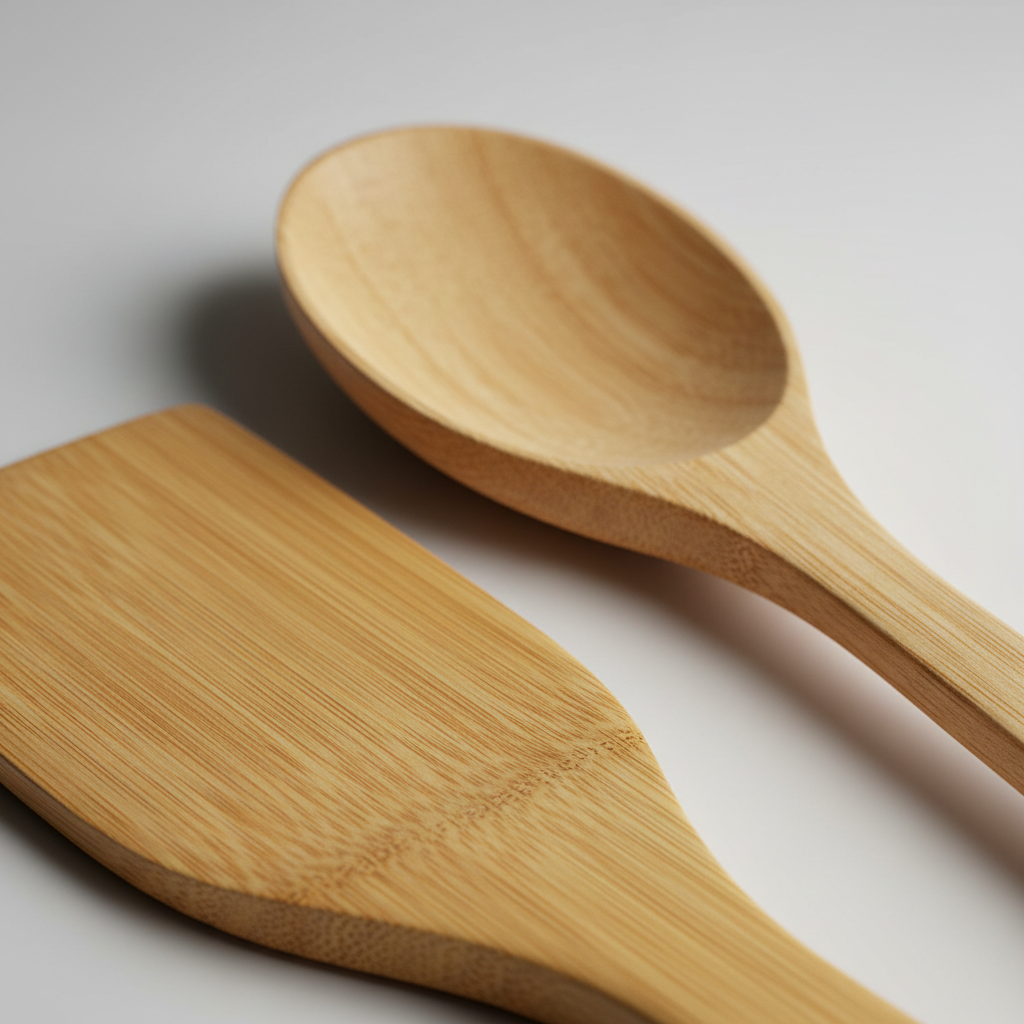
Key point: piece count is not quality. A 5-piece set with the right shapes often beats a 14-piece set full of duplicates you don’t enjoy using.
How to choose the right pieces (what most sets get wrong)
Most kitchens need fewer tools than a typical “all-in-one” bundle includes. If you pick smart, you’ll cook more comfortably and wash less.
The 6-piece core set that fits most U.S. kitchens
- Flat turner (thin edge for eggs, burgers, fish)
- Flexible-ish spatula shape (bamboo won’t be silicone-flexible, but the profile matters)
- Solid spoon (for stirring sauces and grains)
- Slotted spoon (for draining and serving)
- Ladle (only if you make soup more than occasionally)
- Tongs (optional, but very practical)
Nice-to-have pieces that depend on your habits
- Pasta server if you cook long noodles often, otherwise it becomes clutter.
- Mixing spoon with corner if you cook in square pans or want to scrape edges better.
- Whisk can be useful, but bamboo whisks vary a lot in sturdiness.
If you’re buying the best bamboo kitchen utensils set for a gift, prioritize the turner + spoon shapes and a clean finish, those are the “first impression” tools people touch every day.
Care and maintenance: how to make bamboo last longer
Bamboo utensils usually fail from water and heat stress, not from normal stirring. Small habits matter.
- Hand wash when you can: many sets claim “dishwasher safe,” but harsh cycles and long heat drying can shorten lifespan.
- Don’t soak: leaving bamboo in a sink of water encourages swelling and glue-line stress.
- Dry fully before storing: especially if you use a countertop crock that holds moisture.
- Oil occasionally: a light coat of food-grade mineral oil can help reduce drying and cracking for many households. If you have allergy concerns, consider asking a professional for guidance on finishes.
According to USDA FSIS general food-safety guidance, keeping utensils clean and dry helps reduce bacterial growth. Bamboo is not “self-sanitizing,” so treat it like any other tool that touches food.
Common mistakes (and how to avoid wasting money)
A lot of “bamboo doesn’t last” stories trace back to a few predictable issues.
- Buying for aesthetics only: pretty handles won’t compensate for thick, awkward working edges.
- Using bamboo as a scraper on high heat: it can scorch or roughen; use the right tool for stuck-on fond.
- Storing wet utensils in a closed holder: that trapped humidity can cause smells and discoloration.
- Assuming all bamboo is the same: finishing quality and lamination matter a lot.
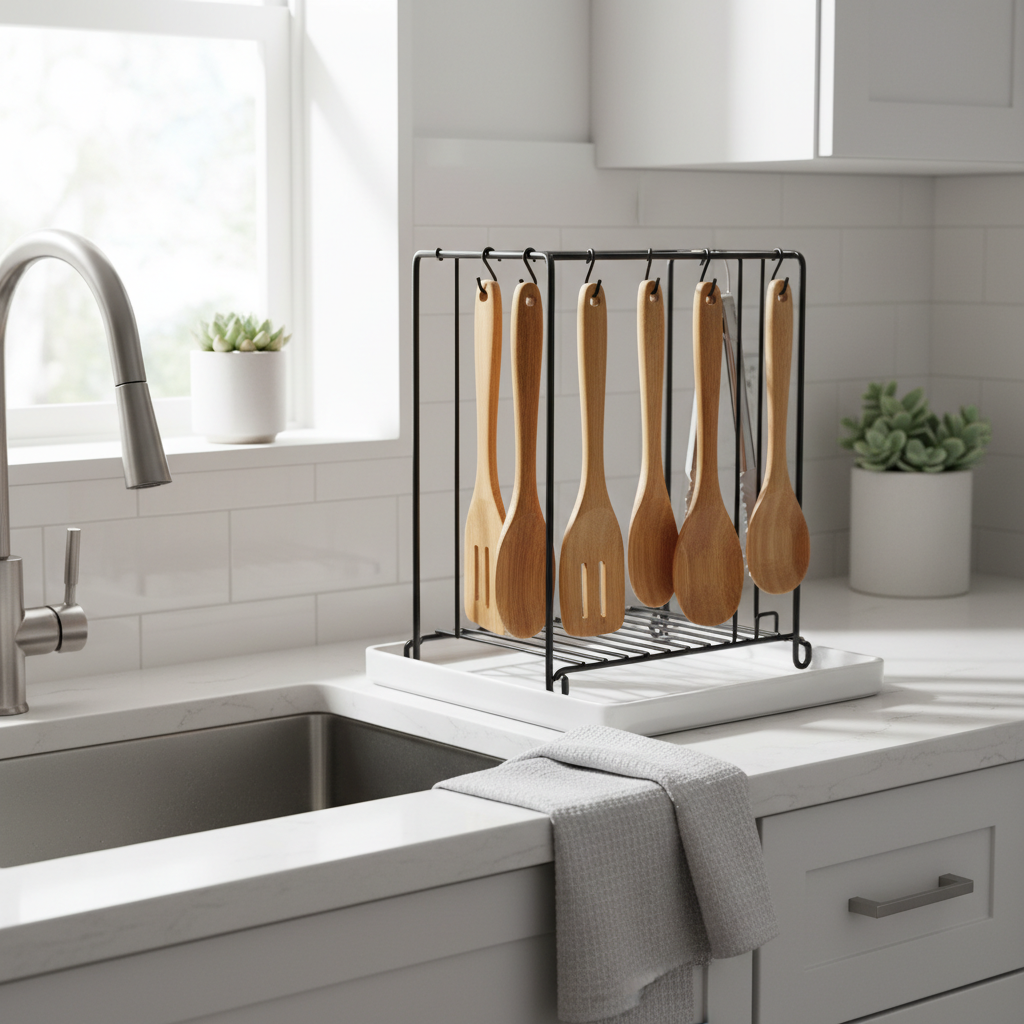
If you want fewer problems, choose a smaller set with better shapes, wash gently, and dry right away. That simple loop prevents most cracking and odor complaints.
When you might want a different material (being honest about limits)
Bamboo is a strong option, but it isn’t perfect for every kitchen. If you routinely cook at very high heat, need ultra-thin edges for delicate fish, or you want dishwasher-only tools, you might be happier mixing materials.
- Silicone can be better for flexible scraping and dishwasher routines.
- Stainless steel works for searing and deglazing, but can scratch nonstick surfaces.
- Hardwoods like olive or maple can be durable, though care needs are similar and price can run higher.
This isn’t a knock on bamboo, it’s just the practical reality: the best bamboo kitchen utensils set shines most in everyday cooking with basic maintenance.
Conclusion: a simple way to choose confidently
If you’re stuck between options, stop comparing piece counts and start comparing tool shapes and finish quality. A smaller, well-made bundle with a thin-edged turner and smooth surfaces tends to feel better day one and still feel good months later.
Your next step is easy: pick the 4–6 tools you actually cook with, scan reviews for splintering and odor patterns, and plan to hand wash and fully dry. That’s how most people end up happy with bamboo instead of quietly replacing it.
FAQ
What should be included in the best bamboo kitchen utensils set for everyday cooking?
Most households get the most value from a turner, a spatula-style tool, a solid spoon, and a slotted spoon. Add a ladle if you cook soups often, and tongs if you like roasting or grilling.
Are bamboo utensils safe for nonstick pans?
In many cases, yes, bamboo is generally gentle on nonstick surfaces because it’s not as hard as metal. Still, if a utensil has rough edges or splinters, it can scratch, so finish quality matters.
Do bamboo utensils go in the dishwasher?
Some products claim they can, but frequent dishwasher cycles often shorten lifespan through heat and extended moisture exposure. If durability is your priority, hand washing tends to be the safer bet.
Why do bamboo utensils sometimes smell bad?
Odor usually comes from trapped moisture, lingering food oils, or a finish that off-gasses in packaging. Drying fully before storage and avoiding long soaking typically helps.
How do I prevent bamboo utensils from cracking?
Don’t soak them, avoid high-heat resting on pan edges for long periods, and consider occasional food-grade mineral oil conditioning. Cracking can still happen over time, but these steps usually reduce it.
What’s the difference between bamboo and wooden utensils?
Bamboo is technically a grass, often made by laminating strips, while “wood” utensils may be carved from hardwood. In practice, both need similar care, but bamboo sets are often lighter and more affordable.
Is a bamboo utensil holder a good idea?
It can be, as long as utensils go in completely dry and the holder can breathe. If you cook a lot and put damp tools back, an open rack or a well-ventilated crock tends to work better.
If you’re trying to upgrade your kitchen with less plastic and a cleaner countertop setup, choosing a bamboo set based on tool shapes and finish, then pairing it with simple care habits, is usually the most reliable, low-stress path.