
home gym ideas small space usually come down to one thing: you need workouts that fit your apartment’s footprint without turning your living room into a permanent obstacle course.
The good news is you don’t need a full rack to get strong, improve conditioning, or stay consistent. What you do need is a plan for space, noise, storage, and the one thing most people skip, flooring and safety.
This guide breaks down realistic setups for studio and small apartments, what to buy first, what to skip, and how to keep your home gym easy to reset back into “normal home” in under two minutes.
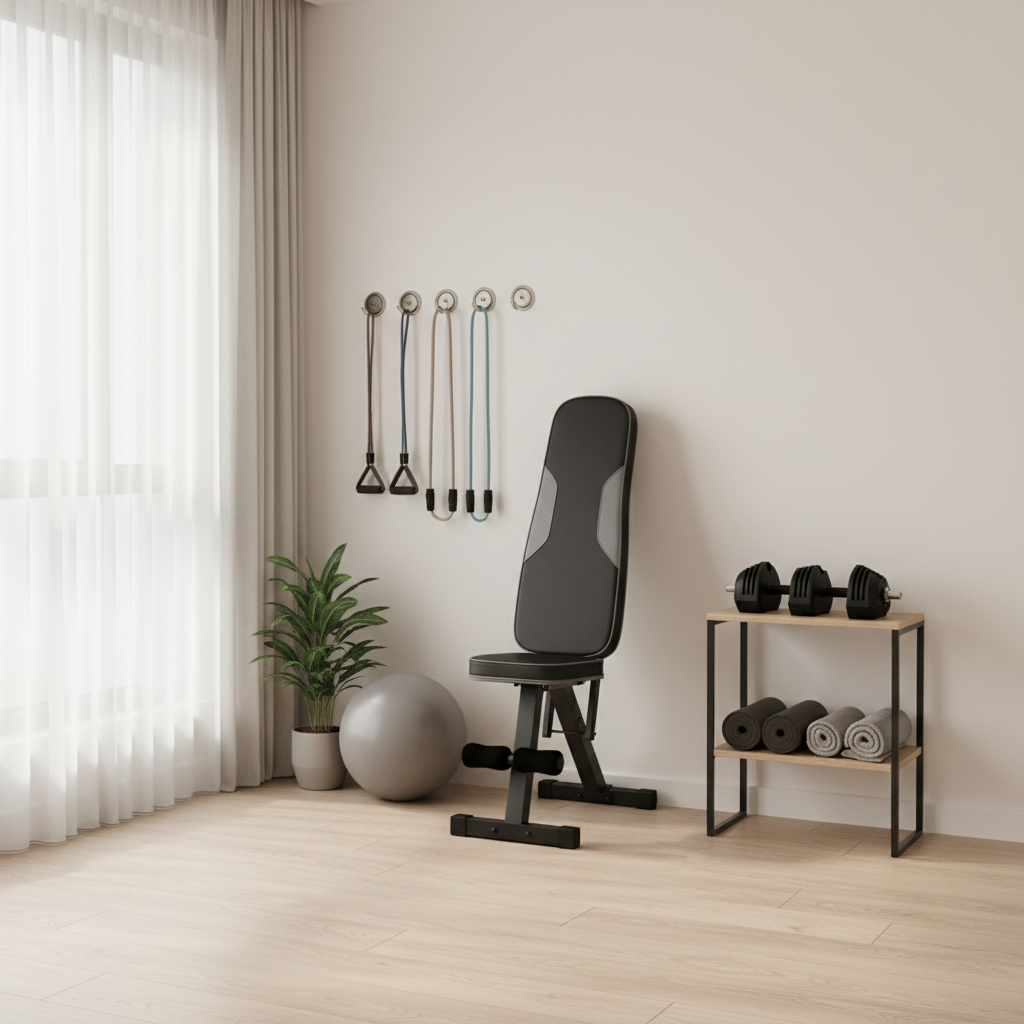
Start with the constraint, not the equipment
Before you shop, pick your “training zone” and name the constraint that matters most. In small apartments it’s usually one of these: floor space, ceiling height, noise to neighbors, or storage.
- Floor space constraint: you need gear that stacks, folds, or lives under the bed.
- Noise constraint: avoid dropping weights, jumping, and unstable benches on hard floors.
- Storage constraint: prioritize multi-use items, adjustable over fixed, wall hooks over bins.
- Shared space constraint: your setup must “disappear” fast so you’ll actually use it.
According to the CDC, adults benefit from both aerobic activity and muscle-strengthening activity each week, so a small-space setup works best when it covers strength + conditioning with minimal pieces.
Quick self-check: what kind of small-space home gym do you need?
If you buy gear without matching it to your training style, you’ll end up with random items and no routine. Use this simple checklist to identify your best setup type.
- If you hate clutter: go “one-bag gym” with bands, a jump rope alternative, and a mat.
- If you love lifting: go “adjustable strength” with adjustable dumbbells and a compact bench.
- If you’re rehabbing or want low impact: go “quiet conditioning” with bands, sliders, and a light kettlebell.
- If motivation is the problem: go “always-visible corner” with a tidy stand and a pre-laid mat.
Also measure two things now, not later: the clear rectangle you can claim (even if it’s only 4x6 feet) and where equipment can live when you’re done.
Apartment-friendly equipment that earns its spot
The best home gym ideas small space rely on fewer items that do more. Below is a practical shortlist that tends to work in apartments, plus what each piece is best for.
High-value basics (most people should start here)
- Exercise mat: comfort, grip, and a clear “this is my workout zone” boundary.
- Resistance bands (loop + long band): rows, presses, glute work, mobility.
- Adjustable dumbbells (or 2–3 fixed pairs): strength without a whole rack.
- Doorway pull-up bar (only if your doorway and trim allow it): pulling strength without floor footprint.
Optional upgrades (choose based on your constraint)
- Adjustable bench: expands dumbbell training, but only if you can store it vertically or under a bed.
- Single kettlebell: swings, goblet squats, carries, very space efficient.
- Suspension trainer: full-body training from a door anchor, good for renters when used correctly.
- Compact cardio: foldable bike, walking pad, or step platform if noise and storage are manageable.
Common skips in small apartments
- Big plate trees and multiple fixed barbells: storage and floor protection become a real project.
- High-impact plyo boxes: great tool, but neighbors may disagree.
- Cheap, unstable benches: wobble creates safety risk and wasted reps.
Three proven layouts for small apartments (with a simple reset)
You don’t need a dedicated room, you need a repeatable layout. These setups assume you’ll train, then return the space to normal living.
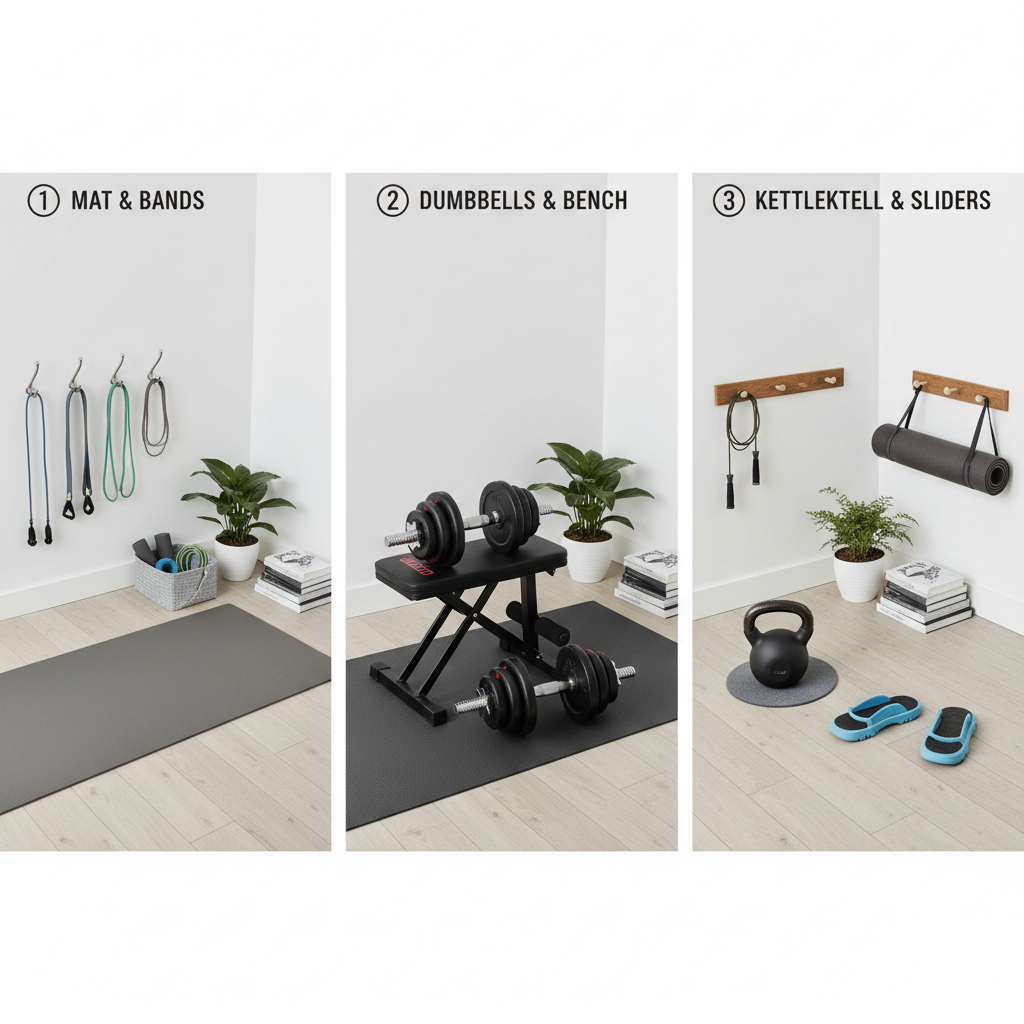
1) The “corner + wall” setup (best for clutter-free homes)
Pick one corner near an outlet and mirror if you have it. Put a mat down, add wall hooks for bands, and a slim bin for small items. The rule is simple: nothing spills past the mat when stored.
- Store bands on hooks, not in a drawer you’ll forget.
- Keep one light and one medium band visible for “no-excuse” days.
2) The “under-bed strength” setup (best for lifters)
Use adjustable dumbbells and a bench that folds or stores upright. Your training zone can be the space in front of the couch, because you’ll clear it, train, reset.
- Put dumbbells on a small stand if possible, bending down every set gets old fast.
- Keep collars, micro plates, or band add-ons in a zip pouch.
3) The “quiet conditioning” setup (best for neighbors)
Build around low-impact moves: step-ups, controlled hinges, carries, band circuits, and mobility. If you want “cardio,” you can still get it by tightening rest times instead of adding jumping.
- Swap jumping jacks for fast marching or step taps.
- Swap burpees for incline push-ups + quick squats.
Noise, flooring, and safety: the part people regret skipping
In apartments, safety is not only about your body, it’s about floors, furniture, and downstairs neighbors. A few simple choices prevent most problems.
- Floor protection: use a dense mat or interlocking tiles under your training zone, especially for dumbbells and kettlebells.
- Anti-slip: if your mat slides, add a non-slip underlayer or move to a grippier surface.
- Door anchors and pull-up bars: follow manufacturer instructions and check your door/trim condition, if anything feels loose, skip it.
- Ventilation: small rooms heat up quickly, a fan is sometimes a “fitness purchase” that keeps you consistent.
If you have joint pain, prior injuries, or dizziness during workouts, it’s smart to scale intensity and consider guidance from a qualified trainer or healthcare professional.
Practical buying plan (and a small table to keep it sane)
If you’re building from scratch, buy in phases so you can test what you actually use. This avoids the classic “apartment gym graveyard” of unused gear.
| Goal | Phase 1 (smallest footprint) | Phase 2 (add power) | Phase 3 (nice-to-have) |
|---|---|---|---|
| General fitness | Mat + loop bands | Adjustable dumbbells | Foldable bench |
| Strength focus | Adjustable dumbbells | Bench + long band | Pull-up bar (if safe) |
| Fat loss / conditioning | Mat + bands + timer | Kettlebell or step | Walking pad (if storage works) |
| Low impact | Mat + long band | Light kettlebell + sliders | Suspension trainer |
Key takeaways you can act on today:
- Measure your workout rectangle and storage spot before buying.
- Start with one strength tool and one conditioning tool, not five random items.
- Optimize for setup and reset speed, consistency beats complexity.
Realistic routines that work in 4x6 feet
You don’t need a long routine, you need a repeatable one. Here are two templates that fit most small apartments and match common home gym ideas small space setups.
20–30 minute strength circuit (dumbbells or bands)
- Squat pattern: goblet squat or banded squat, 8–12 reps
- Hinge pattern: RDL or band pull-through, 8–12 reps
- Push: push-up or dumbbell floor press, 6–12 reps
- Pull: one-arm row or band row, 8–12 reps
- Core: dead bug or plank, 30–45 seconds
Do 2–4 rounds with controlled form. If you’re unsure about technique, getting a one-time form check from a qualified coach can save you weeks of frustration.
Quiet conditioning finisher (no jumping)
- Fast step-ups or marching in place, 45 seconds
- Band punches or shadow boxing, 45 seconds
- Mountain climbers slow-to-moderate, 45 seconds
- Rest, 30–60 seconds
Run 3–6 rounds depending on your fitness level and how your knees and ankles feel that day.
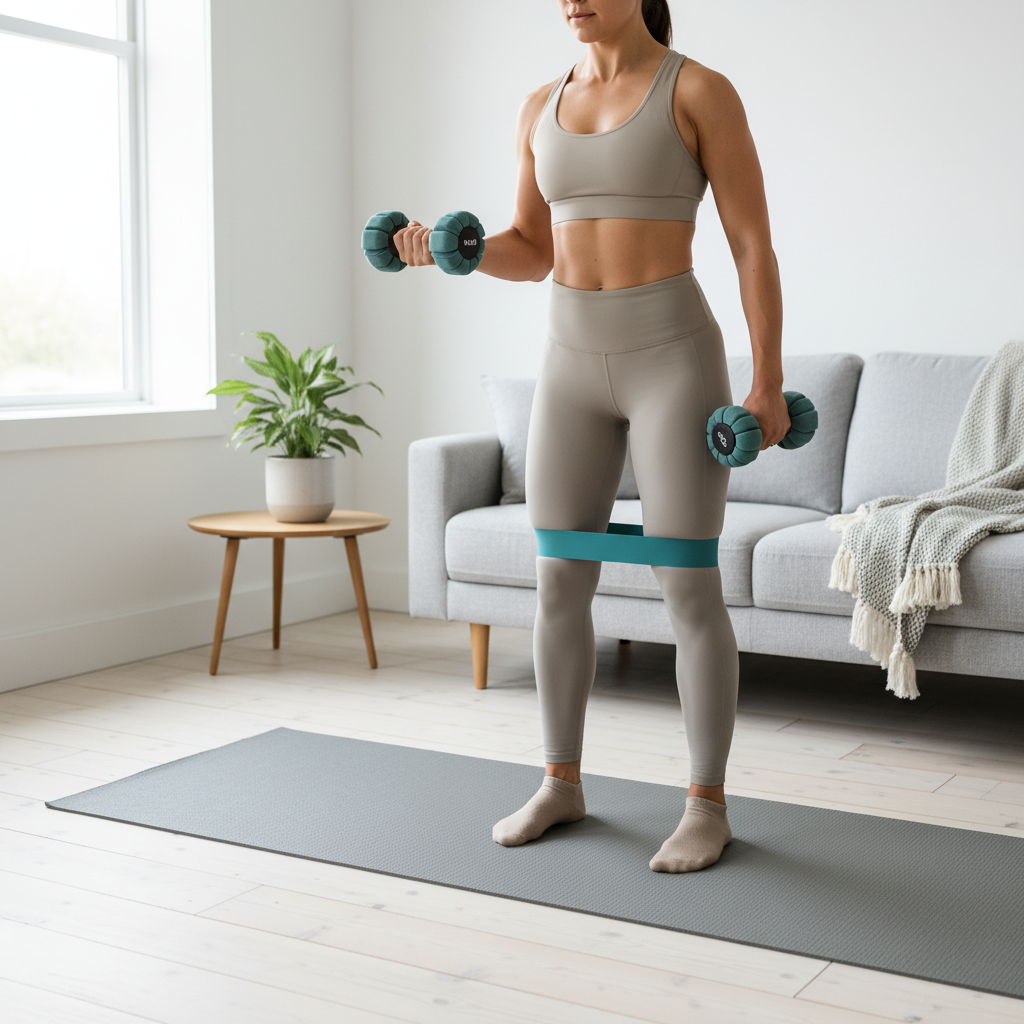
Common mistakes that make small-space gyms feel impossible
- Buying for an ideal routine instead of what you’ll do on a busy Tuesday night.
- No storage plan, gear ends up scattered, then workouts stop.
- Too much impact, complaints from neighbors push you into “quiet-only” training, then motivation dips.
- Chasing heavy numbers without floor protection or stable setup, risk goes up for little benefit.
- Ignoring airflow, overheating makes short workouts feel miserable.
One small mindset shift helps: treat your apartment gym as a “minimum effective dose” space, not a replica of a commercial gym.
Conclusion: build the smallest gym you’ll actually use
The best home gym ideas small space are the ones you can set up fast, train in safely, and pack away without resentment. If you nail those three, the workouts follow.
Pick one layout from above, buy phase 1 only, and commit to three sessions a week for a month. Once that feels automatic, add the next piece, not before.
FAQ
What is the best equipment for a small apartment home gym?
For most people, a mat, resistance bands, and adjustable dumbbells cover the widest range of workouts with the least storage. Add a compact bench only if you know where it will live.
How do I make a home gym in a studio apartment without clutter?
Limit yourself to what fits in one defined storage zone, like a slim corner rack or under-bed bin. If gear can’t return to that spot in under two minutes, it tends to become clutter.
Are walking pads worth it for small spaces?
They can be, especially if you work from home and can store the pad under a couch or bed. The dealbreaker is usually noise and where it lives when not in use.
How can I work out without bothering downstairs neighbors?
Favor controlled strength training, step-based cardio, and band circuits over jumping. A thicker mat and avoiding dropped weights makes a bigger difference than people expect.
Can I build muscle with resistance bands in a small apartment?
Many people can build strength and muscle with bands if they progress tension over time and train close to fatigue with good form. If your goal is heavy lifting numbers, bands may feel limiting.
Is a doorway pull-up bar safe in an apartment?
It depends on your door frame, trim quality, and the specific bar design. Follow the manufacturer instructions, test stability carefully, and skip it if anything shifts or creaks.
How much space do I really need for a home gym?
A clear 4x6 foot rectangle often works for mat work, bands, and dumbbells. If you want a bench or cardio equipment, plan for extra clearance and storage space.
If you’re trying to choose gear and you want a setup that fits your exact layout, budget, and noise constraints, a simple shopping plan and a quick room measurement checklist can save you from buying the “almost right” stuff.