
How to organize shoes in small closet starts with one honest decision: stop treating every pair like it deserves the same kind of storage. In tight closets, the “pile on the floor” approach quickly turns into scuffed shoes, lost mates, and that daily mini-annoyance where you can’t find what you actually wear.
The good news is you don’t need a full renovation or a viral “closet system” to get control. Most small spaces improve fast once you choose the right storage style for your closet type, set a simple rotation, and give frequently worn shoes a predictable home.
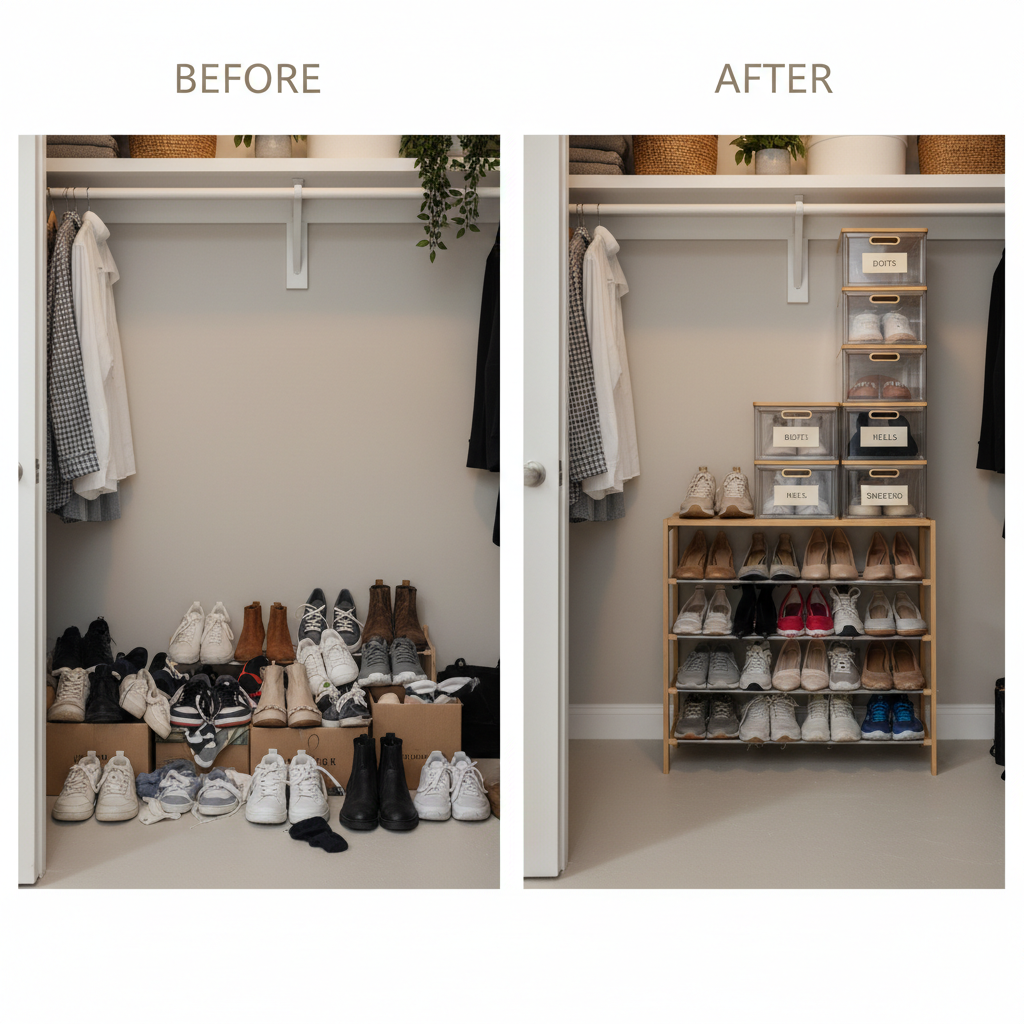
I’ll walk you through a practical way to decide what stays in the closet, what moves elsewhere, and what storage tools usually work in real apartments and older homes. There’s also a quick checklist, a setup table, and a few mistakes that waste money (and space).
Start with the real constraint: closet type, not shoe count
When people search how to organize shoes in small closet, they often assume the problem is “too many shoes.” Sometimes it is, but more often the constraint is the closet layout: shallow depth, a single hanging rod, no shelves, or a doorway that steals usable corners.
Take two minutes to identify what you’re working with, because it changes the storage choice.
- Reach-in closet (typical apartment): best for floor racks, door organizers, stackable bins.
- Shallow closet (less than ~24 inches deep): you’ll rely on vertical stacking and slim racks, not bulky cubes.
- Walk-in but narrow: zones matter more than gadgets, keep aisles clear.
- No closet, just a wardrobe: treat it like a cabinet, use bins and shelf dividers.
Also notice airflow and dust. If the closet runs humid or shoes come in wet, closed bins can trap odor and moisture, vented options or a simple drying routine may work better.
Fast sorting: keep, rotate, and relocate (a 20-minute rule)
Before buying anything, sort shoes by how you use them. This is the part most people skip, then they end up organizing clutter more efficiently, which still feels like clutter.
Try this quick sort on the floor:
- Daily/weekly pairs: sneakers, work shoes, the boots you actually wear.
- Occasional pairs: event heels, interview shoes, seasonal sandals.
- Sentimental or “maybe”: be honest, these are space-expensive.
- Needs repair/cleaning: decide a date or let them go.
In many homes, the closet should only hold the daily/weekly pairs plus the current season. Occasional pairs can live in labeled bins up high, or elsewhere (bed storage, entryway cabinet), especially if the closet also needs to store clothing.
Choose a storage method that matches shoe shapes (not aesthetics)
Different shoes behave differently in storage. Sneakers stack, boots slump, heels snag, and flats disappear. A setup that looks great for sneakers can be awful for ankle boots.
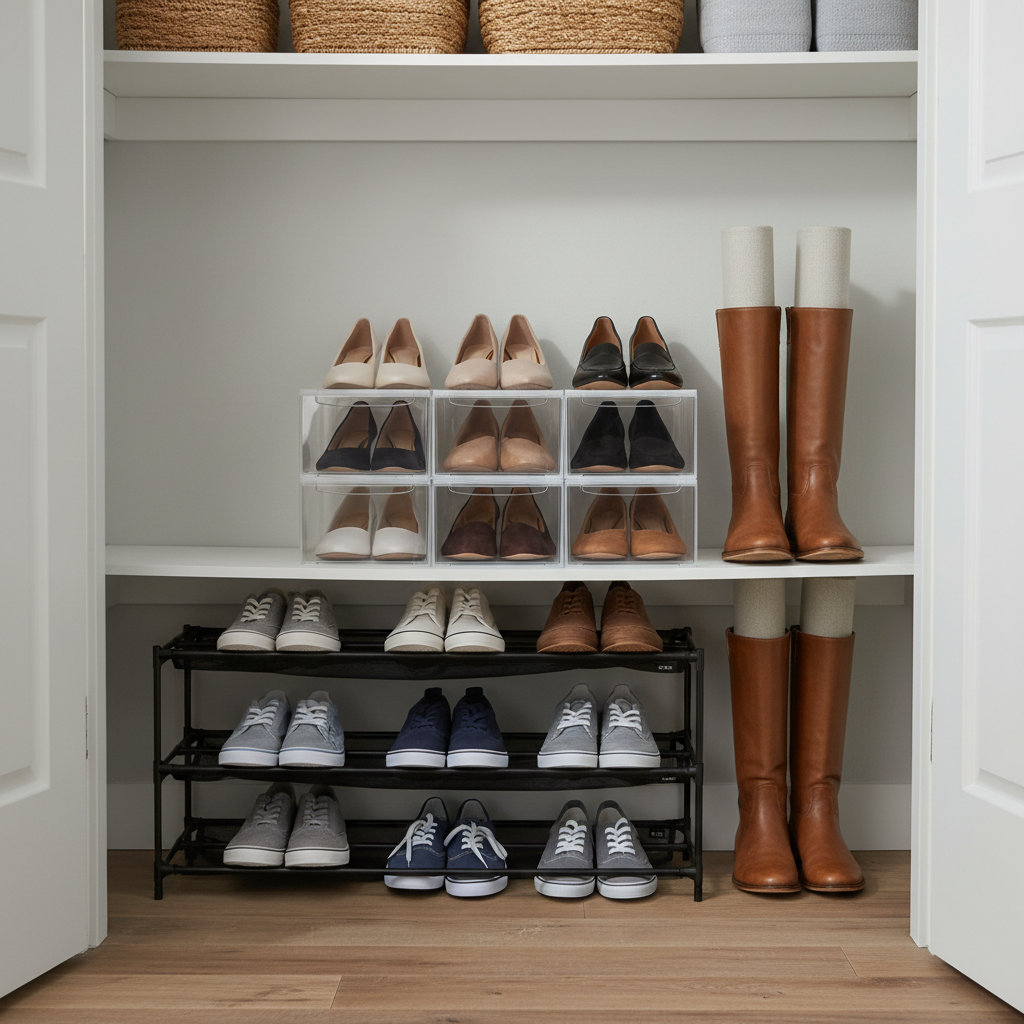
Use the table below as a quick matchmaker. It’s not about “best,” it’s about what usually wastes the least space for that shoe type.
| Shoe type | Storage that usually works in small closets | Watch-out |
|---|---|---|
| Sneakers / casual shoes | Slim floor rack, over-the-door pockets, stackable bins | Door pockets can bend bulky soles |
| Heels | Clear-front bins, shelf row with heel stops, cubbies | Don’t let heels catch on fabric pockets |
| Ankle boots | Two-tier rack, under-shelf organizers, boot trays | Stacking without support can crease uppers |
| Tall boots | Boot shapers + floor zone, hanging boot clips (if space) | Hanging can stress shafts over time |
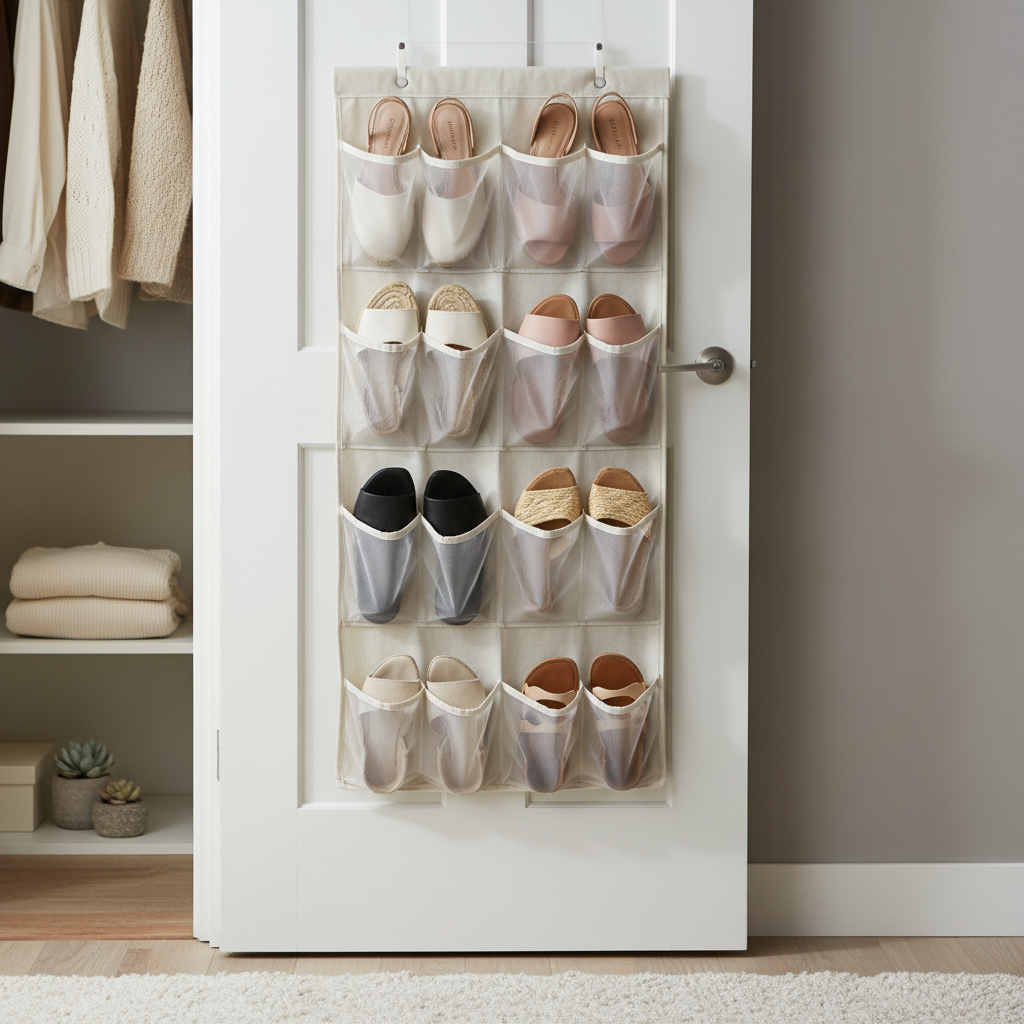
| Sandals / flats | Door organizer, slim shelf bins, labeled boxes | They get lost if the system has no labels |
A simple “zones” setup that keeps the floor clear
If your closet floor turns into a bottleneck, set up zones with a clear rule: every shoe must have a home that doesn’t block the closet door or your hanging clothes. This zoning approach is often the quickest way to maintain order after you clean once.
Zone 1: grab-and-go (the easiest to reach)
- Keep 5–8 pairs you wear most here.
- Use a slim 2-tier rack or a low-profile tray so you can vacuum easily.
- If you have kids or roommates, this zone reduces “shoe migration.”
Zone 2: current season overflow (eye-level or top shelf)
- Use clear bins or open baskets with labels: “Work,” “Gym,” “Weekend.”
- Store pairs you wear, just not daily.
- Put delicate materials (suede, satin) in bins to reduce dust.
Zone 3: off-season (highest shelf or outside the closet)
- Pack in breathable bags or boxes with a label on the short side.
- Add a small note like “needs polish” so next season is easier.
Small-closet tactics that create space fast
These are the moves that make a noticeable difference even when you can’t add shelving. Pick two or three, don’t try to install a dozen micro-solutions.
- Go vertical: stackable clear bins or a vertical rack often doubles capacity without widening the footprint.
- Use the back of the door carefully: over-the-door organizers are great for flats and sandals, less great for heavy sneakers.
- Add one shelf if you can: even a single wire shelf above the hanging rod creates a “shoe bin” area.
- Try under-shelf baskets: they steal dead space under existing shelves, perfect for slippers or flats.
- Boot control: boot shapers (or rolled towels) keep shafts upright, which also saves floor chaos.
According to OSHA, keeping walkways and exits clear helps reduce trip hazards. Your closet might not be a “workplace,” but the logic translates: if shoes are where your feet need to go, that’s where accidents happen.
Quick self-check: what system should you use?
If you’re stuck, answer these quickly. Your “yes” answers point to the simplest system that tends to hold up over time.
- You hate putting shoes away: choose open racks, not lidded boxes.
- You forget what you own: choose clear bins or open shelves at eye-level.
- Your closet smells musty: avoid fully sealed containers, let shoes dry before storing.
- You share the closet: create left/right zones and cap each person’s grab-and-go pairs.
- You have lots of boots: prioritize a boot zone, everything else can be bins.
- You’re renting: stick to door organizers, racks, and removable shelf inserts.
Most small closets improve when your daily pairs stay visible and low-friction, and everything else gets “one step harder” to access. That tiny barrier is what prevents overflow.
Step-by-step: a weekend setup you can actually maintain
This is a practical sequence that reduces rework. If you do it out of order, you’ll keep moving shoes around to make room for the next tool.
- Step 1: Empty the floor, wipe it down, and decide your grab-and-go capacity.
- Step 2: Place the rack/tray first, because it defines the footprint you can live with.
- Step 3: Assign zones using painter’s tape temporarily if that helps you visualize.
- Step 4: Add bins only for the categories that truly need containment.
- Step 5: Label in plain language, not “misc.” You want future-you to comply.
- Step 6: Add a 2-minute reset habit: once a week, return strays to their zone.
Key point: If you’re trying to organize a lot of shoes in a small closet, a “perfect” layout matters less than a layout you’ll follow when you’re tired.
Mistakes that waste space (and money)
- Buying storage before sorting: it locks you into keeping shoes you don’t wear.
- All closed boxes: looks clean, but many people stop using the system because it’s too much effort.
- Ignoring shoe care: putting wet shoes into bins can trap moisture and odor, let them dry first.
- Overloading door organizers: doors sag, pockets tear, and heavy shoes become annoying fast.
- No cap on “daily pairs”: without a limit, the floor becomes the default again.
If odor, moisture, or mold is a recurring issue, it may be worth checking ventilation or using a dehumidifier. For persistent indoor mold concerns, consider consulting a qualified home professional, since causes vary by home and climate.
Conclusion: keep it simple, keep it repeatable
How to organize shoes in small closet comes down to two decisions you can make today: which shoes deserve prime access, and what storage method matches your closet’s constraints. Once grab-and-go pairs stay predictable and the rest live in labeled zones, the mess usually stops rebuilding itself.
If you want a quick next move, pick one: add a slim rack, or add clear labeled bins on the top shelf. Do that, then reassess before you buy anything else.
Key takeaways
- Match storage to closet type, not what looks good online.
- Keep daily pairs visible, make occasional pairs slightly harder to access.
- Zones beat complexity, especially in shared or rental spaces.
FAQ
How do I organize shoes in a small closet without a shoe rack?
Use what the closet already gives you: the top shelf for labeled bins, and the back of the door for a pocket organizer (best for flats and sandals). For daily pairs, a simple tray on the floor can define a “home” even without a rack.
What’s the best way to store shoes so they don’t smell in a closet?
Let shoes dry fully before they go back in, and avoid sealing damp pairs into closed bins. If the closet runs humid, vented storage and basic airflow usually help, and for ongoing odor you may want to review cleaning and drying habits.
How many shoes should I keep in my small closet?
There’s no universal number, but a useful rule is: keep only the current-season shoes you realistically reach for. Many people find a “cap” like 5–8 grab-and-go pairs prevents floor piles, with the rest stored higher or elsewhere.
Are clear shoe boxes worth it for small spaces?
They can be, especially if you forget what you own and rebuy similar pairs. The tradeoff is friction: if lids annoy you, you’ll stop using them, so consider a mixed system with open storage for daily shoes.
Should shoes go on the closet floor or on shelves?
Daily shoes often work well on the floor in a slim rack because access is effortless. Shelves are great for occasional pairs, but only if you can see labels or contents, otherwise they become “shoe storage you never open.”
How do I store boots in a small closet without ruining them?
Keep tall boots upright using boot shapers or rolled towels, and avoid crushing them under stacks. If you hang boots, check that the method doesn’t create creases or stress points, materials vary and some are more sensitive.
What if my closet is shared and shoes keep mixing?
Make the system obvious: left/right zones or separate labeled bins, plus a firm limit on each person’s grab-and-go area. Shared closets fail when the “default” becomes the floor, so protect the floor space first.
If you’re trying to organize shoes in a small closet and you want a more hands-off setup, a simple starter kit often works best: one slim rack for daily pairs plus two or three labeled bins for overflow. It’s not fancy, but it’s the kind of system people actually keep using.