
Under bed storage ideas for small bedrooms work best when you treat the space like a real closet, not a junk drawer you forget about until moving day.
If your room feels tight, it’s usually not because you own “too much,” it’s because the easiest storage is in the wrong places, so you end up stacking stuff in corners, on chairs, and on top of dressers.
This guide walks through practical options that fit typical U.S. bed frames, how to measure so you don’t buy the wrong containers, and a few organizing habits that keep under-bed storage from turning into chaos again.
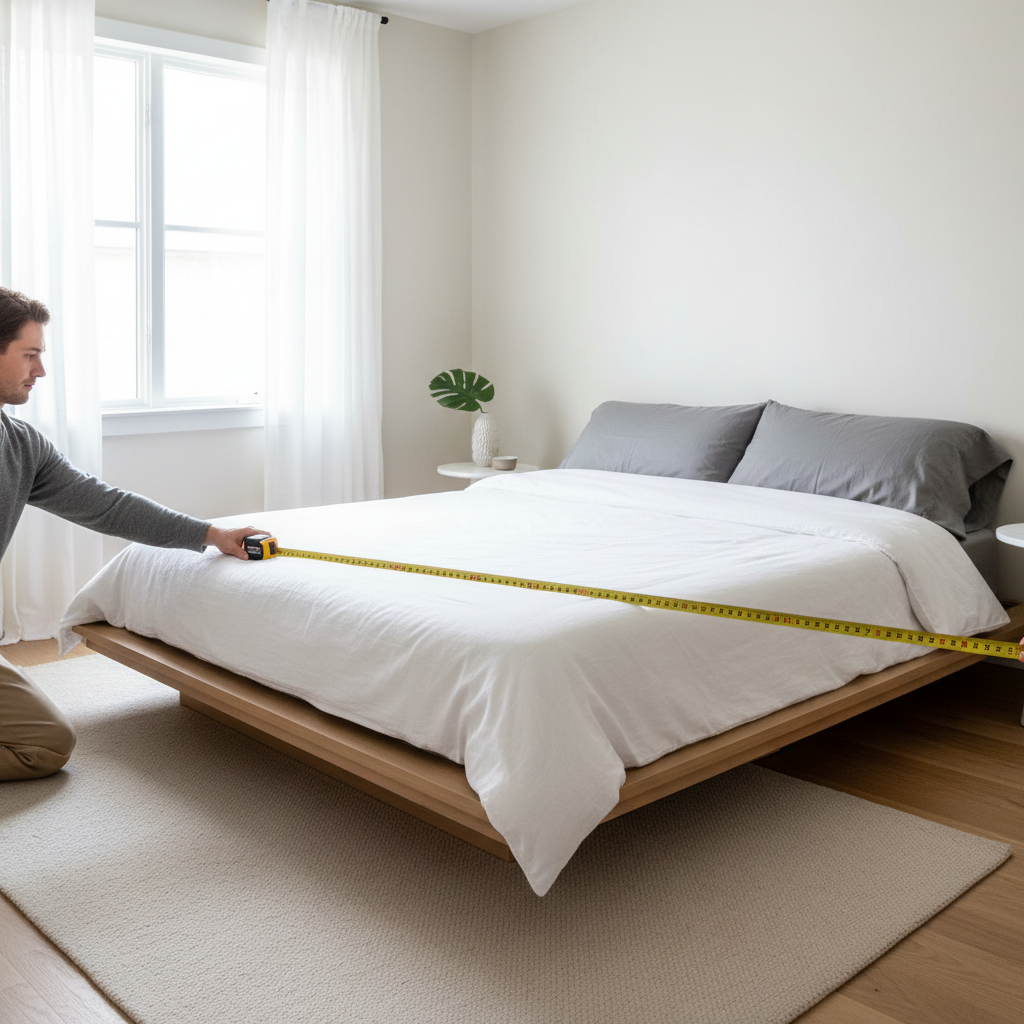
Start by sizing the space (so you don’t waste money)
The biggest frustration with under-bed storage is buying a bin that looks right online, then realizing the lid hits a support beam or the wheels snag on carpet.
- Measure clearance: floor to the lowest point of the frame or slats, not the comforter edge.
- Check the “usable” depth: bed legs, center support, or a trundle rail can steal inches.
- Note your floor type: thick carpet often needs larger wheels or a simple pull strap instead of casters.
- Access pattern: one side against a wall changes everything, you may need long, narrow containers you can pull from the open side.
According to CPSC (U.S. Consumer Product Safety Commission)... it’s smart to avoid overloading furniture and to use storage that stays stable and doesn’t create tipping or trip hazards, especially in tighter rooms where you walk close to the bed.
Pick the right under-bed storage type (quick comparison table)
Not all under bed storage ideas for small bedrooms solve the same problem. Some maximize volume, others are about speed and daily access.
| Option | Best for | Watch-outs |
|---|---|---|
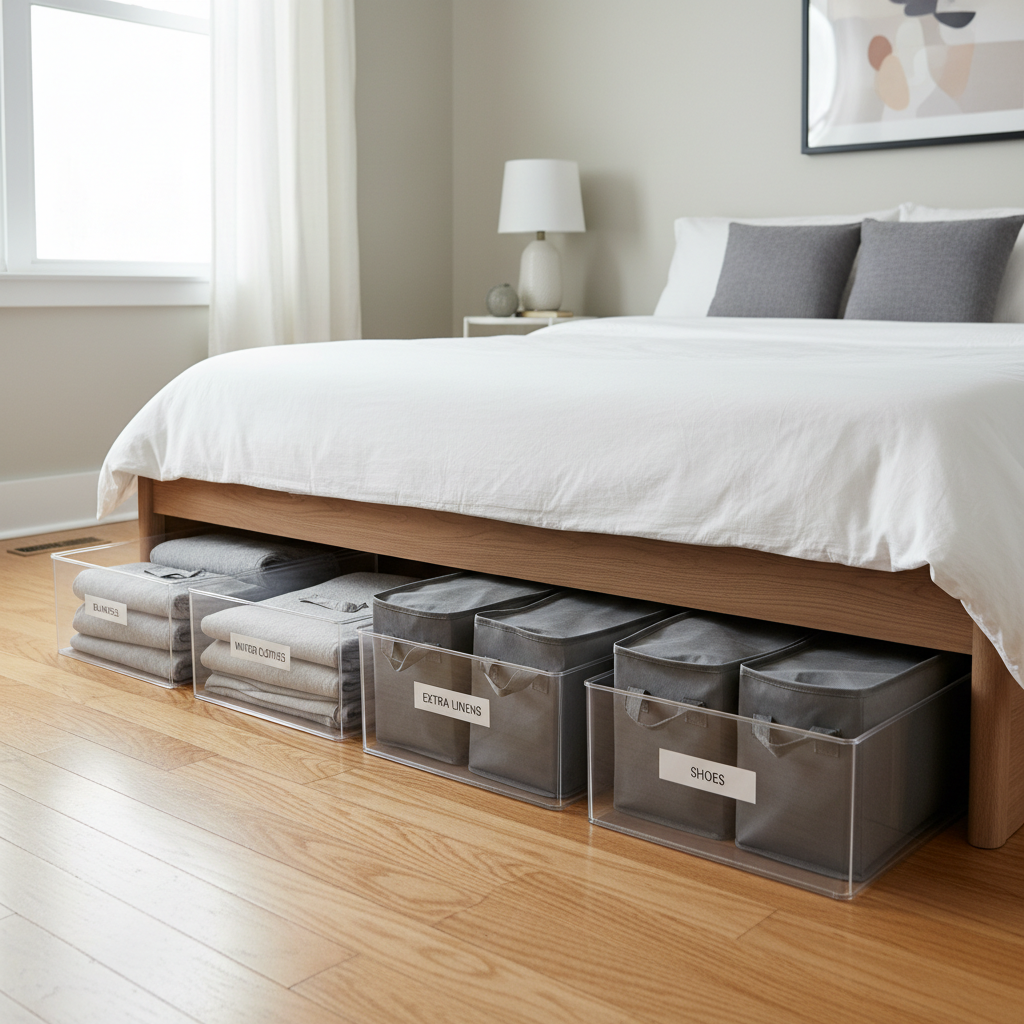
| Low plastic bins with lids | Seasonal clothes, linens, keepsakes | Lids crack, can slide on hardwood |
| Fabric zip bags (soft-sided) | Bulky items like comforters, sweaters | Less protection from dust/moisture |
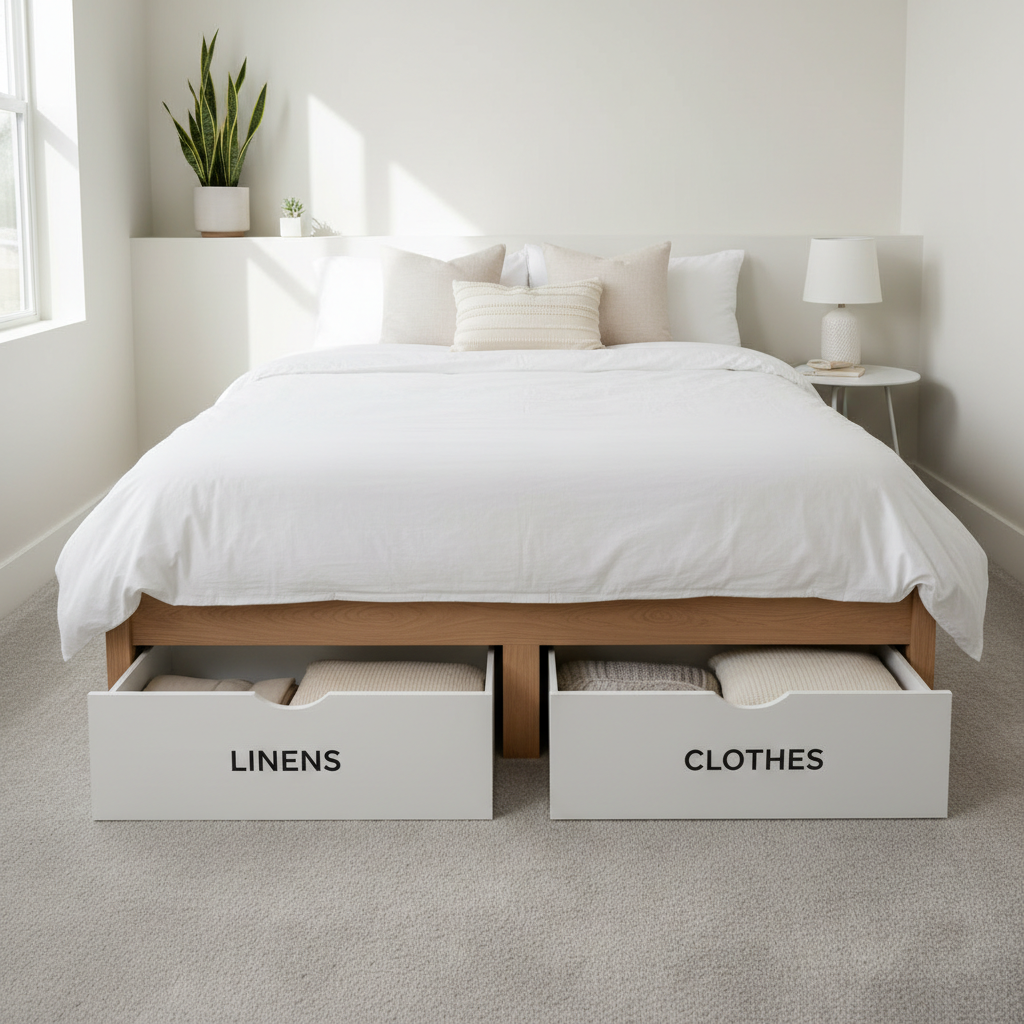
| Rolling drawers / wheeled totes | Frequent access, shoes, gym gear | Wheels struggle on thick carpet |
| Vacuum-seal bags (inside a bin) | Max compression for seasonal textiles | Not ideal for delicate fibers long-term |
| DIY plywood drawer on sliders | Custom fit for awkward frames | Time, tools, and smooth floor needed |
What to store under the bed (and what usually shouldn’t go there)
Under-bed space is prime real estate, but it’s not neutral. Dust, temperature swings, and occasional moisture in older buildings can affect what you store.
Great candidates
- Extra bedding: spare sheets, duvet covers, guest pillowcases.
- Off-season clothing: jackets, boots, summer shorts, holiday items.
- Shoes: especially if you use divided organizers to prevent scuffs.
- Workout gear: bands, small weights, yoga blocks, towels.
Usually a bad idea
- Food or anything scented: it can attract pests and hold odors.
- Important documents or photos: store higher up and drier, ideally in a sealed file box.
- Fragile collectibles: they get bumped when you pull bins out.
If you’re in a basement-level unit or you’ve had humidity issues, consider a sealed bin plus a moisture absorber, and if you’re unsure what’s safe to store, it’s reasonable to ask your building maintenance or a home professional for guidance.
A fast self-check: why your under-bed storage keeps failing
People blame “not enough space,” but in small rooms the real culprit is friction. If it’s annoying to access, you stop using it properly.
- You can’t pull containers out with one hand: too heavy, no wheels, or no pull strap.
- Everything is mixed: one bin has shoes, cables, and a random scarf, so you rummage and make a mess.
- No labels: you rely on memory, which works until it doesn’t.
- The bed blocks access: nightstands or a tight layout make the “good” side unusable.
- Containers don’t match your habits: you chose deep bins for items you reach for weekly.
If two or more feel true, your next step is not buying more storage, it’s simplifying what goes under there and making retrieval easy.
Room-by-room practical setups (steps you can copy)
Below are under bed storage ideas for small bedrooms that work in real layouts, including rooms where only one side of the bed is reachable.
Setup A: “One-open-side” bed against a wall
- Use two long, low bins that pull from the open side, instead of four shorter ones you can’t reach.
- Put most-used items nearest the foot so you’re not kneeling in a tight corner.
- Add stick-on label holders on the short end facing out.
Setup B: Shared bedroom (kids, roommates, couples)
- Split by person: left side, right side, with color-coded bins.
- Store only “category” items under the bed, like extra bedding or seasonal clothes, not daily chaos.
- Use a quick rule: if it doesn’t fit back in 30 seconds, the container is too small or too full.
Setup C: Tiny closet, lots of clothes
- Move off-season clothing under the bed, keep a smaller in-closet capsule for the current season.
- Use vacuum-seal bags only for bulky layers, then place them inside a lidded bin to prevent punctures.
- Keep a simple inventory note in your phone: “Under-bed Bin 1: sweaters + scarves.”
Make it stay organized: a simple system (labels, zones, reset)
The difference between “clever storage” and storage that actually helps is maintenance. Not intense, just consistent.
- Create zones: linens, shoes, seasonal, gear. One zone per container.
- Use labels you can read standing up: front-facing, big text, no cute codes.
- Limit fill level: stop at about 80% so items slide in and out without a fight.
- Set a reset trigger: change of season, daylight savings, or when you swap bedding.
One small trick that helps: put a cheap, thin flashlight or a motion light near the bed, because dark corners make you “deal with it later,” and later becomes never.
Safety, airflow, and other “not fun but important” notes
Most under-bed setups are safe, but a few details matter, especially in small bedrooms where you move around half-asleep.
- Don’t block vents or heaters: if your room has floor registers near the bed, keep airflow in mind.
- Mind weight and balance: heavy items near the center support, lighter items near the sides.
- Watch for allergens: dust builds up under beds, sealed containers can help, and frequent vacuuming may reduce triggers for some people.
- Avoid trip hazards: straps and handles should tuck in, wheels should roll smoothly.
If you’re dealing with mold, pests, or persistent dampness, storage choices can get tricky, and it’s worth consulting a qualified home professional rather than guessing.
Key takeaways you can use this weekend
Good under bed storage ideas for small bedrooms come down to fit, access, and a bit of discipline around categories.
- Measure first, including center supports and floor type.
- Match container style to frequency: wheels for weekly items, sealed bins for seasonal items.
- Store the right stuff, textiles and seasonal gear beat paperwork and anything fragile.
- Label and zone, so you stop rummaging.
If you pick one action, make it this: choose two categories you want to relocate under the bed, buy or repurpose containers that fit that exact use, then label them before you slide anything in.
Conclusion: make the bed earn its footprint
Small bedrooms rarely need “more space,” they need space that behaves. Once your under-bed area holds the right things in the right containers, the rest of the room opens up fast, your surfaces stay clearer, and cleaning becomes less annoying. Take 15 minutes to measure, choose one storage style that matches your floor and habits, then keep a quick seasonal reset on your calendar.
If you want the most painless start, begin with linens and off-season clothing, those categories tend to stay stable and give you a visible win without constant re-sorting.