
Tiny pantry ideas for small kitchens usually come down to one thing: stop treating your pantry like a single “cabinet,” and start treating it like a set of micro-zones that each earn their space.
If your kitchen feels like it’s always out of room, it’s rarely because you own “too much.” More often, food and tools get stored where they’re hard to see, hard to reach, and easy to forget, then you buy duplicates and the cycle repeats.
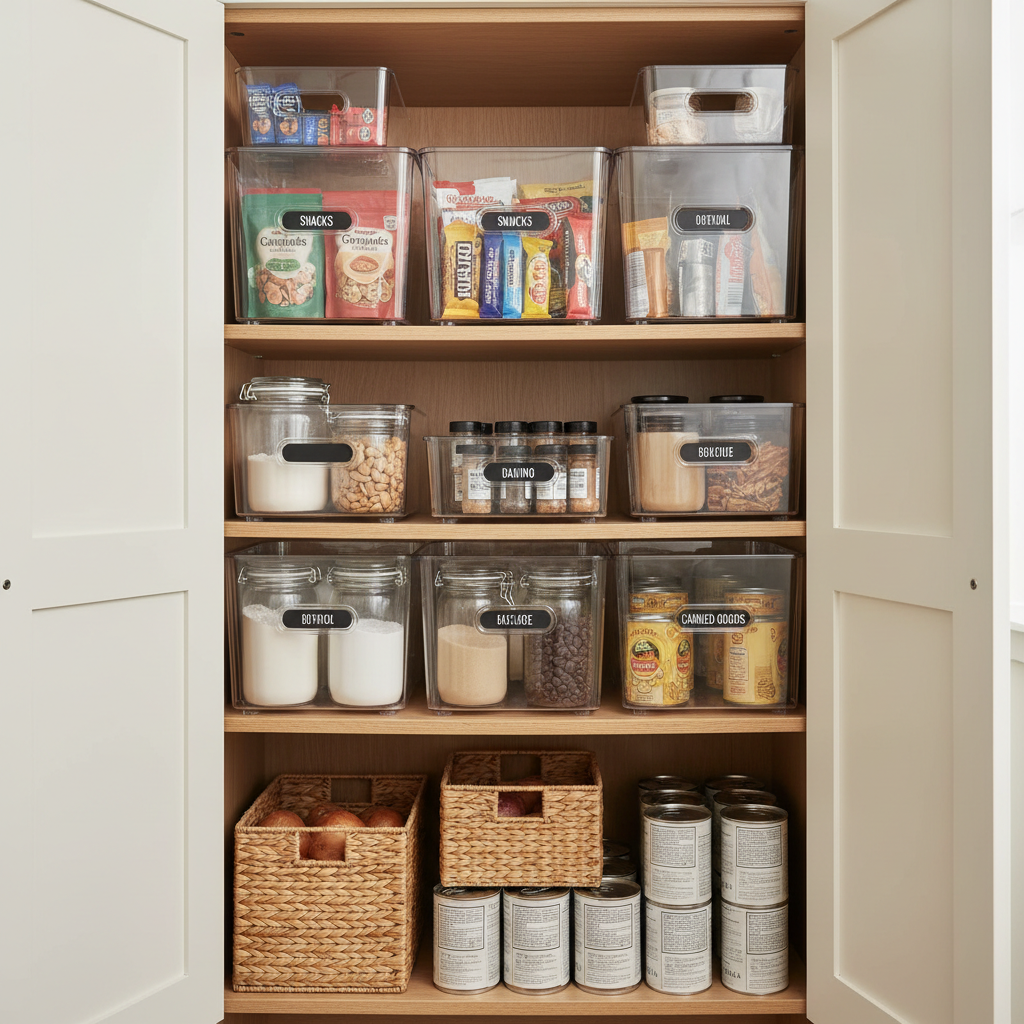
This guide focuses on practical, renter-friendly moves and a few “worth it” upgrades. You’ll get a quick self-check, a table of storage options, and steps you can actually do in an hour or a weekend, depending on your patience level.
Why tiny pantries feel impossible (and what’s really going on)
Small kitchens punish messy systems. A couple of common patterns show up again and again.
- Vertical space is wasted: tall cabinets turn into one big stack, so items in back become “pantry archaeology.”
- Packaging fights you: half-open bags, odd-sized boxes, and bulky multipacks don’t tessellate, they sprawl.
- No zones, no rules: when snacks, baking, and dinner staples mix, you spend time hunting, not cooking.
- Accessibility isn’t planned: the stuff you use daily ends up on high shelves, and the rarely used items sit front and center.
According to USDA Food Safety and Inspection Service (FSIS), dry goods storage should prioritize clean, dry conditions and appropriate containers, which is a helpful reminder that “organized” also needs to be practical and safe, not just pretty.
A quick self-check: what kind of small-kitchen pantry are you working with?
Before you buy organizers, identify your container. Your best tiny pantry ideas for small kitchens depend on what you actually have.
- One narrow cabinet (12–18 inches wide): you need pull-outs, risers, and strict categories.
- Upper cabinets only: you need door storage and lightweight bins you can pull down.
- No pantry cabinet at all: you need a slim freestanding unit or a cart, plus a “backstock” plan.
- Deep base cabinet: you need sliding drawers or bins that come to you, otherwise the back becomes dead space.
- Rental limitations: you need no-drill solutions, tension rods, over-the-door racks, and removable labels.
If you can answer one more question, it gets even easier: are you short on space, or short on visibility? Most people think it’s space, but visibility is usually the real culprit.
High-impact tiny pantry layout ideas (use zones, not piles)
When space is tight, layout beats containers. A simple zoning approach makes the pantry feel bigger because your brain stops scanning everything.
Try the 5-zone method (even if your “pantry” is one shelf)
- Daily grab: coffee/tea, breakfast items, lunch add-ons, the things you touch every day.
- Dinner base: pasta, rice, canned tomatoes, beans, broths, sauces.
- Quick snacks: snacks get their own bin so they don’t invade every corner.
- Baking: flour, sugar, chips, sprinkles, extracts, kept together to avoid duplicate purchases.
- Backstock: extras and bulk items, ideally higher or farther back, clearly marked.
Keep “daily grab” between waist and eye level. Put backstock high, and anything heavy (like big jars) lower for fewer accidents.
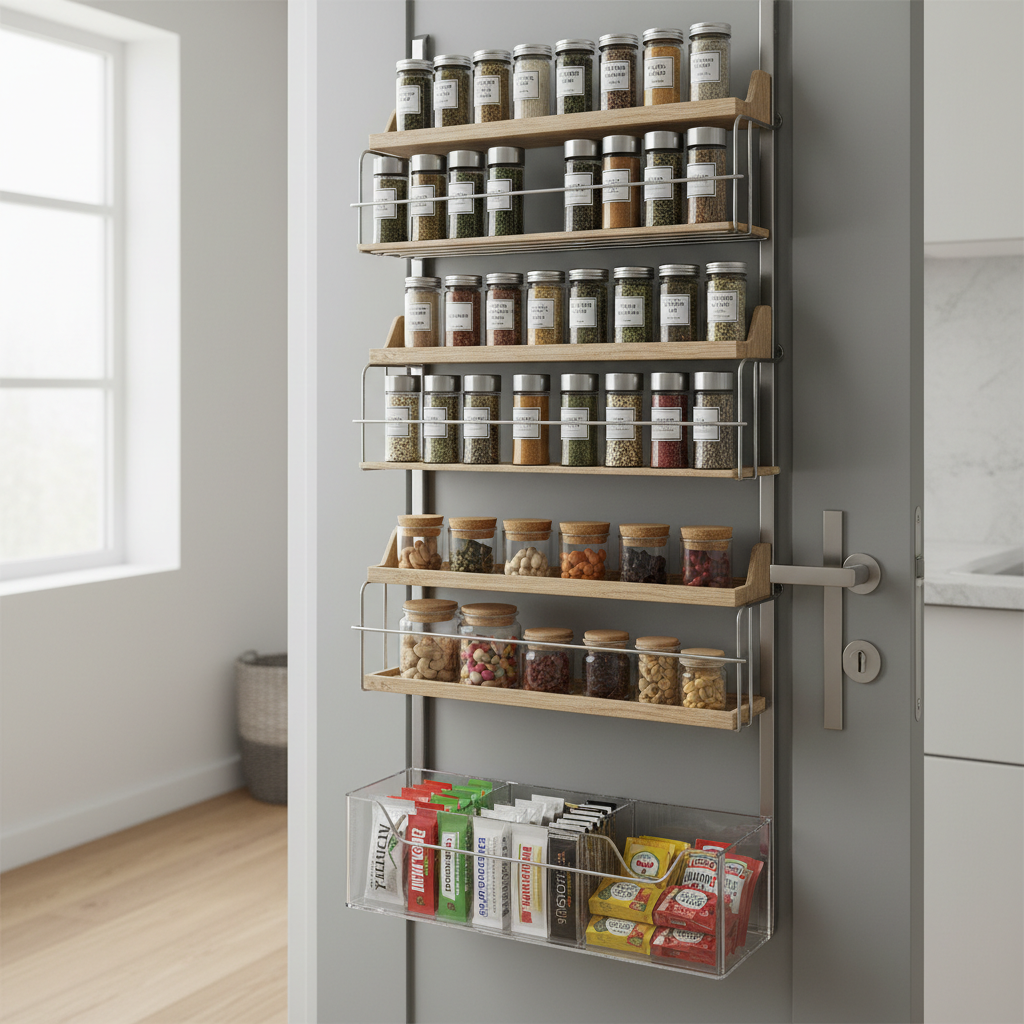
Use the door as a “thin shelf”
Door storage is one of the most reliable tiny pantry ideas for small kitchens because it adds square footage without stealing cabinet room. Look for slim racks for spices, small jars, packets, wraps, and snack bars. Avoid overloading: too much weight can warp hinges over time.
Tools that actually work in tiny pantries (with a simple comparison table)
Not every organizer helps. In small spaces, you want things that improve reach and visibility, not just “contain.”
| Tool | Best for | Why it helps | Watch-outs |
|---|---|---|---|
| Clear handled bins | Snacks, breakfast, packets | Pulls out like a drawer, keeps categories together | Measure shelf depth first |
| Pull-out wire drawers | Deep base cabinets | Turns “back of cabinet” into usable space | May require screws; check rental rules |
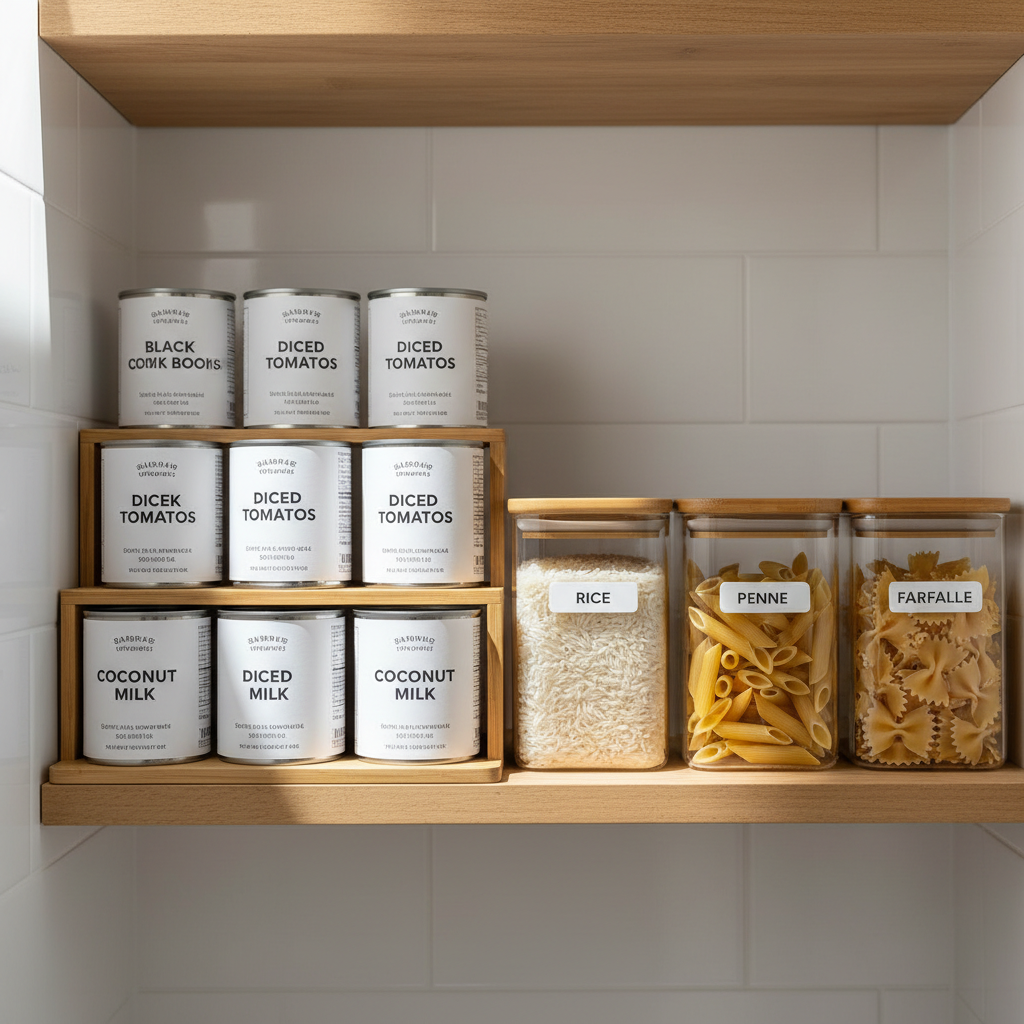
| Tiered shelf risers | Cans, spices, small jars | Stops the front row from blocking the back row | Can wobble if overloaded |
| Lazy Susans | Sauces, oils, nut butters | One spin replaces digging and knocking things over | Choose a rimmed style to prevent falls |
| Airtight containers | Flour, sugar, cereal, rice | Stackable, tidy, often keeps pests out | Label clearly to avoid “mystery powders” |
If you only buy one thing, many households get the most mileage from clear handled bins, because you can “edit” your pantry by moving whole categories at once.
Step-by-step: a 60-minute pantry reset (no remodel, minimal fuss)
This is the version that works even when you’re tired and your kitchen is already chaotic.
- Step 1: Pull everything from one section only. One shelf or one cabinet, not the entire kitchen.
- Step 2: Sort by use, not by product type. If you make oatmeal daily, keep those pieces together, even if it mixes categories.
- Step 3: Create 2–5 “containers”. Bins, shoebox-size tubs, or even sturdy grocery bags for now.
- Step 4: Put the most-used zone in the prime spot. Eye level wins.
- Step 5: Add one visibility booster. A riser for cans or a lazy Susan for sauces is usually enough.
- Step 6: Label lightly. Painter’s tape and a marker works. Fancy labels can come later.
According to FDA guidance on food storage and handling, keeping foods in appropriate, closed containers and maintaining clean storage areas reduces contamination risk, so the “reset” isn’t only aesthetic, it can support safer storage habits too.
Tiny pantry ideas by kitchen type (apartments, rentals, and truly “no pantry” homes)
If you live in an apartment with one skinny cabinet
Go vertical, but keep it stable. Add a riser for cans, use 2–3 bins for categories, and reserve one small “overflow” bin so loose items don’t multiply across shelves.
If you’re renting and can’t drill holes
Focus on removable wins: over-the-door racks, tension rod dividers, freestanding shelf inserts, and removable hooks for lightweight items. If you do use adhesive products, follow manufacturer instructions and test on a hidden area, paint quality varies a lot.
If you have basically no pantry space
Pick one dedicated pantry substitute: a slim rolling cart, a narrow freestanding cabinet, or a closed shelf unit. The closed door matters more than people expect, it reduces visual clutter and makes the kitchen feel calmer.
One more practical tip: split “working pantry” and “backstock.” Keep a week or two of staples in the kitchen, put extras in a closet or under-bed bin, then restock once a week. That single habit can make tiny pantry ideas for small kitchens stick long-term.
Common mistakes that make small pantries worse
- Over-decanting everything: moving every item into containers can look great, but it adds time and cost. Prioritize messy staples (flour, cereal, rice) first.
- Buying organizers before measuring: measure shelf depth, height, and door clearance, especially if you add door racks.
- Storing heavy glass up high: it’s an avoidable safety risk. Keep heavy jars and bottles lower.
- Letting “misc” become a permanent category: a small misc bin is fine, but if it overflows weekly, your zones need adjustment.
- Ignoring expiration and rotation: put newer items behind older ones. It’s basic, but it’s where waste usually starts.
If you notice persistent pests, moisture, or musty smells, it may signal a building issue. In many cases it’s worth consulting your landlord or a qualified professional, because storage containers alone won’t fix water intrusion.
Key takeaways you can use today
- Visibility beats volume: risers, bins, and pull-outs make a tiny pantry feel bigger without adding space.
- Zones prevent duplicates: group by how you use items, not how stores sell them.
- Doors and depth are hidden gold: door racks and pull-out solutions unlock the best “lost” areas.
- Start small: one shelf reset is more realistic than a whole-kitchen overhaul.
If you want one next step, pick one cabinet, create three zones, and add a single tool that improves reach. That’s usually enough to feel immediate relief, and it makes future upgrades obvious.
If you’re trying tiny pantry ideas for small kitchens and keep hitting the same wall, a simple layout plan and a short shopping list tailored to your cabinet measurements can save time and prevent returns, especially in rentals where every change has to be reversible.