
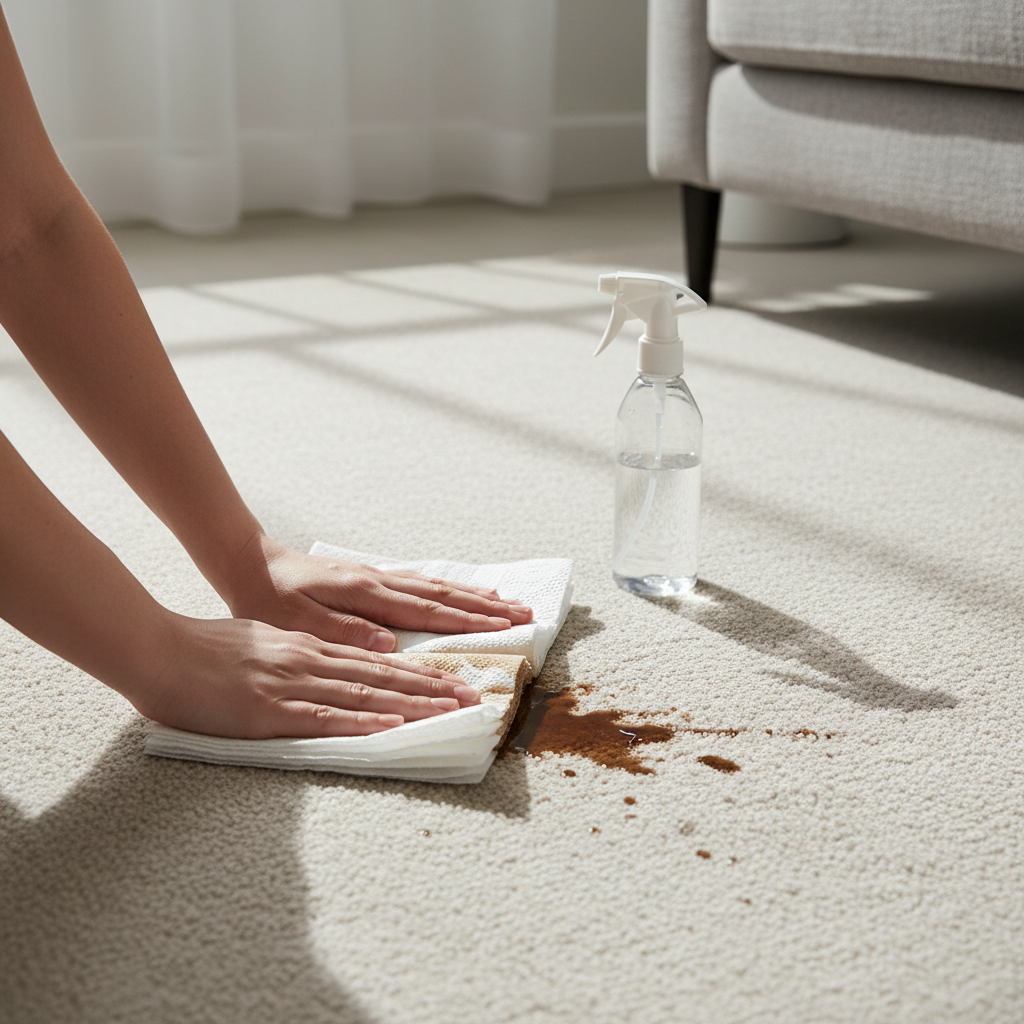
How to clean carpet stains with household items starts with one simple move most people skip: slow down, blot, and avoid scrubbing until you know what you’re dealing with.
If you’ve ever watched a small spill turn into a fuzzy, dark “shadow” a week later, you already know why this matters. Carpets hide residue, and a quick fix can set the stain deeper, especially with heat or the wrong cleaner.
This guide keeps it practical and realistic, common stains, what you can do with pantry basics, and where the limits are. I’ll also point out a few mistakes that look harmless in the moment but often cause the “it came back” problem.
What actually makes a carpet stain “stick”
Most stains become permanent-looking for one of three reasons: the spill soaks into the backing, dye bonds to fibers, or leftover soap and oils attract more dirt later. That last one surprises people, because the spot looks clean on day one.
According to the American Cleaning Institute (ACI), blotting (not rubbing) helps lift soil and moisture without driving it deeper into fibers. That lines up with what you see in real homes: heavy scrubbing frays carpet and spreads the stain edge.
- Water-based stains (juice, soda, mud) usually respond to gentle surfactants and rinsing.
- Oil-based stains (grease, makeup) need a degreasing step before water helps.
- Dye/tannin stains (coffee, wine, tea) often need mild acid and patience.
- Protein stains (milk, blood, pet mess) can set with heat, keep water cool.
Fast self-check: pick the right method before you spray
If you want how to clean carpet stains with household items to actually work, match the cleaner to the stain type. Use this quick checklist and you’ll avoid most “made it worse” outcomes.
1) Is the stain fresh or dry?
- Fresh (minutes to hours): focus on blotting, dilution, gentle lift.
- Dry (days+): rehydrate first with a light mist of water, then lift in rounds.
2) What’s the texture?
- Sticky suggests sugar or soda, rinse is important.
- Oily/slippery suggests grease, start with dish soap solution.
- Crusty suggests mud or food solids, scrape gently before any liquid.
3) Any carpet risk factors?
- Wool, vintage rugs, or unknown fibers can react to vinegar or peroxide.
- Deep pile can hold moisture longer, raising mildew/odor risk if overwet.
- If you see color transfer onto your towel during testing, stop and switch to a milder method.
Household stain removers: what to use, when, and why
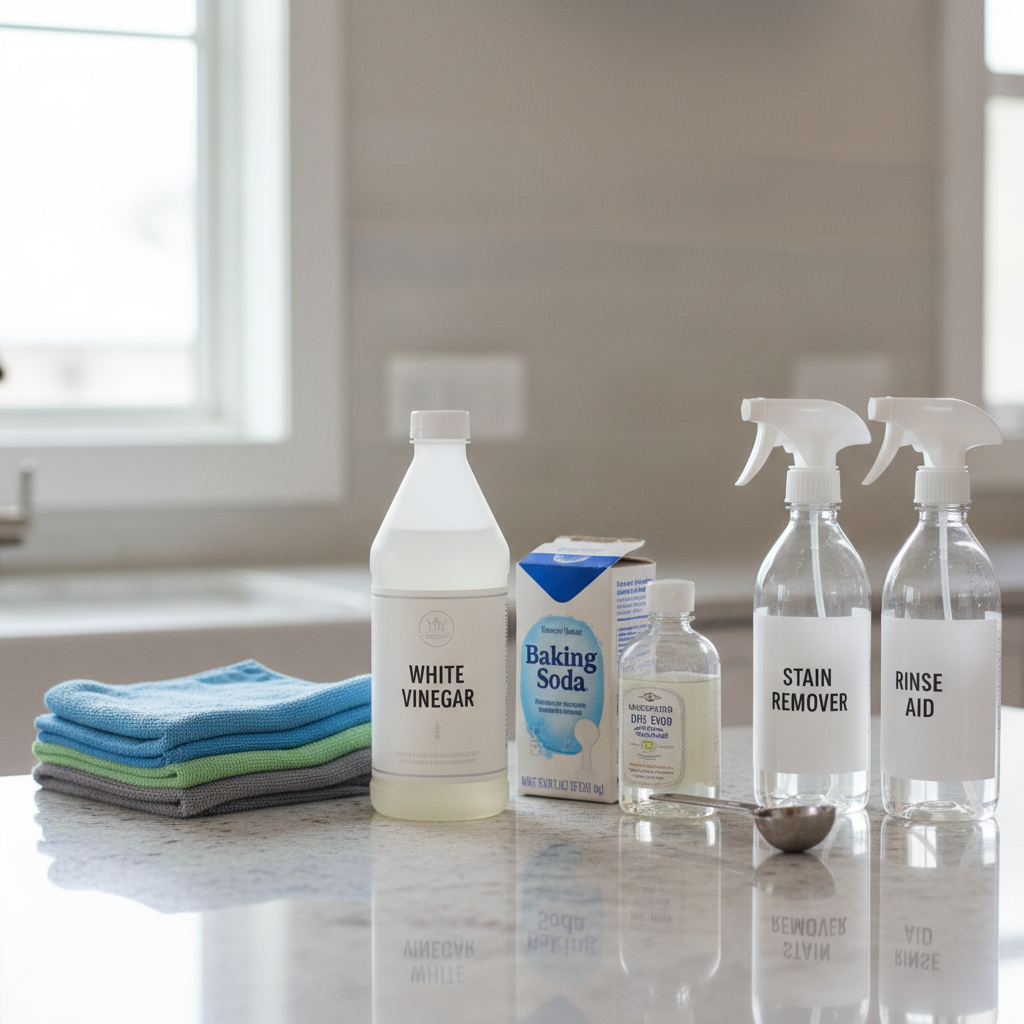
You don’t need a cabinet full of specialty bottles, but you do need a few basics and realistic expectations. Here’s a simple reference table for common household options.
| Household item | Best for | How to mix | Notes |
|---|---|---|---|
| Dish soap (clear) | Grease, food, general soil | 1/4 tsp in 1 cup warm water | Too much soap leaves residue, rinse after. |
| White vinegar | Coffee/tea, mild odors, salt stains | 1:1 vinegar and water | Spot test, avoid on some natural fibers. |
| Baking soda | Odor absorption, damp spots | Sprinkle dry | Vacuum thoroughly after drying. |
| Hydrogen peroxide (3%) | Light carpets, organic stains | Use straight or 1:1 with water | Can lighten dye, test first, avoid dark carpets. |
| Rubbing alcohol | Ink, some dyes | Small amount on cloth | Ventilate, keep away from flame, test. |
The core technique that works on most stains (step-by-step)
Before you jump into stain-specific fixes, use this general method. It’s boring, but it’s the reason many DIY spot cleans actually hold up a week later.
- Step 1: Remove solids. Use a spoon or dull edge to lift, don’t grind it in.
- Step 2: Blot. Press with paper towels or a clean white cloth, swap to a dry area often.
- Step 3: Apply a small amount of solution. Light misting beats soaking, especially on thick carpet.
- Step 4: Work from the outside in. This keeps the ring from expanding.
- Step 5: Blot again, then rinse. Dab with plain water to remove cleaner residue.
- Step 6: Dry fast. Stack dry towels with a little weight, run a fan nearby.
Key point: If you only do one “extra” step, make it the rinse. Residue is a top reason spots reappear, especially in high-traffic areas.
Stain-specific recipes (coffee, wine, grease, pet accidents, ink)
Below are practical starting points for how to clean carpet stains with household items. Always spot test in a hidden corner first, especially on wool, patterned carpet, or rugs with unknown dye.
Coffee or tea
- Blot, then apply a 1:1 mix of white vinegar and cool water.
- Blot until transfer slows, then rinse with plain water and blot dry.
- If a shadow remains on light carpet, a small dab of 3% peroxide can help, test first.
Red wine
- Blot immediately, don’t wait.
- Mist cool water to dilute, blot again.
- Use dish soap solution (very mild), blot, then rinse.
Grease, butter, oily food
- Sprinkle baking soda or cornstarch if you have it, let it sit 10–15 minutes, then vacuum.
- Apply a small amount of dish soap solution, blot, rinse, blot.
- Avoid hot water early on, it can spread oils.
Pet urine or vomit
- Blot as much liquid as possible, then use cool water to dilute and blot again.
- Vinegar solution can help with odor, but it’s not the same as an enzyme cleaner, which targets organic residue.
- If odor keeps coming back, the padding may be affected, household methods sometimes can’t reach it.
According to the CDC, when cleaning up bodily fluids, it’s wise to wear disposable gloves and wash hands afterward. If you have respiratory sensitivities, stronger odors and cleaners can be irritating, so ventilation helps.
Ink
- Dab rubbing alcohol onto a cloth, then blot the ink gently, don’t pour directly onto carpet.
- Move to a clean area of the cloth as ink transfers.
- Rinse with a little water, blot dry, repeat if needed.
Common mistakes that cause stains to return (or spread)
Most “I cleaned it but it came back” stories have the same root causes. If you want how to clean carpet stains with household items to look good long-term, watch these closely.
- Over-wetting the carpet: water moves the stain into padding and can create odor or discoloration.
- Skipping the rinse: soap attracts dirt, the spot turns gray over time.
- Using heat too early: hair dryers and steam can set protein stains.
- Scrubbing hard: frays fibers and creates a bigger, fuzzier patch.
- Mixing random chemicals: some combinations can release irritating fumes, stick to simple, known mixes.
When household items aren’t enough (and what to do next)
Sometimes the honest answer is that DIY hits a wall. Deep pet urine, old dye stains, or large areas that were soaked may need stronger tools, and in some cases replacing pad makes more sense than endless spot cleaning.
- Call a pro if the stain is large, keeps wicking back after drying, or you suspect it reached the padding.
- Consider a rental extractor for widespread traffic-lane grime, but avoid overuse on wool or delicate rugs.
- Check carpet warranty guidance if it’s newer carpet, some manufacturers restrict certain chemicals.
If anyone in the home has asthma, chemical sensitivities, or you’re dealing with unknown substances, it’s reasonable to consult a professional cleaner or a medical professional if symptoms show up. Caution is not overkill here.
Key takeaways and a simple plan for your next spill
The most reliable approach is not a magic ingredient, it’s the process: blot, use the mildest effective solution, rinse, and dry fast. Household supplies can handle a lot of everyday messes, but they work best when you keep moisture controlled and don’t rush.
- Do now: build a small kit, clear dish soap, white vinegar, baking soda, clean white cloths.
- Next spill: blot first, then pick a method based on whether it’s oily, dyed, or protein-based.
If you need a more hands-off option, or you’re tackling recurring pet odors and older set-in spots, it may be worth comparing a dedicated enzyme cleaner or scheduling a professional spot treatment so you’re not repeating the same cleanup every weekend.