
Pantry organization ideas for beginners work best when you stop chasing “Pinterest perfect” and build a setup that matches how you actually cook, shop, and store food.
If your pantry feels chaotic, it’s usually not because you own “too much,” it’s because categories are unclear, items hide behind other items, and restocking happens without a system. The result is the same: duplicate purchases, expired food, and that small daily stress of not finding what you need.
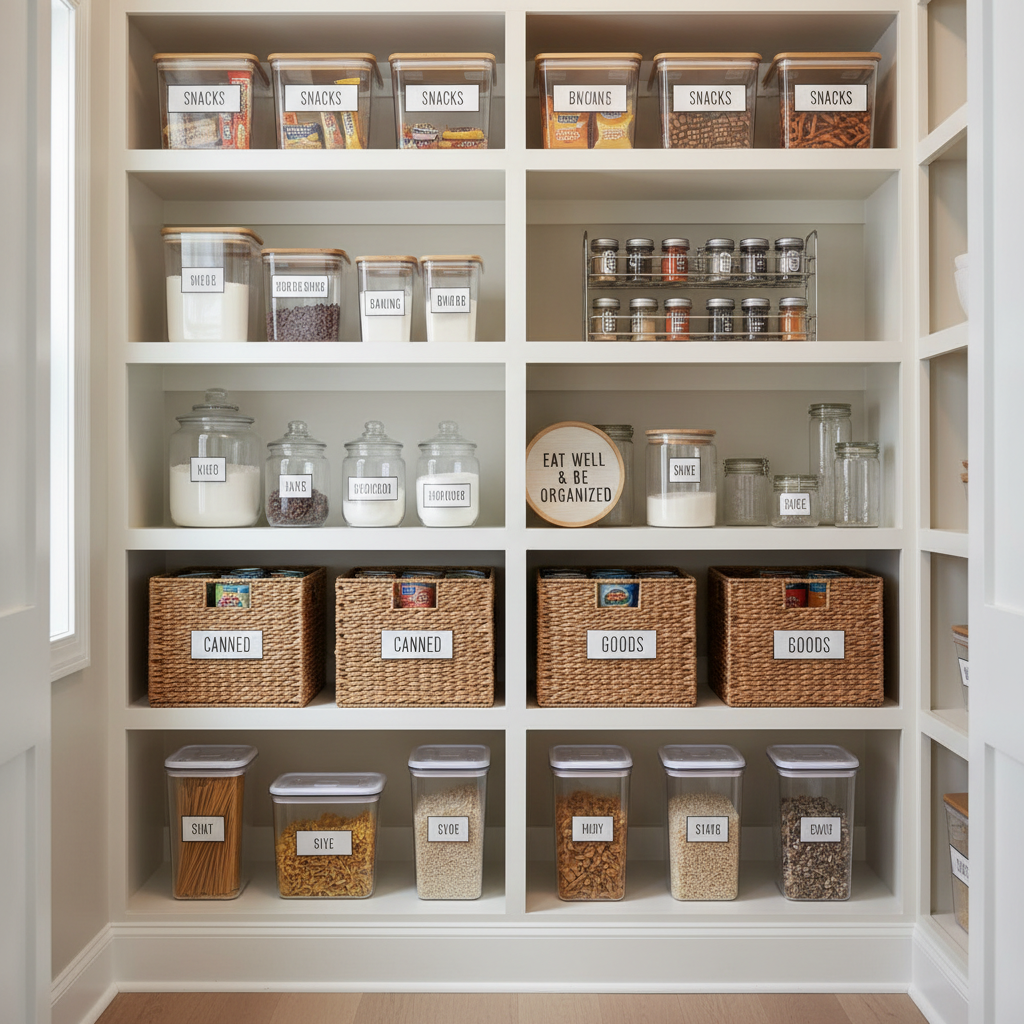
This guide keeps it practical: what to fix first, what to buy (and what to skip), plus a simple maintenance rhythm so it stays organized even on busy weeks.
Why most beginner pantries get messy (and what to fix first)
Most pantry mess happens from a few predictable patterns, and it’s worth naming them because the fix is usually straightforward.
- No “home” for categories, so snacks drift into baking, pasta ends up behind cereal, and you start stacking instead of storing.
- Visibility problems, deep shelves and dark corners make food disappear, then you rebuy what you already own.
- Packaging chaos, half-open bags and odd-shaped boxes topple and waste space, especially in narrow pantries.
- Restock without rules, groceries get shoved wherever there’s room, so the system breaks every week.
Fix order matters. If you start by buying containers before you define zones, you usually end up with bins that look nice but don’t fit what you store.
A quick self-check: what kind of pantry do you actually have?
Before you reorganize, take 3 minutes and identify your starting point. This keeps your “plan” from becoming extra clutter.
- Small closet pantry: limited depth, often one overhead shelf that becomes a graveyard for rarely used items.
- Deep shelves: items hide behind other items, you need pull-outs or strict front-to-back rules.
- Open pantry shelving: looks great when it’s curated, looks stressful when packaging is random.
- Pantry = mixed storage: food + paper towels + appliances, which is common, but needs stronger zoning.
If you’re in the “mixed storage” group, you’re not failing, you just need clearer boundaries so paper goods don’t crush crackers and appliances don’t block dinner staples.
Set up simple zones that match how you cook
Good pantry organization ideas for beginners usually start with 5–7 zones, not 20 micro-categories. You can always refine later.
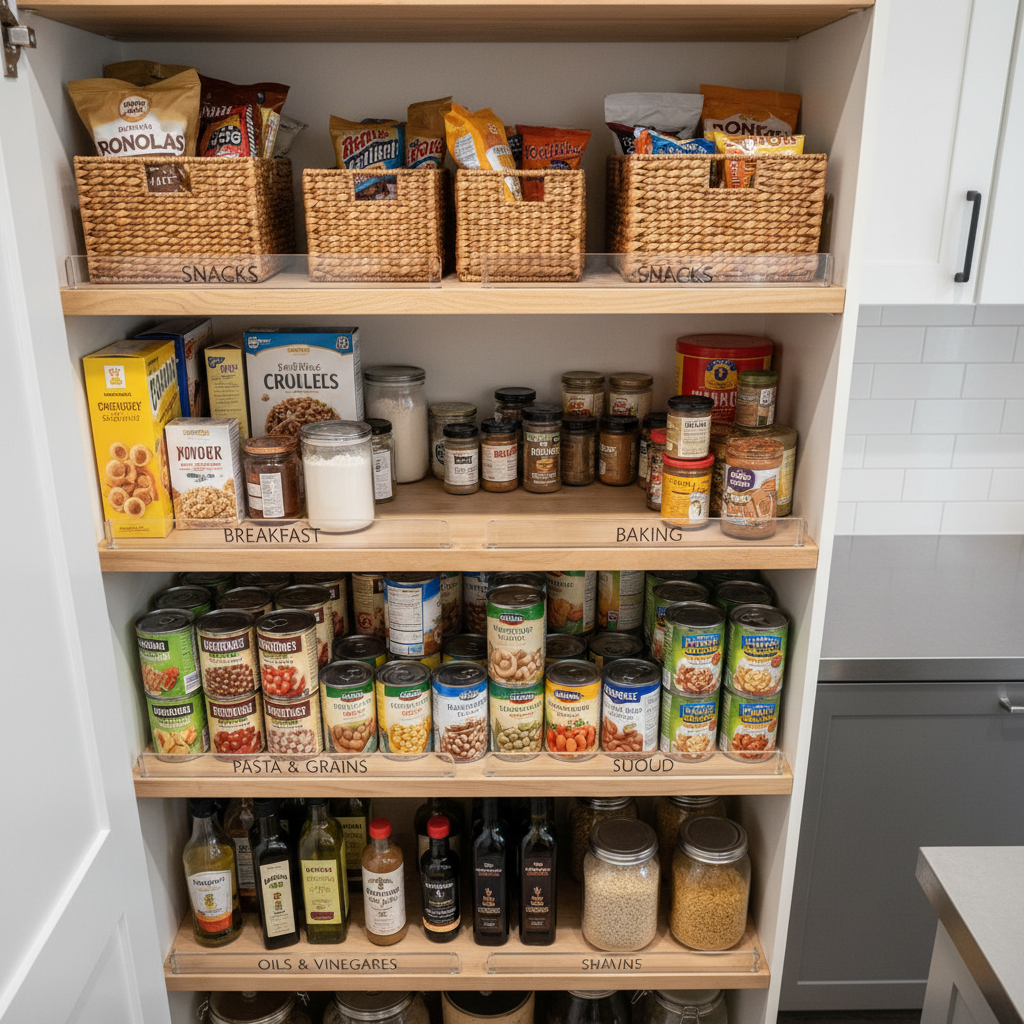
Here are zones that work for many U.S. households, then tweak based on your habits.
- Daily grab: kids’ snacks, bars, nut butter, anything used every day.
- Breakfast: cereal, oatmeal, coffee, tea, pancake mix.
- Dinner staples: pasta, rice, beans, jars of sauce, tortillas.
- Canned and shelf-stable: canned tomatoes, tuna, broth, boxed meals.
- Baking: flour, sugar, chocolate chips, sprinkles, extracts.
- Backstock: duplicates and bulk buys, kept together so they don’t flood daily shelves.
- Non-food (optional): paper goods, lunch bags, food storage, placed away from open food.
One small but powerful rule: keep the “daily grab” zone between chest and eye level. Put slow movers up high, and heavier items lower to reduce tipping and strain.
Containers and tools: what’s worth buying (and what to skip)
You don’t need a full container makeover. The beginner goal is control: fewer spills, better visibility, faster restock.
Worth it in most situations
- Clear bins with handles for snacks, baking packets, taco night items, and “little stuff” that migrates.
- Lazy Susans for oils, vinegars, nut butters, and small jars that hide in corners.
- Label tape + marker, simple and easy to change when your system evolves.
- Airtight canisters (selectively) for flour, sugar, rice, cereal if pests or staleness is a concern.
Often skippable at the start
- Perfectly matched container sets, they can force you into sizes you don’t need.
- Overly specific organizers that only fit one product, they tend to become clutter later.
- Dozens of tiny labels, unless you enjoy maintaining them, keep it simple.
According to the U.S. Department of Agriculture (USDA), safe food storage includes keeping foods in sealed containers to help protect from pests and moisture, and rotating items so older products get used first. That “rotate” part matters as much as the bins.
A beginner 60-minute pantry reset you can actually finish
This is the practical version of pantry organization ideas for beginners: one focused session, no perfection spiral, and you end with a system you can keep.
1) Pull out only one shelf at a time
Dumping the whole pantry onto the floor can work, but it also derails people. One shelf keeps the mess contained and momentum high.
2) Make three quick piles
- Keep: you use it, it’s in date, you like it.
- Relocate: belongs elsewhere (batteries, candles, random tools).
- Question: mystery items, stale snacks, duplicates you forgot existed.
3) Wipe, then build zones with “temporary labels”
Painter’s tape works great. Live with the zones for a week, then commit to nicer labels if it feels right.
4) Put items back using one rule: group and face forward
Group by zone, then face labels toward you so you can “scan” shelves fast. If you can’t see it, you won’t use it.
5) Create a backstock boundary
Choose one shelf or two bins for duplicates. If you buy in bulk, this step keeps your daily area from turning into a warehouse.
Simple storage map: where things go (with a quick table)
If you want fewer decisions, use this placement map. It’s not fancy, it’s just what tends to hold up in real life.
| Pantry area | Best for | Why it works |
|---|---|---|
| Eye level | Daily snacks, coffee/tea, lunch items | Fast access, less “digging” |
| Chest level | Cooking staples, grains, sauces | Easy to scan and restock |
| Low shelves | Canned goods, drinks, heavy backstock | More stable, safer lifting |
| Top shelf | Entertaining items, seasonal baking, rarely used gear | Keeps prime space for daily life |
| Door/side (if available) | Small packets, wraps, spices (lightweight only) | Uses “dead space” without blocking shelves |
Key point: if you have kids, make one lower “approved snacks” bin. It cuts down on constant requests and half-opened boxes.
Keep it organized: a 5-minute weekly routine (plus common mistakes)
The reason many systems fail is maintenance friction. If upkeep takes 30 minutes, it won’t happen. If it takes 5, it usually sticks.
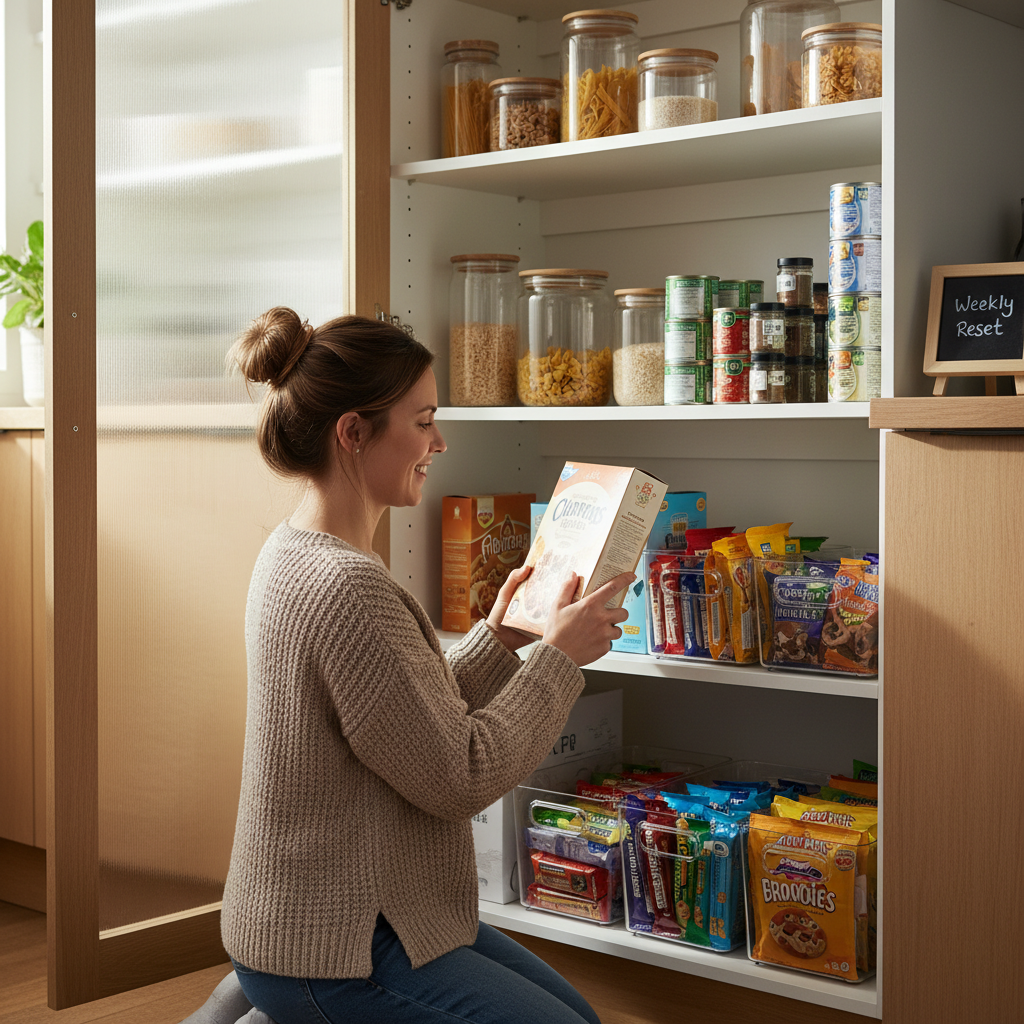
Weekly (5 minutes)
- Pull forward anything that drifted to the back.
- Move older items in front, newer behind, especially for snacks and boxed meals.
- Check your “backstock shelf” and bring one duplicate forward if the open one is running low.
Monthly (10–15 minutes)
- Wipe one sticky shelf.
- Scan for expired items, or things you realistically won’t eat.
- Revisit zones if you keep breaking them, that’s feedback, not failure.
Common mistakes that waste effort
- Over-labeling: if you need a label to know where pasta goes, the zone is too complicated.
- Storing by “type of container” (all boxes together) instead of by use (breakfast together).
- Ignoring visibility: deep shelves without bins often revert to piles.
- Buying organizers before measuring: even half an inch matters in narrow pantries.
When you should go beyond DIY (pests, moisture, safety)
Most pantry projects stay in the “simple and satisfying” lane, but a few situations deserve extra attention.
- Recurring pests (ants, pantry moths, rodents): sealed containers help, but you may need building-level fixes. Consider contacting a licensed pest professional if the issue keeps returning.
- Moisture or moldy smells: don’t just cover it with bins. Investigate leaks, ventilation, or humidity, and consider a qualified contractor if you suspect structural moisture.
- Food safety uncertainty: if you’re unsure whether a product is safe to keep, it’s reasonable to check official guidance. According to the U.S. Food and Drug Administration (FDA), following label instructions and safe storage practices helps reduce foodborne illness risk.
If you’re dealing with allergies at home, extra separation and clear labels can reduce mix-ups, and in complex cases it may be worth asking a healthcare professional for personalized guidance.
Conclusion: a beginner pantry that stays calm
A pantry doesn’t need to look like a showroom, it needs to help you cook and shop with less friction. If you take one thing from these pantry organization ideas for beginners, let it be this: create a few strong zones, make items visible, and give backstock a clear boundary.
Pick one action today: either set up a “daily grab” zone, or add two clear bins for the small chaotic items. Do that, live with it for a week, then adjust without guilt.
FAQ
- What are the easiest pantry organization ideas for beginners with no budget?
Start with zoning using what you already own: shoeboxes, small cardboard boxes, or reusable bags as temporary bins. The big win comes from grouping and labeling, not buying containers. - How do I organize a pantry with deep shelves so food doesn’t get lost?
Use pull-out bins or handles so you can “extract” a category like snacks or baking. If you can’t add bins, enforce a front-to-back rule: open items in front, duplicates behind. - Should I decant everything into matching containers?
Usually no, at least not at the start. Decant the few categories that spill or go stale easily, then keep most items in original packaging to save time and reduce maintenance. - How many zones should a beginner pantry have?
In many kitchens, 5–7 zones is the sweet spot: enough structure to prevent chaos, not so many that you forget where things belong. - What’s the best way to store backstock from Costco or bulk shopping?
Give it one dedicated shelf or two bins, and treat it like a mini “store room.” If backstock spreads into daily shelves, the pantry will feel full even when it’s organized. - How do I keep kids from messing up the pantry?
Create one lower bin for kid-approved snacks and a separate bin for “ask first” items. It reduces rummaging, and you’ll notice inventory faster. - How often should I clean out my pantry?
A 5-minute weekly straighten keeps it stable, and a 10–15 minute monthly scan catches expired items. A full reset is usually only needed when your household routine changes.
If you’re trying to simplify grocery runs or stop buying duplicates, a quick pantry reset plus a basic zone plan often gets you 80% of the benefit without turning it into a weekend project. If you want, tell me your pantry type (closet, deep shelves, open shelving) and what you buy most, and I can suggest a tighter zone map.