
How to get hard water stains off glass comes down to one thing, dissolve the mineral buildup without scratching the surface. Those cloudy rings and crusty spots are usually calcium and magnesium deposits that bond tightly to glass, especially around showers, windows, and drinking glasses.
This is worth fixing the right way because the wrong move tends to make it worse, abrasive powders can haze glass, and harsh acids can damage nearby stone, metal trim, or protective coatings. If you’ve ever “cleaned” and ended up with a dull patch, that’s typically etching or micro-scratching, not remaining dirt.
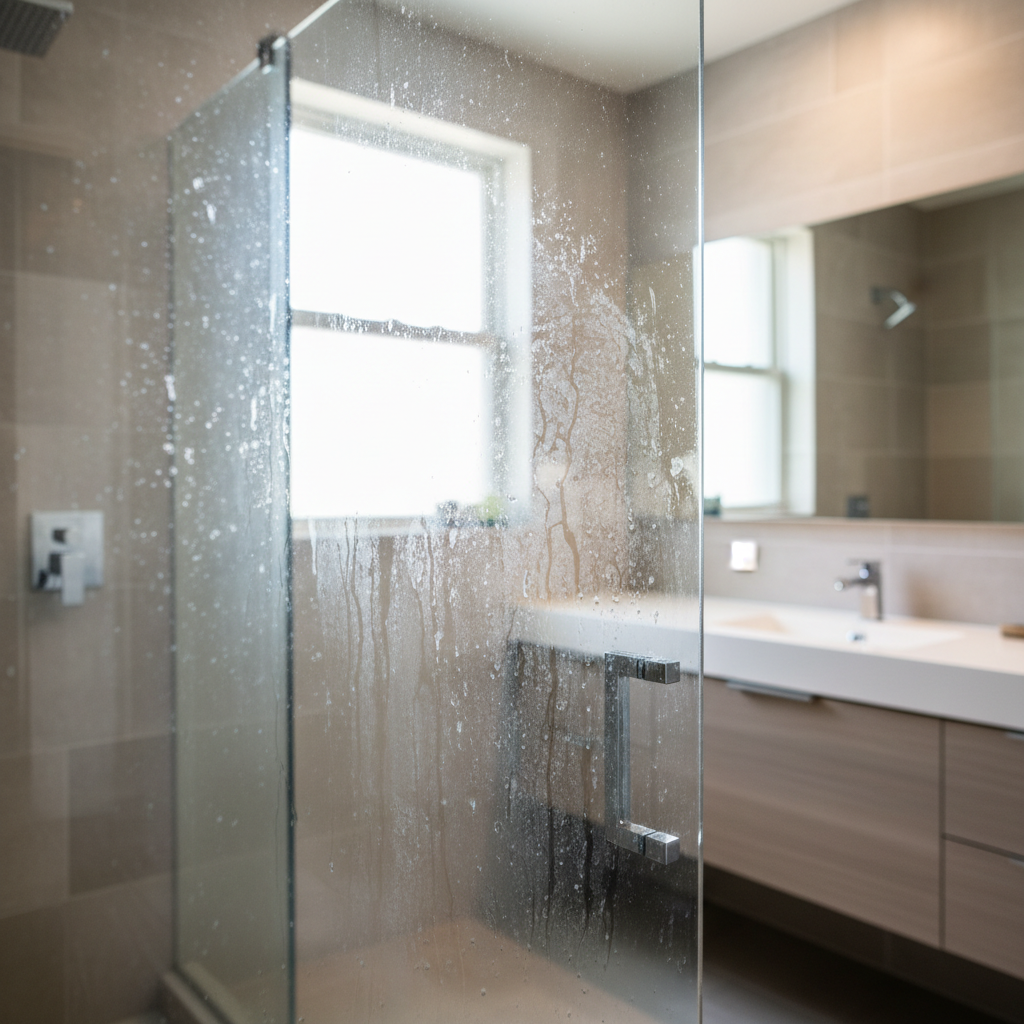
Below you’ll get a practical decision path, what to try first, what to avoid, and how to keep stains from coming back so quickly. I’ll also call out situations where DIY can backfire, like coated glass or nearby marble.
What hard water stains actually are (and why soap makes them stick)
Hard water stains form when water evaporates and leaves minerals behind, most commonly calcium carbonate. Over time, repeated wet-dry cycles build a stubborn layer that regular glass cleaner can’t lift.
In showers, there’s often a second problem, soap scum. Soap scum is a waxy film that binds to minerals and “cements” them onto the glass. That’s why you might wipe daily and still see a cloudy curtain on the door.
According to the U.S. Geological Survey (USGS), “hardness” is mainly caused by dissolved calcium and magnesium in water. In plain terms, if you have hard water, you have the ingredients for spots any time water dries on glass.
Quick self-check: what kind of stain are you dealing with?
Before you reach for a strong acid or a scraper, take 60 seconds to identify what you’re looking at. The “right” method depends on whether it’s mineral scale, soap scum, or etched glass.
- It feels rough or crusty when you run a fingertip over it: usually mineral scale.
- It feels slick or waxy, and smears when wet: usually soap scum with minerals on top.
- It looks cloudy but feels smooth, and doesn’t change much when wet: could be etching (surface damage) or a worn coating.
- White outline at the bottom of a shower door: often thick scale where water pools.
Key point: if the glass looks “frosted” and never clears even when soaked, you may be dealing with etching, cleaning can improve it, but it might not fully disappear.
Start here: least aggressive methods that work in many homes
If you want the safest path, go from mild to strong. This reduces the risk of scratching, and it also helps you learn what your glass tolerates, especially if it has a factory coating.
Method 1: White vinegar compress (good first try)
Household vinegar is mild acetic acid, which often loosens mineral deposits. It’s not magic, but for light-to-moderate spotting it can do a lot.
- Warm the vinegar slightly (not boiling, just warm to the touch).
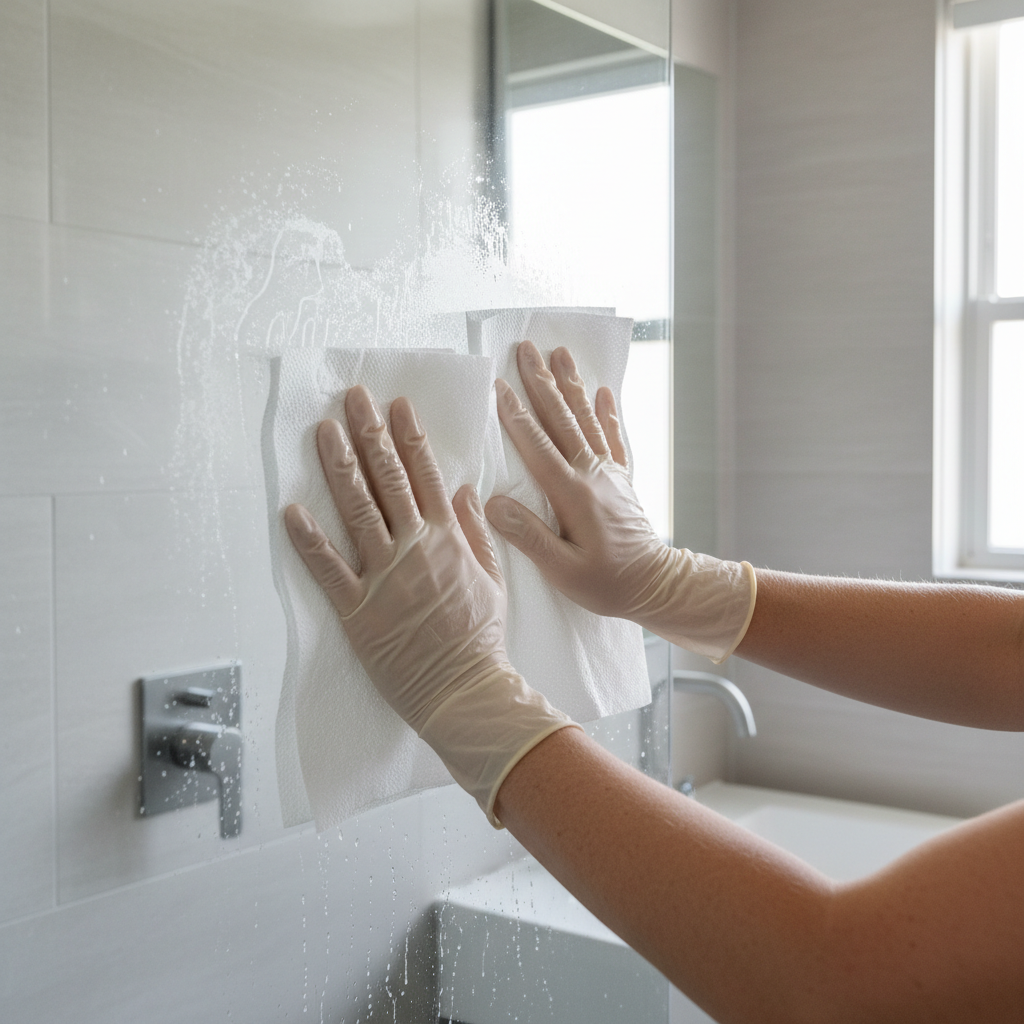
- Soak paper towels or a microfiber cloth, press onto the stained area.
- Leave 10–20 minutes, keep it damp.
- Gently wipe, then rinse well and dry.
If you’re trying how to get hard water stains off glass on a shower door, drying after rinsing matters more than people expect, it prevents new minerals from re-depositing during cleanup.
Method 2: Dish soap pre-wash (when soap scum is the real issue)
If the glass feels slick, do a quick degrease step first, otherwise acid has to fight through oily film.
- Mix a few drops of dish soap in warm water.
- Scrub with a non-scratch sponge.
- Rinse, then move to vinegar (or another descaler) on the now-clean surface.
Method 3: Baking soda paste (only with a light hand)
Baking soda is a mild abrasive. It can help on durable glass, but pressure matters, heavy rubbing can leave fine haze over time.
- Make a thin paste with water.
- Rub gently using a damp microfiber cloth.
- Rinse thoroughly and dry.
When the stains laugh at vinegar: stronger options (use carefully)
For thick, older scale, you may need a stronger acid or a commercial descaler. This is where people get fast results, and also where they can damage surrounding materials if they rush.
Option A: Citric acid solution (often effective, less odor)
Citric acid can be a nice middle ground. It’s commonly used for descaling kettles and coffee makers, and it can work well on glass scale too.
- Dissolve citric acid powder in warm water until it feels “slippery” and tangy.
- Apply as a spray or compress for 5–15 minutes.
- Wipe, rinse, dry.
Option B: Commercial calcium-lime-rust removers (fast, but read the label)
Many CLR-type products target calcium carbonate quickly. Choose one that explicitly lists safe use on glass, and follow dwell time strictly.
- Ventilate the room, wear gloves.
- Apply, wait only as long as directed.
- Rinse more than you think you need to, then dry.
According to the Centers for Disease Control and Prevention (CDC), mixing household cleaners can create hazardous fumes, so avoid combining acids with bleach or ammonia, even if you’re tempted to “boost” cleaning power.
A practical method table: choose what fits your glass and your risk tolerance
Use this as a quick chooser when you’re deciding how to get hard water stains off glass without turning it into a weekend project.
| Situation | Best starting method | Time | Risk notes |
|---|---|---|---|
| Light spots on windows | Vinegar compress | 10–20 min | Rinse well to protect frames |
| Shower glass feels waxy | Dish soap pre-wash + vinegar | 15–30 min | Soap scum blocks acids |
| Thick crust at bottom edge | Citric acid or descaler | 10–20 min | Protect metal and stone nearby |
| Cloudy but smooth glass | Test spot, mild first | Varies | May be etching, limited improvement |
Step-by-step: shower doors (the most common headache)
Shower glass usually has both minerals and body-care residue, so the workflow matters. Here’s a reliable sequence that avoids over-scrubbing.
- Rinse with warm water to soften surface grime.
- Degrease with dish soap solution, rinse.
- Descale with vinegar or citric acid compress, keep it wet.
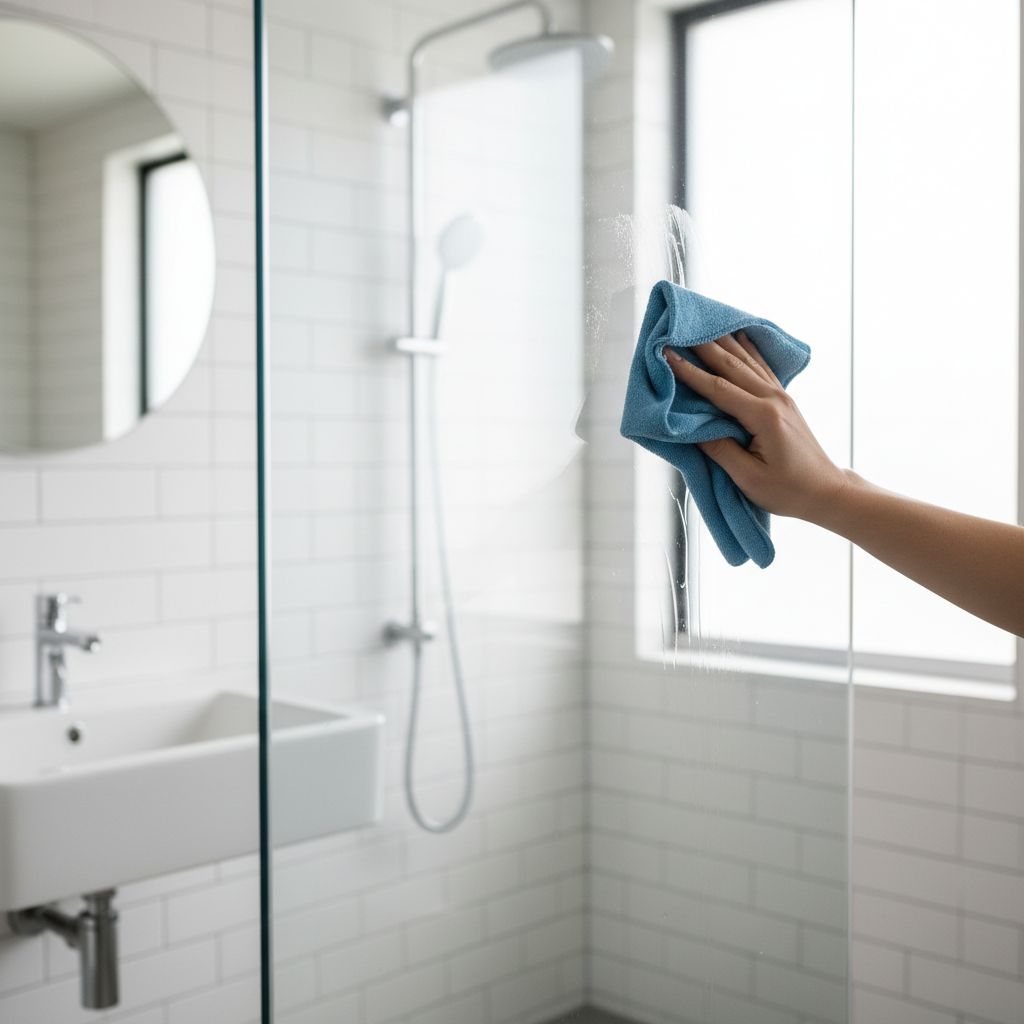
- Agitate gently using a non-scratch pad or microfiber.
- Rinse thoroughly, then dry completely with a towel.
If you’re stuck on the last 10%, don’t jump straight to a razor blade. A blade can work on some glass, but it can also catch on coatings or grit and leave a permanent scratch.
Common mistakes that waste time (or damage glass)
A lot of frustration comes from repeating a method that can’t work on that specific stain, or using a tool that creates new problems.
- Using abrasive powders on delicate or coated glass, it may leave permanent haze.
- Letting strong descalers dry on the surface, residue can etch or stain nearby finishes.
- Skipping the rinse, leftover acid can keep reacting, especially around metal trim.
- Cleaning around natural stone without protection, many stones react badly to acids.
- Expecting glass cleaner to remove scale, it’s great for fingerprints, not minerals.
If you have marble, travertine, or limestone near the glass, it’s usually safer to mask edges and keep acids tightly controlled, and in some setups it may be smarter to consult a stone pro before you experiment.
Keep stains from coming back: maintenance that actually sticks
Once the glass looks clear again, prevention is the part that saves you hours. In many households, a few small habits beat any “miracle” cleaner.
- Squeegee after showers, 30 seconds makes a visible difference over a week.
- Dry the bottom track and corners, that’s where scale thickens.
- Use a weekly mild descaling spray (vinegar solution or a ready-made product safe for glass).
- Consider a water softener if hard water affects multiple areas, impact varies by home and budget.
- Apply a glass protectant if compatible with your door, it helps water bead so minerals cling less.
And yes, if you’re Googling how to get hard water stains off glass every month, that’s usually a sign your water is hard enough that prevention needs to be part of your routine, not a once-a-year reset.
When to call a pro (or at least stop and reassess)
DIY is fine for most spotting, but there are a few situations where professional help often costs less than replacing glass or refinishing stone.
- Suspected etching: pros may polish glass, results vary and can’t always restore full clarity.
- Coated or treated shower glass: aggressive chemicals can strip coatings, check manufacturer guidance.
- Nearby natural stone: acids can permanently damage calcium-based stone, a stone specialist can advise safer options.
- Commercial buildings or large windows: access and safety become the bigger issue, not the cleaner.
Conclusion: a clear plan beats a stronger chemical
Most of the time, getting glass clear again is less about “the strongest product” and more about matching the method to the residue, remove soap film first, dissolve minerals second, then dry so the problem does not instantly restart. If you want a simple next step, try a vinegar or citric acid compress on a small test area, then decide if you need to step up.
Action ideas: Pick one panel, do the dish-soap pre-wash and vinegar compress, then commit to a quick squeegee habit for a week, you’ll know fast whether your routine is working.
FAQ
What removes hard water stains from glass best, vinegar or CLR?
Vinegar is a safer starting point for many homes and works well on light-to-medium buildup. CLR-type products can work faster on thick scale, but they require more caution around metal, grout, and nearby stone, and you should follow label directions closely.
How long should vinegar sit on shower glass?
Often 10–20 minutes is enough if you keep it wet with a paper-towel compress. If it dries out, it stops working well, and you may just be spreading residue around.
Can hard water stains become permanent on glass?
They can appear “permanent” when the glass surface becomes etched. Cleaning may improve the look, but true etching is surface damage, not removable buildup, and results vary depending on severity.
Is it safe to use a razor blade to remove mineral deposits?
Sometimes, but it’s easy to scratch glass if there’s grit under the blade or if the glass has a coating. If you try it, use lots of lubrication and a new blade, and test a small corner first.
Will Magic Erasers remove hard water stains off glass?
They can reduce some haze, but they’re still mildly abrasive. On clear glass they may be fine with gentle pressure, yet on coatings or delicate surfaces they can dull the finish, test first.
How do I clean hard water stains off drinking glasses without leaving a smell?
A short soak in warm water with a little citric acid can work and usually leaves less odor than vinegar. Rinse thoroughly and air-dry, lingering smell often comes from incomplete rinsing.
Why do stains come back right after I clean?
Often it’s leftover cleaner residue plus new minerals drying on the surface. A thorough rinse and a final towel-dry make a bigger difference than most people expect, especially in hard-water areas.
If you’re cleaning the same glass over and over, you might prefer a more streamlined setup, a weekly descaling spray you trust, plus a simple squeegee routine, tends to beat occasional deep scrubbing and keeps the glass looking clearer with less effort.