
The best small kitchen appliances for tiny spaces are the ones that earn their footprint every single day, fold away fast, and replace at least two larger tools you’d otherwise need.
If you cook in a studio, share a galley kitchen with roommates, or just hate counter clutter, the wrong “compact” buy turns into a dusty regret. A lot of small appliances are only small in the box, then they sprawl across your counter with cords, accessories, and awkward storage.
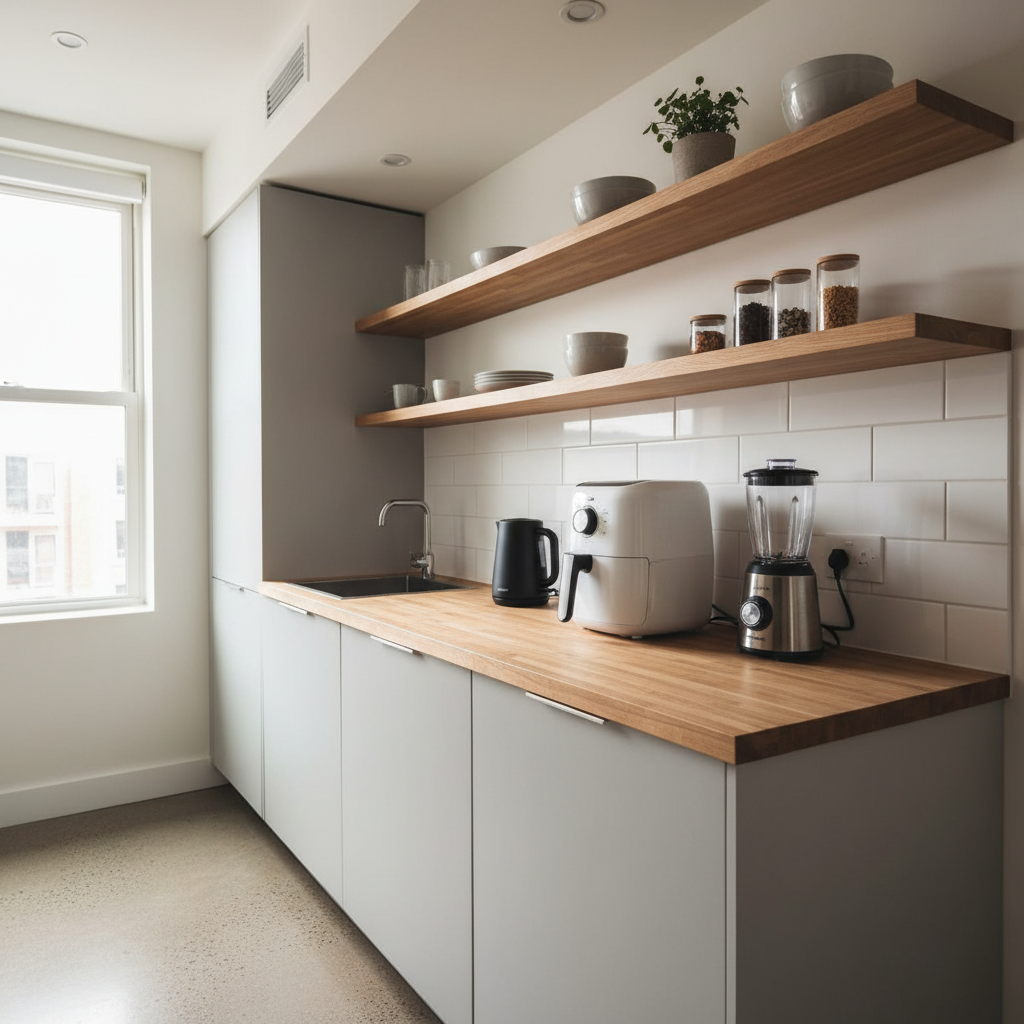
This guide focuses on practical picks that work for real small kitchens: what to prioritize, what to skip, and how to choose appliance sizes that actually fit your cabinets and your habits. You’ll also get a quick decision checklist, a comparison table, and setup tips that make a cramped kitchen feel more workable.
What “best” really means in a tiny kitchen
In a larger kitchen you can buy specialty gadgets and forget about them, in a small one you’re negotiating space every day. Here’s what tends to matter most.
- Footprint and storage shape: a slim rectangle that stores vertically often beats a “compact” cube that can’t fit anywhere.
- Multi-use value: one device that handles two jobs usually wins over two single-purpose tools.
- Heat and ventilation: countertop ovens and air fryers can run hot, so clearance and airflow become part of “fit.”
- Cleanup friction: tiny sinks make complicated parts a dealbreaker.
- Noise: powerful blenders in thin-walled apartments can be a social problem, not just a spec sheet detail.
According to UL Solutions, using cooking appliances with proper ventilation and following manufacturer clearance guidance helps reduce household safety risks, which is especially relevant when counters sit close to walls, curtains, or upper cabinets.
Quick comparison table: space-saving appliances that usually pay off
This table doesn’t crown one “winner,” because the best small kitchen appliances for tiny spaces depend on whether you cook full meals, batch prep, or mostly reheat. It does show what typically earns its keep.
| Appliance | Best for | Why it works in small spaces | Watch-outs |
|---|---|---|---|
| Compact air fryer / air fryer oven | Fast dinners, crispy snacks | Replaces toaster + small oven for many households | Needs clearance, can be bulky with baskets |
| Slim electric kettle | Tea/coffee, quick boiling | Small footprint, fast, easy to store | Scale buildup, cord management |
| Immersion blender | Soups, sauces, smoothies (light) | Stores in a drawer, minimal parts | Not ideal for thick nut butters |
| Compact rice cooker (3–5 cup) | Rice, grains, one-pot meals | Can act as small steamer + warming station | Takes cabinet space, nonstick care |
| Mini food processor | Chopping, pesto, quick prep | Speeds prep without a full-size machine | Extra bowls/lids can clutter |
| 2-slice toaster (slim profile) | Daily toast/bagels | Simple, predictable, small storage | Single-purpose if you already use an air fryer oven |
Top small appliances that make the biggest difference (and how to choose)
1) Compact air fryer: choose by basket shape, not just quart size
A compact air fryer can be one of the best small kitchen appliances for tiny spaces if you use it several times a week. The mistake is buying by “capacity” and ignoring the basket’s footprint and the height needed to pull it out.
- Look for: squarer baskets (more usable surface area), easy-clean basket, clear button layout.
- If your counter is narrow: consider a slimmer air fryer oven style, but check door clearance.
- If you store it away: weight matters more than people think.
Safety note: keep appliances away from curtains and under-cabinet edges, and follow the manual’s clearance guidance, especially for heat-venting models.
2) Immersion blender: tiny tool, big payoff
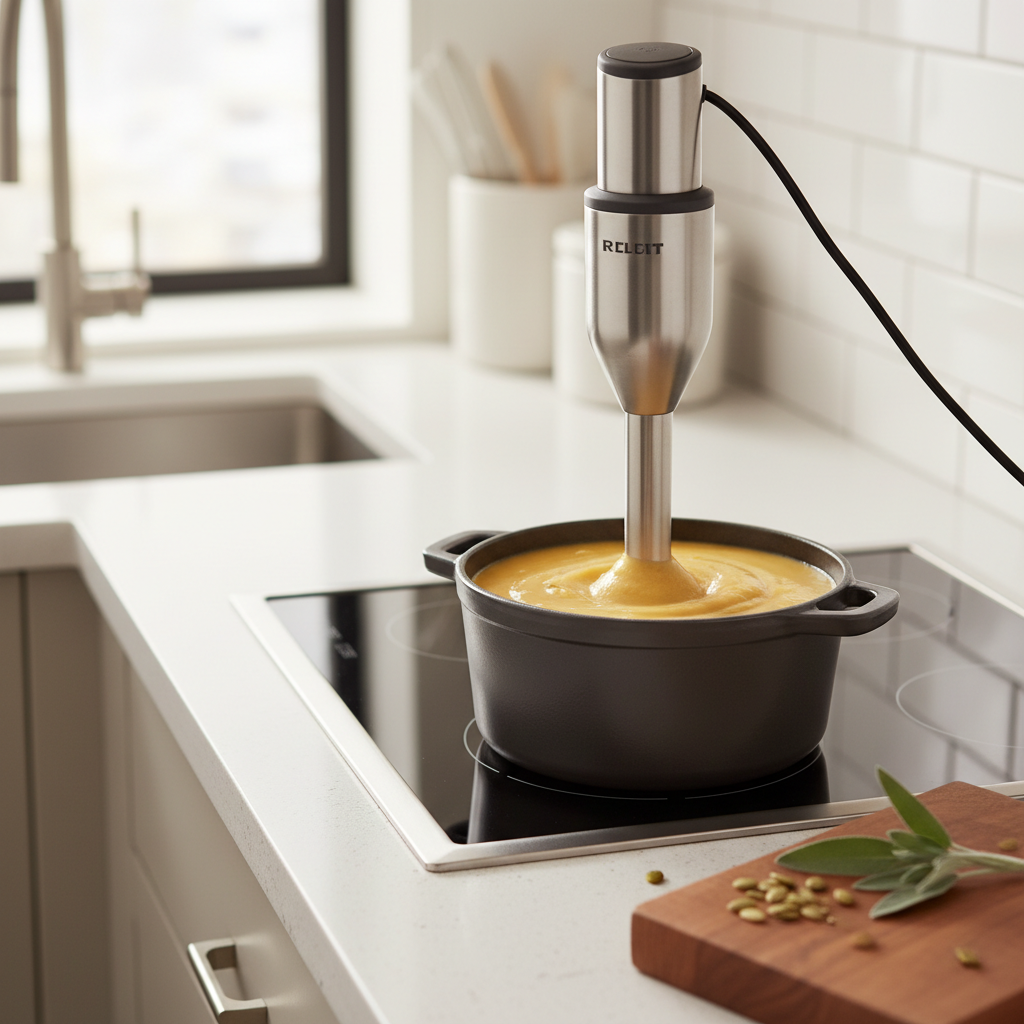
If you want “real cooking” without owning a blender base, an immersion blender is the quiet hero. It’s also one of the few appliances that fits in a drawer and still feels like a kitchen upgrade.
- Great for: pureeing soup in the pot, quick dressings, small smoothies, whipped cream (with whisk attachment).
- Pay attention to: detachable shaft (easier to wash), splash guard shape, and cord length.
3) Electric kettle: the “no-drama” upgrade for small kitchens
For many households, a slim electric kettle is a better space-to-value ratio than a single-serve coffee machine. It boils fast, stores easily, and supports coffee, tea, instant noodles, oatmeal, and quick blanching.
- Look for: auto shut-off, a stable base, and a lid that opens without hitting upper cabinets.
- If your water is hard: plan on descaling, a little maintenance saves performance.
4) Rice cooker (small): a meal-prep anchor that doesn’t require attention
A small rice cooker earns space if you actually cook grains weekly. Beyond rice, you can do quinoa, lentils, steamed veggies, even simple one-pot meals, which reduces stovetop congestion.
- Right size for small spaces: often 3-cup (uncooked) works for one to two people, 5-cup for two to three.
- Prioritize: removable inner lid (cleaning), keep-warm behavior that doesn’t dry food out too fast.
5) Mini food processor: buy it only if it replaces knife work you avoid
Mini processors are handy, but they can also become “extra parts storage.” If you frequently make salsa, pesto, chopped onions, or quick slaws, it’s worth it. If you mostly need occasional chopping, a good knife plus cutting board may win.
- Good fit: you cook at home but hate prep.
- Not ideal: you lack cabinet space for a bowl, lid, and blade that don’t nest well.
Self-check: are you buying for the counter, the cabinet, or the lifestyle?
Before you shop, answer these quickly. It’s the easiest way to choose the best small kitchen appliances for tiny spaces without overbuying.
- Counter reality: Do you have one “parking spot” near an outlet, or do you need everything to store away?
- Cooking pattern: Are you reheating, cooking 3–4 nights a week, or batch-prepping?
- Sink size: Can you comfortably wash a basket or mixing bowl without splashing everywhere?
- Noise tolerance: Do you avoid loud appliances early/late due to neighbors or roommates?
- Heat clearance: Any cabinets directly above your only usable counter zone?
- One-in, one-out rule: Are you willing to donate an old appliance to make room?
If you answered “store away” and “small sink,” prioritize fewer parts, lighter weight, and appliances that clean with one rinse and a quick wipe.
Practical setup tips that make compact appliances feel bigger
Buying the right appliance matters, but arranging your tiny kitchen makes the bigger difference. A few changes usually unlock more usable space than another gadget.
- Create a single appliance zone: one section of counter with an outlet, heat-safe surface, and a small “landing area.”
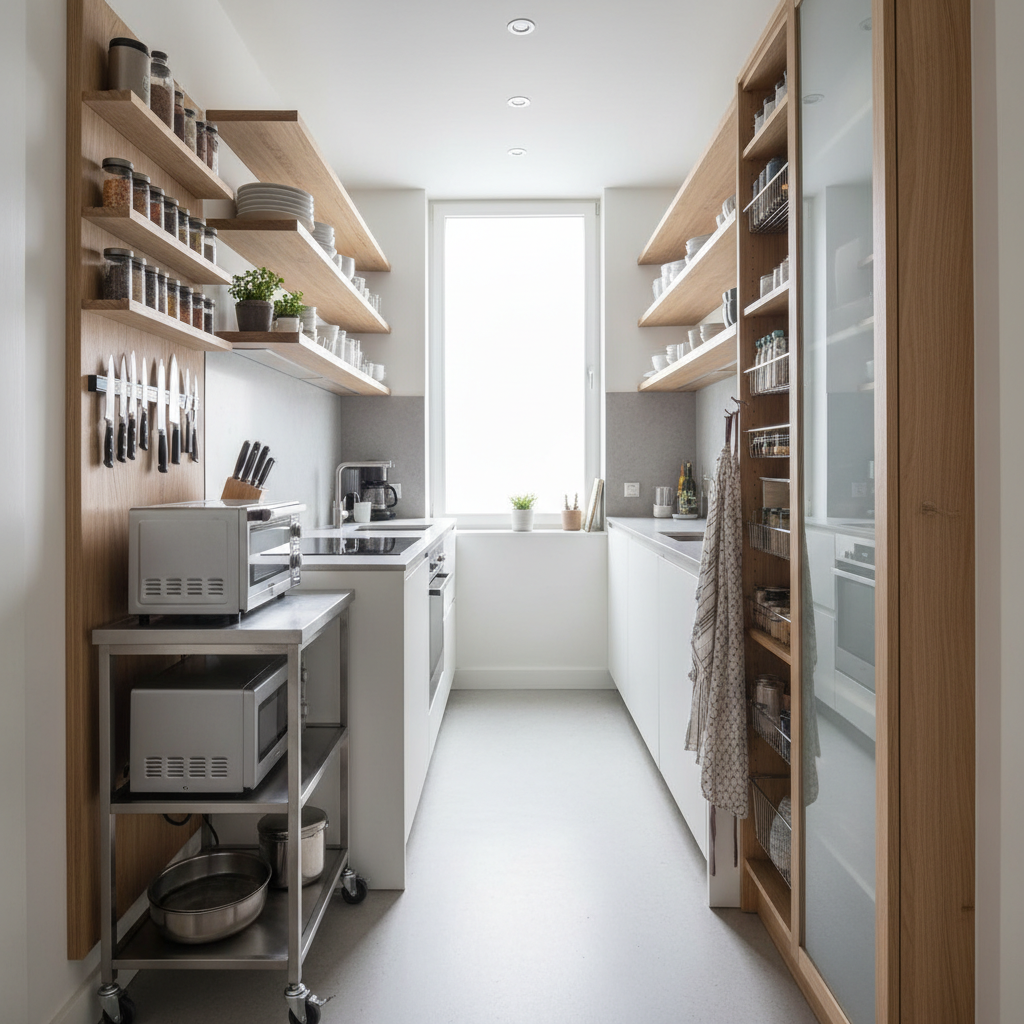
- Go vertical: a sturdy shelf riser or wall rail can get oils, spices, and utensils off the counter.
- Use a rolling cart: if storage is the main issue, a narrow cart can hold a rice cooker or air fryer without stealing prep space.
- Manage cords: short extension cords and clips reduce the visual mess that makes a small kitchen feel chaotic.
- Measure storage, not just counter: the most common fail is an appliance that fits the counter but not a cabinet.
Common mistakes to avoid (these waste space fast)
- Buying duplicates: owning a toaster, toaster oven, and air fryer often means one will sit out forever.
- Falling for “mini” marketing: some compact appliances have large bases or tall profiles that don’t fit under cabinets.
- Ignoring accessories: extra blades, racks, and specialty lids can take more room than the machine.
- Over-optimizing for capacity: in a small kitchen, a slightly smaller appliance you use weekly beats a bigger one you dread moving.
- Storing hot appliances too soon: it sounds obvious, but in tight spaces people rush cleanup, heat trapped in cabinets can be a risk; let items cool fully.
According to NFPA, cooking equipment remains a leading cause of home fires in the U.S., so give heat-producing appliances space, stay nearby while cooking when possible, and keep combustibles away from vents and heating elements.
How to build your “tiny kitchen starter set” (realistic combos)
If you want a simple plan, pick one combo based on how you live. Each set aims to keep storage reasonable while covering most daily tasks.
Combo A: The daily reheat + quick breakfast setup
- Slim electric kettle
- 2-slice toaster or compact air fryer oven (choose one)
- Immersion blender (optional, if you make soups/sauces)
Combo B: The “I cook most nights” setup
- Compact air fryer (basket style) for proteins and veggies
- Small rice cooker for grains and steaming
- Immersion blender for sauces and soups
Combo C: The meal-prep and budget-minded setup
- Small rice cooker
- Mini food processor (only if you prep lots of chopped ingredients)
- Electric kettle for fast boiling and instant meals
Key takeaway: if two appliances do the same job, pick the one you’ll actually leave accessible or use often. That’s usually the one that becomes “best” in tiny spaces.
Conclusion: pick the appliances that match your space, not the fantasy kitchen
The best small kitchen appliances for tiny spaces aren’t the trendiest, they’re the ones that fit your storage, clean up easily, and take pressure off your stove and sink. Start by measuring your real parking spot, then choose one heat appliance, one fast-boil tool, and one prep helper if you truly need it.
If you want one action step today, do a quick audit: pick one appliance you rarely use and remove it, then measure that reclaimed space and shop to that number, not to whatever “compact” means on a product page.