
Small dining room ideas for apartments usually come down to one thing, making a tiny footprint feel intentional instead of squeezed in as an afterthought.
If your dining “room” is really a corner of the living room, a strip of wall near the kitchen, or a space you keep walking through, the wrong choices add daily friction, chairs scrape, traffic jams happen, and the table becomes a dumping ground.
This guide focuses on realistic moves, table shapes that fit, seating that tucks away, lighting that defines the zone, and storage that doesn’t steal precious inches. You’ll also get a quick self-check, a planning table, and a few mistakes that waste money fast.
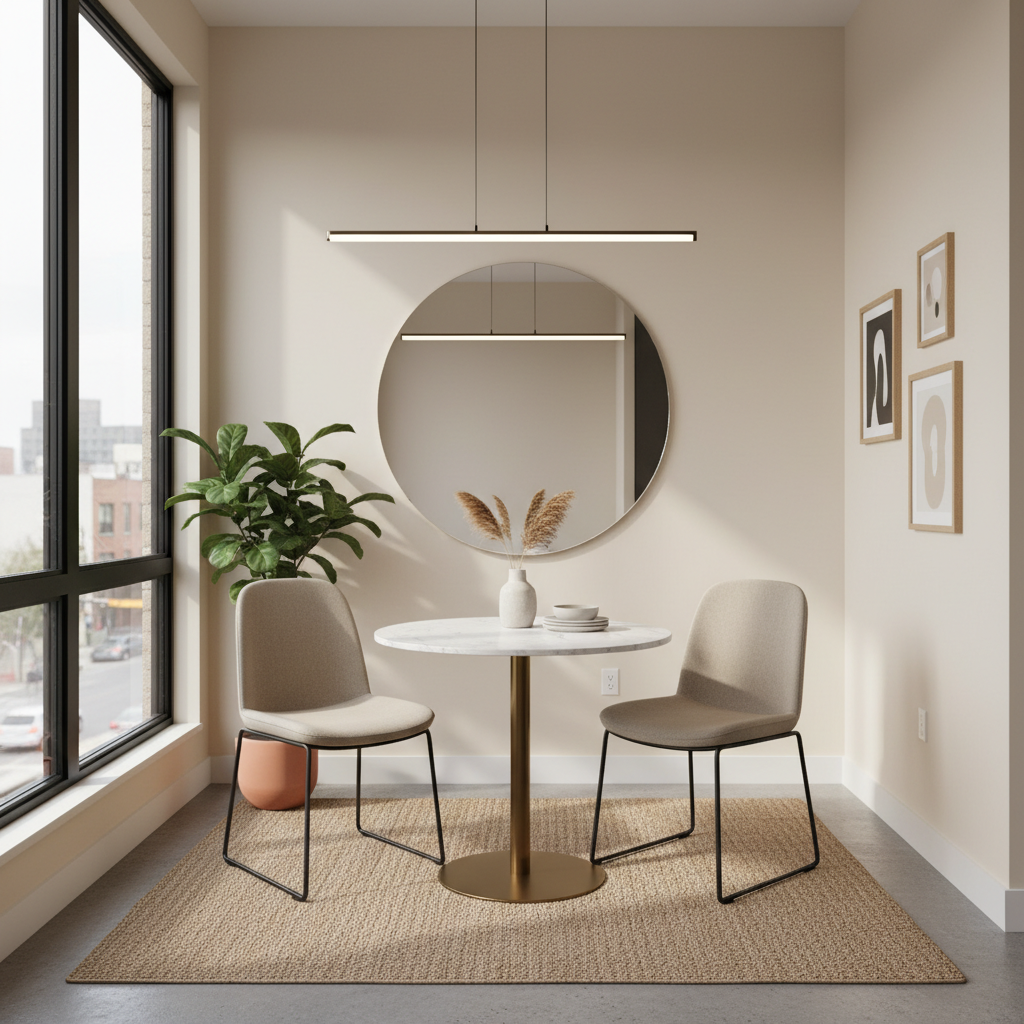
Start with the real constraint: traffic flow, not square footage
Before buying anything, get honest about how people move through the space. A dining setup can be “small” and still feel easy if you protect walking paths and keep chair pull-out space predictable.
According to the National Kitchen and Bath Association (NKBA), clearances around dining and work areas matter for comfortable use, and while exact numbers vary by layout, the principle stays the same: plan for movement first, furniture second.
- Identify the primary path between entry, kitchen, couch, and balcony door, then keep the table out of that lane.
- Mark chair zones with painter’s tape, including the space needed to sit down, not just the tabletop footprint.
- Decide your “default mode”: everyday for 1–2 people, or frequent hosting for 4–6. Your furniture should match the default, not the occasional.
If your dining area sits in a hallway-like strip, a narrow rectangular table or wall-mounted drop-leaf often beats a chunky square, even when the square technically “fits.”
Pick a table shape that works with apartment geometry
Most small dining room ideas for apartments fail at the table stage, the table looks cute online, then the edges hit knees, elbows, or door swings in real life.
Quick table-shape matchups
- Round table: great for tight corners and smoother circulation, no sharp corners to snag, usually best for 2–4.
- Square table: works when the area is truly square and you won’t push it against a wall often.
- Narrow rectangle: best for galley-style spaces or along a wall, can double as a console when not in use.
- Drop-leaf / gateleg: flexible for studios, keeps your floor open most days.
- Extendable table: good if you host sometimes, but only if you actually have storage space for extra leaves or can expand without blocking paths.
Pedestal bases tend to seat more comfortably in small rooms because you lose fewer inches to table legs, especially with round tops.
Use seating that disappears when you’re not eating
In apartments, chairs are the real space hog. A table can be small and still feel crowded if the seating stays “out” all day.
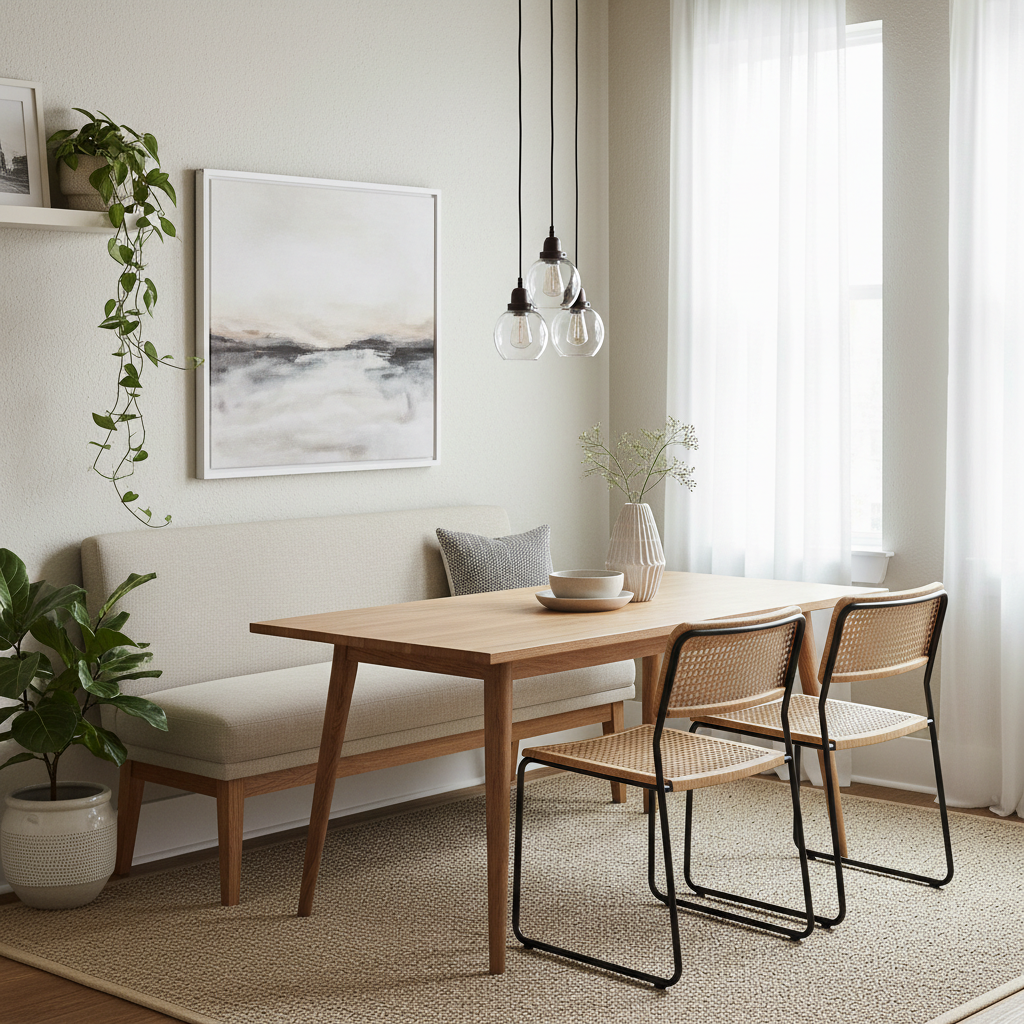
Seating options that usually work well
- Bench against a wall: reduces pull-out clearance on one side, often feels cleaner visually.
- Armless, slim-profile chairs: easier to tuck fully under the table, less visual clutter.
- Stacking chairs: practical if you host occasionally, store in a closet when done.
- Stools for a counter-height table: can slide under more easily, but comfort varies for long dinners.
If you live in a walk-up or older building with uneven floors, check for wobble and consider adjustable feet, it’s a small detail that saves daily annoyance.
Make the dining zone feel “real” with light, rugs, and wall tricks
When the dining area shares space with the living room, the goal isn’t to build walls, it’s to create a clear visual cue that says “this corner is for meals.”
Easy zoning moves that don’t eat floor space
- Hang a pendant or plug-in sconce centered over the table to anchor the area, even in a rental.
- Add a rug sized so chairs stay on it when pulled out, otherwise it becomes a snag point.
- Use a mirror on the wall beside the table to bounce light and open the feel, especially in narrow rooms.
- Go lighter on the top half: light walls, airy curtains, and a table with a thinner top can reduce visual weight.
According to the U.S. Department of Energy, using LED lighting reduces energy use compared with traditional bulbs, so swapping to warm LEDs can make your dining nook more inviting without adding much to your bill.
Storage that supports dining, without turning into clutter storage
A common frustration is having the table become the “mail, bags, random stuff” zone. Smart storage nearby helps, but it has to be sized for an apartment, not a suburban dining room.
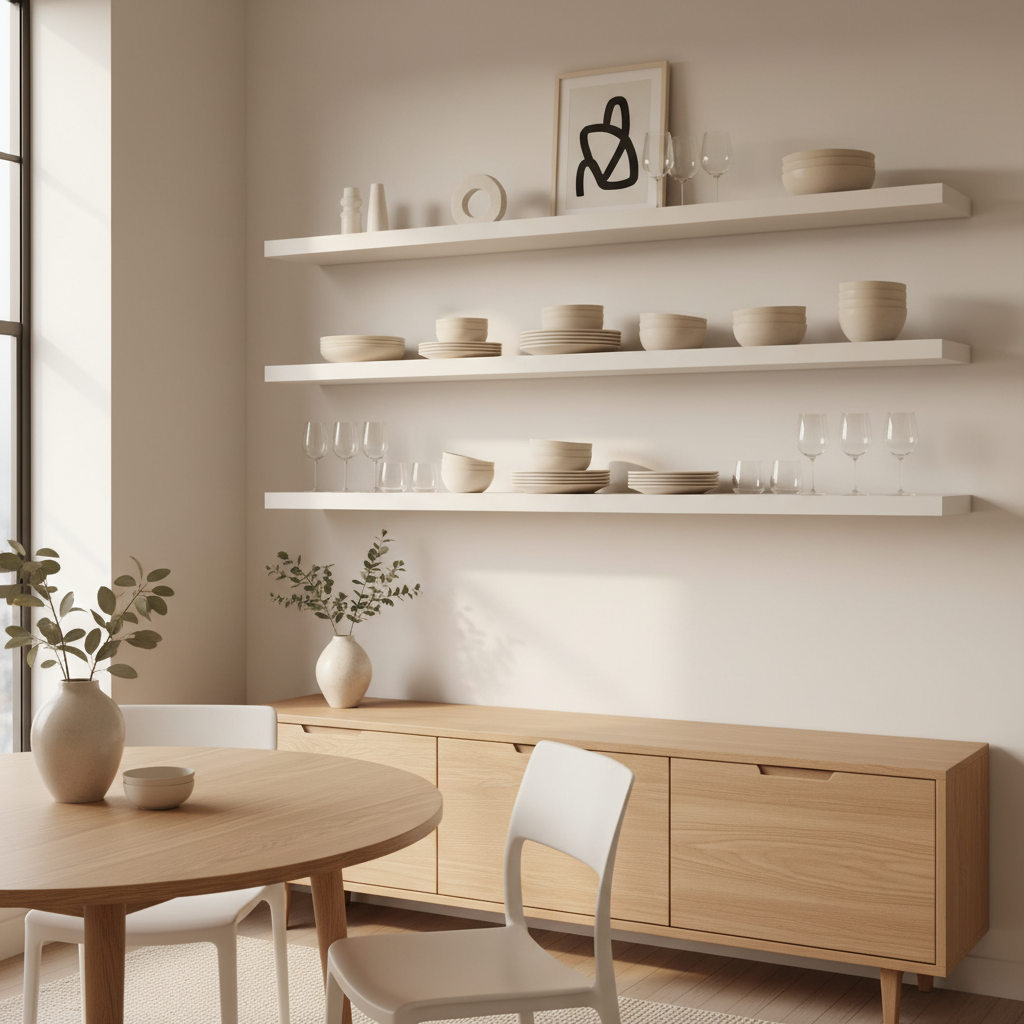
Apartment-friendly storage ideas
- Narrow sideboard (12–16 inches deep) for placemats, candles, and extra dishes.
- Wall-mounted shelves above a small buffet area, keep frequently used items reachable.
- Bar cart that rolls into a corner after dinner, doubles as coffee station.
- Storage bench for linens and serving pieces, helpful if your kitchen cabinets are tight.
One rule that keeps this area from spiraling: store only dining-related items within arm’s reach of the table, everything else gets a different “home.”
A quick planning table: match your layout to the right setup
If you’re deciding between a few options, this is the shortcut. Use it with your measurements and your real life, not your Pinterest life.
| Apartment dining scenario | What usually works | Watch out for |
|---|---|---|
| Studio or open-plan corner | Round pedestal table + 2 slim chairs | Oversized chairs that can’t tuck in |
| Narrow strip near kitchen | Narrow rectangle or wall-mounted drop-leaf | Blocking the main walking path |
| Window nook | Built-in bench look (bench + small table) | Bench depth that steals leg room |
| Frequent hosting (small space) | Extendable table + stacking chairs stored away | No place to store extra seating |
| Dining doubles as work spot | Comfortable chair pair + good task light | Too-high table height for typing |
Practical setup steps you can do in one afternoon
Small dining room ideas for apartments don’t need a full redesign. A few measured, physical tests often beat hours of scrolling.
- Measure the “usable rectangle” of your space, including door swings and radiator clearance.
- Mock the table footprint with tape or cardboard, then sit down and stand up in that outline.
- Choose one visual anchor: a pendant, a rug, or wall art, pick one strong cue rather than many small ones.
- Upgrade comfort deliberately: add a wipeable table runner, supportive seat cushions, and a small centerpiece that’s easy to move.
Key takeaway: if the chairs don’t tuck in cleanly, the space will feel messy even when it’s tidy.
Mistakes that make a small dining area feel even smaller
Some choices look stylish but fight the space every day. If you want fewer regrets, these are the big ones.
- Buying a table for “someday hosting” and living cramped the other 330 days a year.
- Heavy, dark furniture in a low-light corner when you could use lighter finishes or mixed materials.
- Ignoring chair ergonomics, stools look minimal, but long meals can feel rough, comfort matters.
- Overdecorating the tabletop, you lose usable space and end up moving items every meal.
- Skipping floor protection, if you rent, add felt pads and consider a low-pile rug to reduce scratches and noise.
If you’re mounting lighting or shelves, check your lease rules and consider asking a qualified handyman or electrician, especially if wiring or heavy anchors are involved.
Conclusion: make it easy to live with, then make it pretty
The best small dining room ideas for apartments are the ones you keep using because the setup feels natural, chairs tuck in, paths stay open, and the dining zone has its own “moment” without taking over the whole room.
Pick one table shape that respects traffic flow, commit to seating that stores cleanly, and add a single anchor like a pendant or rug. Do those three, and the space usually shifts from “we don’t really eat here” to “this works.”
Action step: tape out your table footprint tonight, then choose furniture based on that real outline, not the product photo.
FAQ
What table size is best for a small apartment dining area?
A 2–4 person table is often the sweet spot, but “best” depends on chair clearance and traffic flow. If you can’t pull out a chair without blocking the main path, go smaller or choose a drop-leaf option.
Is a round table better than a square table in a small space?
Often, yes, because rounded edges make circulation easier and reduce corner collisions. Square can still work if the room is truly boxy and you won’t push it against a wall most days.
How do I fit dining seating in a studio apartment?
Use seating that tucks in or stores away: slim armless chairs, a wall-side bench, or stacking chairs. Keep the default setup for everyday life, then add temporary seating only when needed.
Can I use a rug under a dining table in an apartment?
Yes, and it helps define the zone, but choose low-pile materials and size it so chairs stay on the rug when pulled out. If it bunches or catches chair legs, it becomes annoying fast.
What are good small dining room ideas for apartments with no dining room at all?
Look for “borrowed space” near the kitchen, a window nook, or a wide hallway end. A narrow console-to-table approach or a drop-leaf mounted to the wall can create a dining spot without committing to a full footprint.
How can I make a tiny dining corner look bigger?
Light finishes, a mirror, and a single strong light source over the table usually help more than extra decor. Keep the tabletop mostly clear and use one larger art piece instead of many small items.
Is it safe to hang a pendant light in a rental?
It can be, but it depends on your building rules and the existing electrical box. If you’re unsure, a plug-in pendant or a wall sconce can be a lower-risk alternative, and for electrical work it’s smart to consult a licensed professional.
If you’re trying to choose between a round vs. narrow rectangle table, or you’re stuck on where the dining zone should “live” in an open-plan apartment, you might prefer a quicker, more tailored plan: measure your space, list your default use, and get a short layout recommendation that fits how you actually live.