
Home storage gets hard when every room has a different “kind” of clutter, shoes by the door, snacks on the counter, toys migrating, and a garage that turns into a drop zone.
The good news is you don’t need a total makeover, you need a few repeatable systems: define zones, pick the right storage bins and containers, and make “put away” the easiest option in each space.
This guide focuses on practical home organization, what to buy (and what to skip), how to set up closet organization and pantry organization, plus small space organization tricks that work even in rentals.
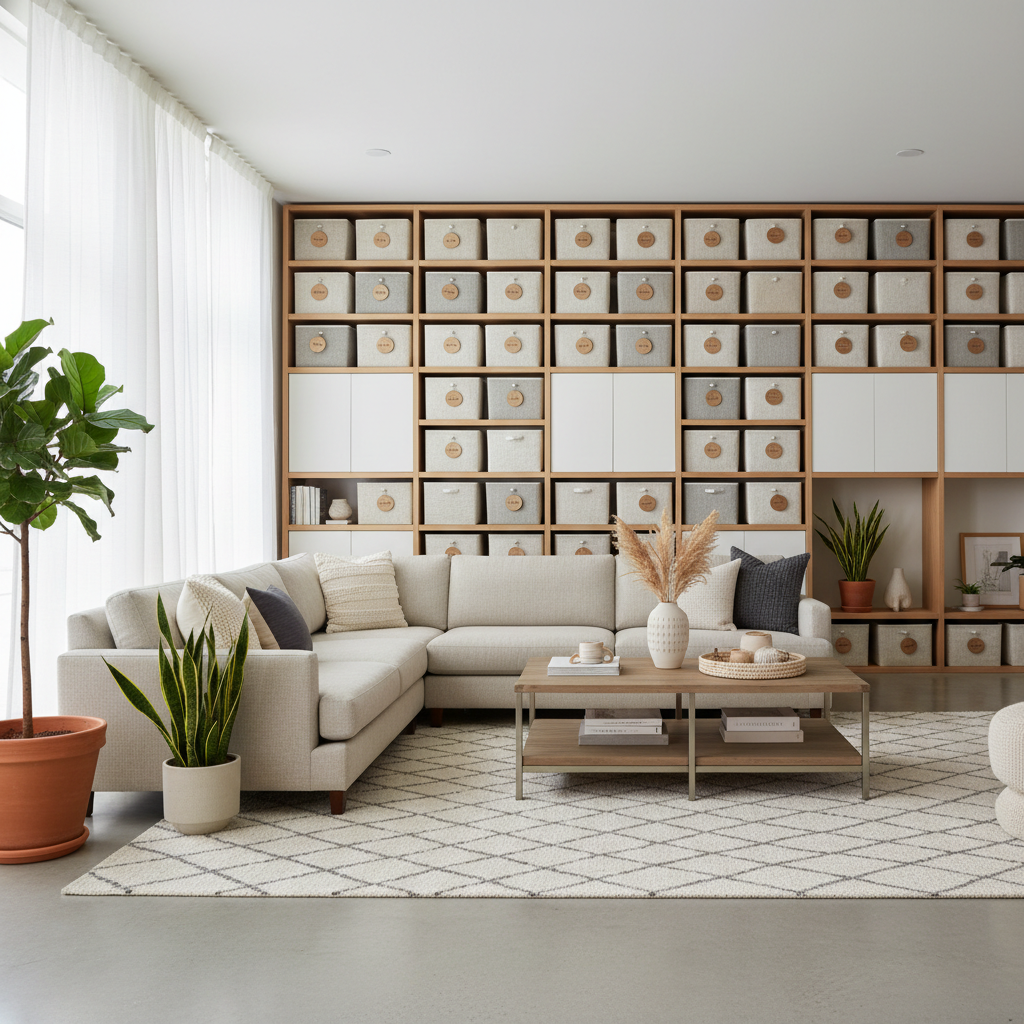
Start with a simple “zones + containers” plan (before you buy anything)
If you try to solve everything with more bins, you usually end up with nicer-looking clutter. A better approach is to decide what each area is for, then choose containers that match the habit you want.
Two quick rules that keep home storage from getting complicated
- One zone, one category. If a shelf holds snacks, mail, and sunscreen, it never stays tidy.
- Containers should fit the space and the item. Deep bins for bulky items, shallow bins for small items you grab often.
A fast setup checklist
- Pick 3–5 “hot spots” causing daily friction (entry, kitchen counter, bedroom chair).
- Set a boundary for each category (one drawer, one shelf, one bin).
- Label only what needs enforcing (kid stuff, pantry backstock, seasonal items).
- Choose clear or open-top options for fast access, lidded options for dust-prone storage.
According to FTC (Federal Trade Commission) guidance on labeling, clear labeling helps reduce mix-ups, the same idea applies at home: labels prevent “close enough” put-backs that create chaos later.
Closet organization that actually survives laundry day
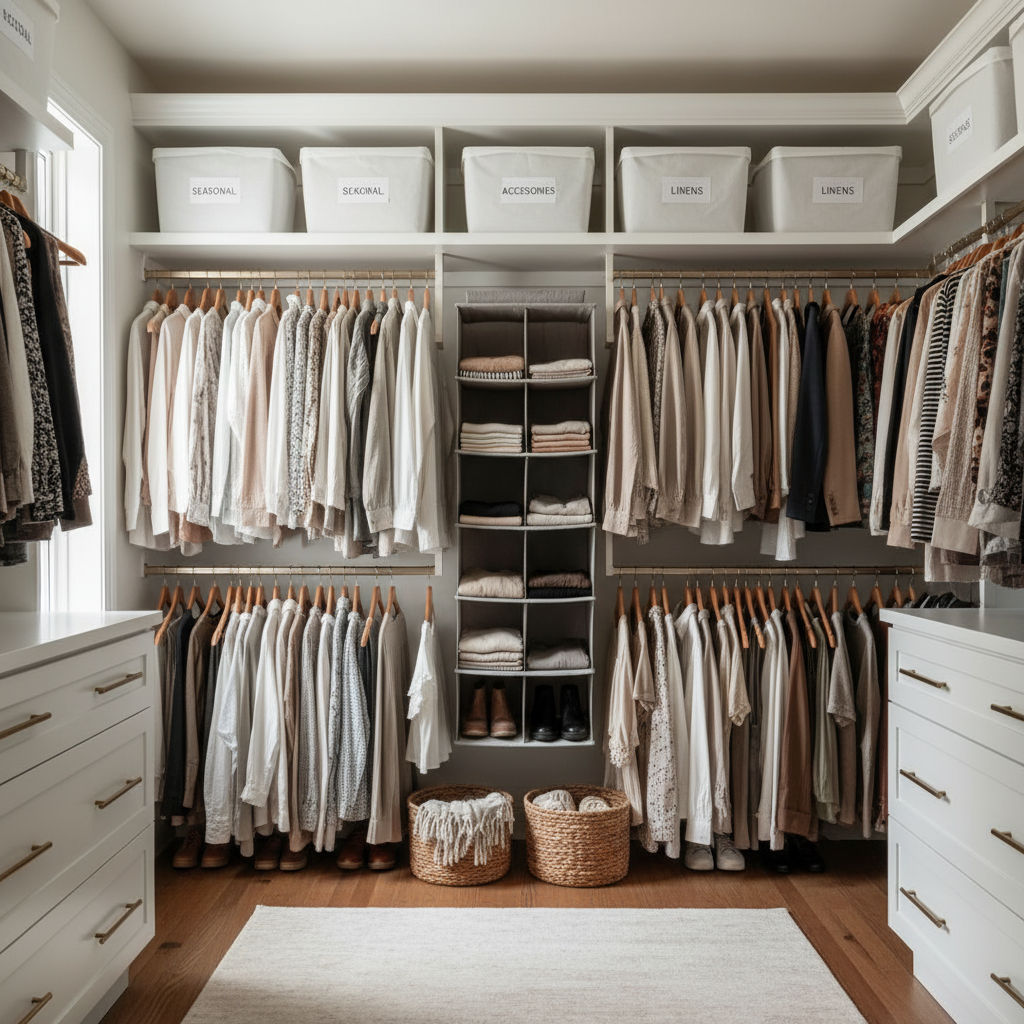
Closets fall apart when you store by “type of hanger” instead of by how you get dressed. Closet organization works best when the easiest spot matches your routine.
Closet layout that fits most households
- Prime zone (eye level): workwear, go-to tops, everyday shoes.
- Upper shelf: out-of-season items, spare bedding in a lidded tote.
- Lower zone: baskets for gym gear, scarves, belts, or handbags.
Small upgrades with outsized impact
- Matching slim hangers save space and reduce “hanger fights.”
- Hanging shelf organizers help with sweaters and jeans that slide off stacks.
- Drawer dividers for socks and underwear, so folding stays optional, not a life requirement.
If your closet has a constant pile problem, try a “one-touch” rule: anything you wear weekly must be reachable without moving other items, otherwise you’ll stop putting it away.
Pantry organization: make “what you have” visible, then make it easy to restock
Pantry organization breaks down in two common ways: you can’t see what you own, and you can’t put groceries away quickly. Fix those two, and the pantry starts running itself.
Set up the pantry in three layers
- Daily grab: snacks, breakfast items, coffee, school-lunch staples.
- Cooking zone: oils, spices, grains, canned goods, baking items.
- Backstock: extras and bulk buys, clearly separated so they don’t crowd the front.
Storage bins and containers that help (and when they’re worth it)
- Clear bins for snacks keep categories tight and stop “random pile drift.”
- Turntables work well for sauces and small jars, especially in deep shelves.
- Airtight containers are useful for flour, sugar, cereal, but don’t force everything into matching sets if you won’t keep up.
According to USDA (United States Department of Agriculture) food storage guidance, keeping foods properly contained can help with freshness and pest prevention, if you deal with pantry moths or humidity, containers matter more.
Entryway storage solutions that reduce daily mess (even without a real entry)
Entryway storage solutions are less about furniture, more about giving the first five feet of your home a job. If you don’t, that space becomes an unpaid storage unit.
Build a “drop zone” that fits your household
- Hooks at adult shoulder height for bags, light jackets, dog leash.
- A small tray or wall pocket for keys, sunglasses, mail.
- Shoe boundary with a rack or two bins, one per regular wearer.
If you’re tight on space
- Use shelving and wall storage instead of floor furniture.
- Pick a slim bench with a lift-top or cubbies, but only if you’ll actually sit to put shoes on.
- Try a “one in, one out” rule for shoes by the door, it’s blunt, but it works.
Small space organization: use vertical space, hidden space, and “right-size” furniture
Small space organization usually fails when storage steals walking space. The fix is to store up, store under, and keep surfaces clear so the room feels livable.
Go-to ideas that work in apartments and rentals
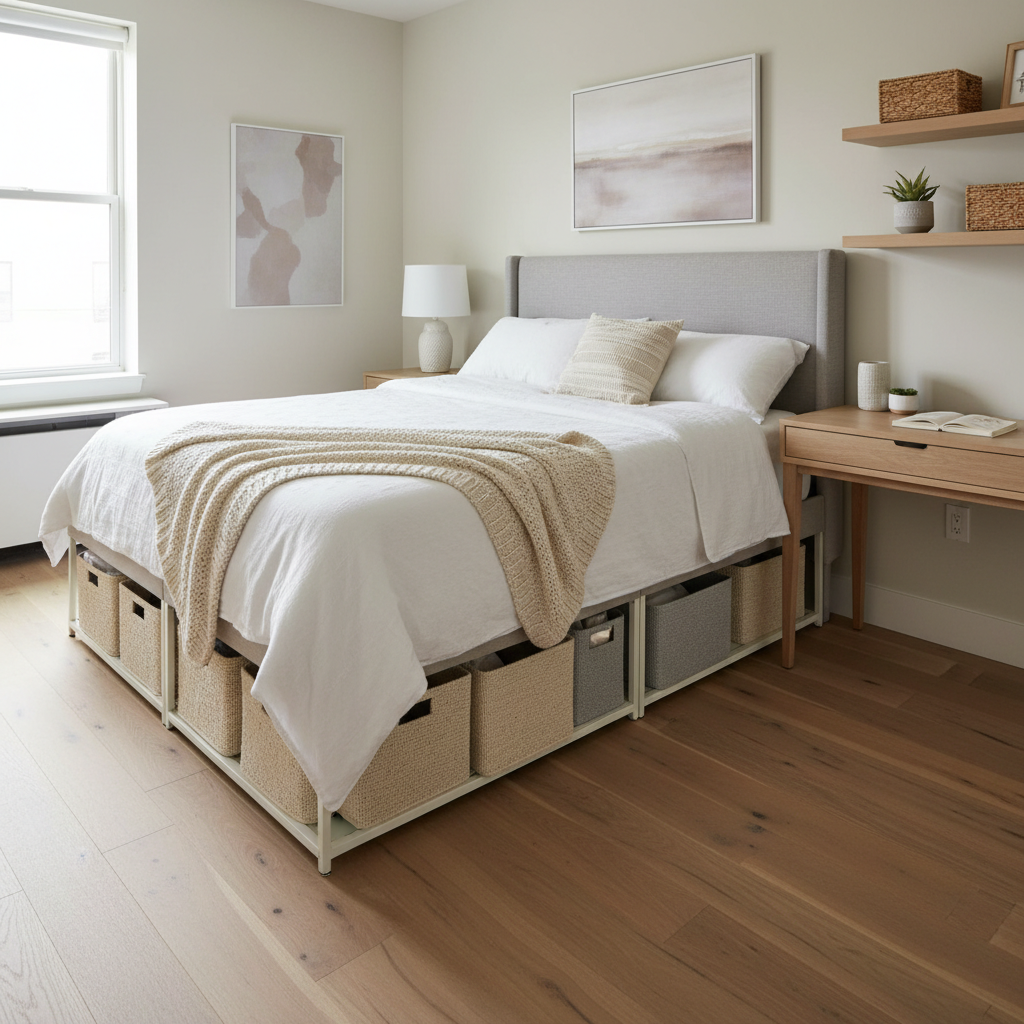
- Under bed storage for off-season clothing, extra linens, or gift wrap. Use low-profile zip bags or rolling bins so retrieval stays painless.
- Over-the-door organizers for cleaning supplies, accessories, or pantry overflow.
- Floating shelves in awkward wall areas, but keep them shallow so they don’t feel heavy.
- Ottoman or coffee table with storage for blankets, remotes, board games.
A quick “don’t buy it” filter
- If it requires perfect folding, it probably won’t last.
- If it blocks a door swing or a drawer, it becomes clutter.
- If you can’t explain what belongs inside in one sentence, skip it.
Garage organization and laundry room organization: keep the “utility” spaces from eating your weekend
Garage organization is tricky because it mixes long-term storage with daily-use gear. Laundry room organization has a similar problem, too many categories, not enough obvious homes.
Garage setup that stays workable
- Create three zones: tools/home maintenance, sports/outdoor, seasonal/holiday.
- Use wall systems: pegboard, track systems, or sturdy shelving and wall storage to get items off the floor.
- Pick tough bins: stackable, lidded, and labeled on two sides for quick scanning.
Safety note: if you store chemicals, fuels, or propane, follow the product label and local regulations, and consider asking a qualified professional if you’re unsure about ventilation or fire risk.
Laundry room tweaks that reduce “clothes chair” buildup
- One basket per person or one for lights/darks, whichever matches your routine.
- A folding surface (even a simple counter) makes finishing the cycle more likely.
- Small bin for lost socks and a hook for air-dry items, tiny, but it keeps piles from forming.
Toy organization ideas that don’t require constant policing
Toy organization ideas work best when kids can reset the room without adult-level sorting. If the system is too detailed, you’ll be the system.
Practical toy categories (keep it broad)
- Building: blocks, tiles, train tracks.
- Imaginative play: dolls, figures, dress-up.
- Creative: art supplies, stickers, craft kits.
- Games/puzzles: store vertically like books when possible.
Container picks that reduce mess fast
- Open bins for daily toys, lids slow kids down.
- One “quick clean” basket for the end-of-day reset, then sort weekly if needed.
- Low shelves so kids can see what exists, fewer “dump-and-run” moments.
If toys keep overflowing, try a simple rotation: keep a portion accessible, store the rest in a labeled tote, swap every couple weeks. Many families find the play stays richer when options are fewer.
Quick reference table: what to use where
If you’re deciding what to buy, this table helps match the storage tool to the room and the behavior you want.
| Area | Common problem | What tends to work | What to avoid |
|---|---|---|---|
| Closet | Piles and “can’t find it” | Hanging shelves, slim hangers, drawer dividers | Overstuffed top shelf with no categories |
| Pantry | Duplicates and expired items | Clear bins, turntable, simple zones for backstock | Over-decanting everything into mismatched sizes |
| Entry | Shoes, keys, bags everywhere | Wall hooks, tray, slim shoe rack | One big “junk bowl” with no limits |
| Bedroom | No space for extras | Under bed storage, storage ottoman | Bulky dressers that steal walking space |
| Garage | Floor clutter, hard to park | Wall storage, heavy-duty shelves, labeled totes | Unlabeled bins you never open again |
Hands-on plan: a 60–90 minute reset you can repeat
If you want a realistic way to start, pick one room and run this short loop. It’s not glamorous, but it’s dependable.
- Step 1: Clear one surface. Counter, shelf, bench, whatever causes daily stress.
- Step 2: Sort into 4 piles: keep here, move elsewhere, donate, trash/recycle.
- Step 3: Set a boundary. One bin, one shelf, one drawer for the category.
- Step 4: Add the minimum container. Prefer open bins for high-frequency items.
- Step 5: Add a “catch” option. A small basket for stuff you can’t decide on today, revisit weekly.
Key point: the best home storage system is the one you’ll maintain when you’re tired, rushed, or coming home with groceries in both hands.
Common mistakes (and what to do instead)
- Mistake: Buying organizers before decluttering. Do instead: decide categories and limits first, then shop with measurements.
- Mistake: Over-labeling every single thing. Do instead: label shared zones and backstock, keep personal drawers simple.
- Mistake: Deep shelves with no pull-out access. Do instead: use bins as “drawers” or add a turntable for small items.
- Mistake: Systems that require perfect habits. Do instead: use open-top solutions and broad categories, especially for kids.
When it makes sense to get extra help
If clutter ties to a life transition, a move, a new baby, caregiving, or a demanding work season, you’re not failing, you’re overloaded. In those cases, hiring a professional organizer for a few hours can jump-start the system, and many people find it easier than doing it alone.
If you notice persistent difficulty letting go of items that creates safety issues or severe stress, consider talking with a qualified mental health professional. This is sensitive territory, and the right support can be genuinely helpful.
Conclusion: pick one room, choose one system, then keep it boring
Home storage improves fastest when you stop chasing perfect aesthetics and start building repeatable zones that match how your household moves. Do one closet shelf, one pantry section, or one entryway corner, then let that small win set your standard.
If you want momentum, measure one space today, choose one container type, and commit to a 10-minute weekly reset. The “easy to put away” part matters more than the label maker.