
Best shelf organizers for kitchen cabinets can turn that one “everything falls out” cupboard into a space where you can actually find a mug, a pan, or the spice you need without rearranging the whole shelf.
Most cabinet chaos comes from two things, tall empty air above your items and stacks that shift every time you pull one piece out, the right organizers fix both by adding usable “levels” and defining zones.
This guide narrows down which organizer styles work best in real U.S. kitchens, how to size them, and what to buy when your cabinets are deep, narrow, oddly tall, or just packed.
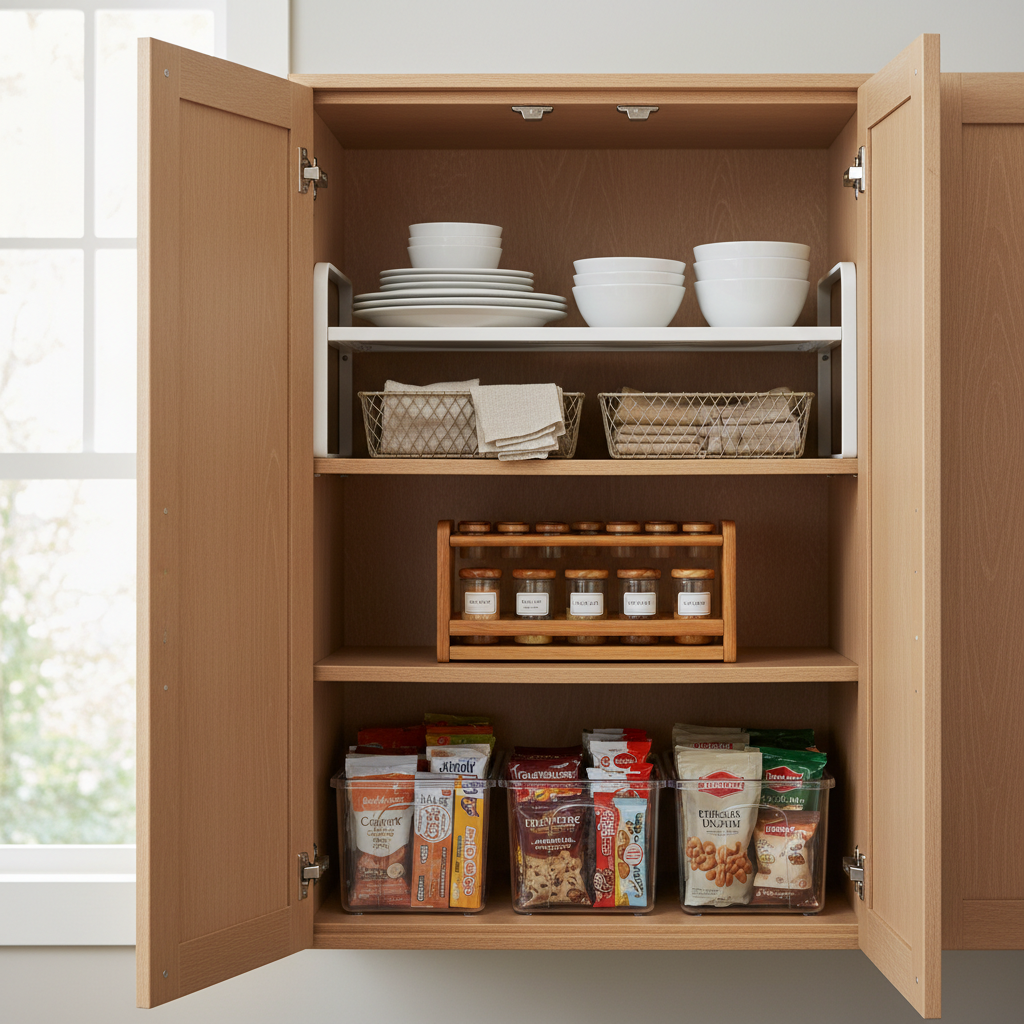
What “best” means for shelf organizers (it’s not one product)
“Best” depends on what you store and how you use the cabinet, not just how pretty it looks on a product page. In practice, the best shelf organizers for kitchen cabinets usually share a few traits.
- They match the pain point: preventing toppling stacks, reclaiming vertical space, or creating pull-out access in deep cabinets.
- They fit your cabinet’s constraints: door hinges, face frames, interior lips, shelf thickness, and odd widths.
- They’re stable: wobble is what makes people “give up” and toss organizers into a closet.
- They’re easy to clean: especially near cooking oils, flour, and crumbs.
According to NSF (National Sanitation Foundation)... food-contact areas should be easy to clean and maintain, so organizers with wipeable surfaces and fewer grime-catching seams tend to be a safer long-term bet.
Quick comparison: common shelf organizer types (and where they shine)
If you want the shortest path to a better cabinet, start by choosing the organizer style that matches your storage problem.
| Organizer type | Best for | Watch-outs |
|---|---|---|
| Shelf risers (stackable) | Plates, bowls, mugs, canned goods | Can wobble if too tall or overloaded |
| Expandable shelf organizers | Custom widths in mixed cabinet sizes | Expansion joints can catch crumbs, check stability |
| Tiered shelves | Spices, small jars, vitamins, condiments | Measure height so labels stay visible |
| Under-shelf baskets | Wraps, napkins, tea, light snacks | Needs the right shelf thickness, can block tall items below |
| Clear bins (grab-and-go) | Packets, baking supplies, snack bars | Too deep can become “junk drawers,” label them |
| Lazy Susans (turntables) | Oils, sauces, spreads in corners | Round shape wastes space in narrow cabinets |
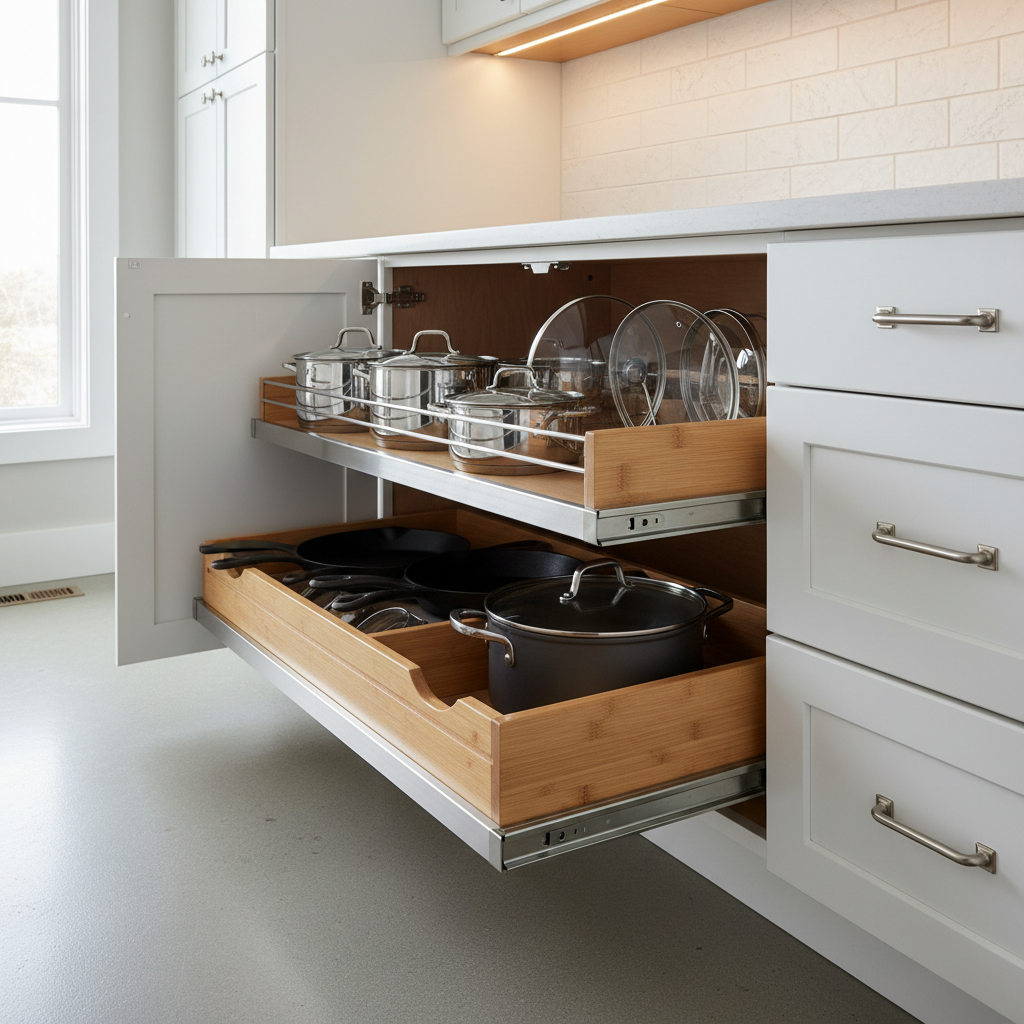
| Pull-out shelf/basket inserts | Deep base cabinets, heavy cookware | Install effort, weight limits matter |
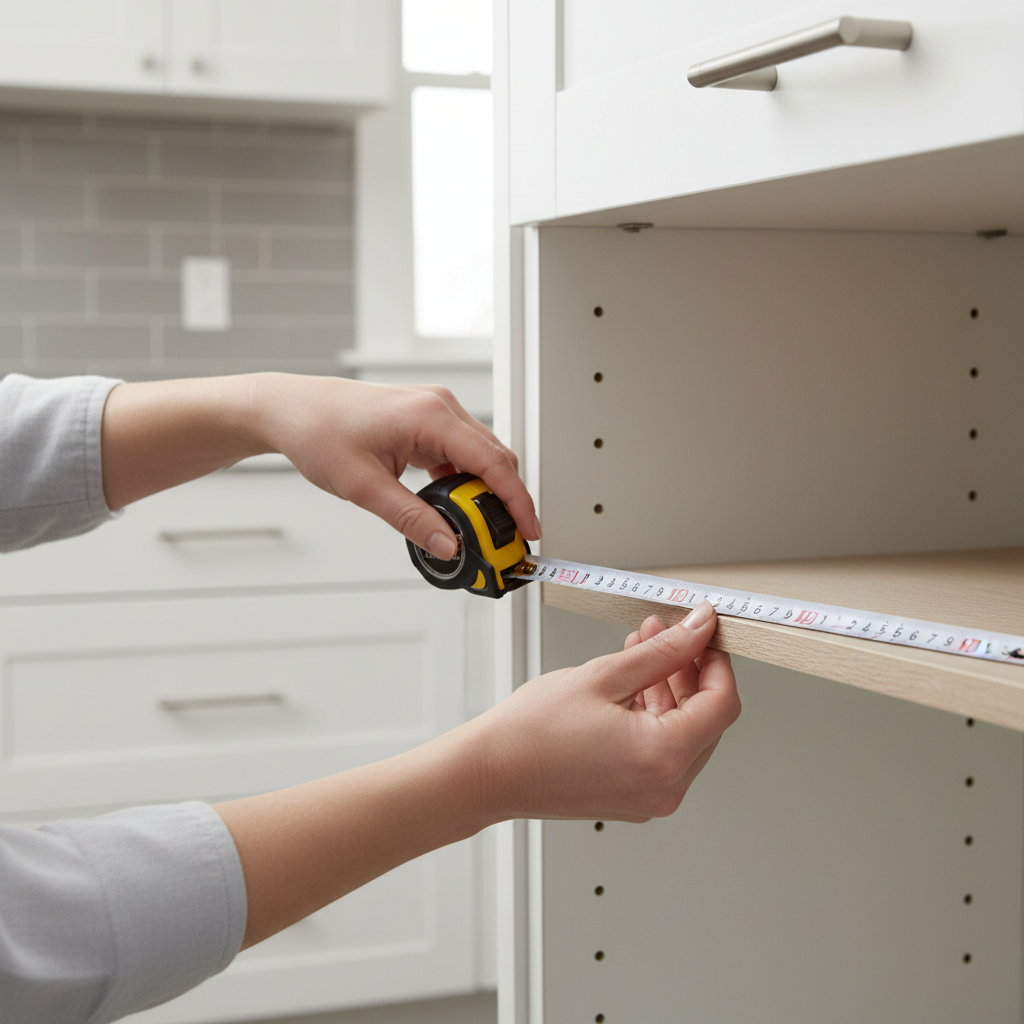
Before you buy: a fast sizing checklist that prevents returns
A lot of “this doesn’t fit” comes from forgetting one detail: cabinet interiors are rarely the same as the exterior width you think you have. Use this quick checklist before buying organizers online.
- Interior width: measure inside wall to inside wall, not door-to-door.
- Usable depth: account for hinges and any lip or trim at the back.
- Vertical clearance: shelf-to-shelf height, and leave room for your hand to grab items.
- Shelf thickness: critical for under-shelf baskets and clip-on pieces.
- Door swing and handle clearance: especially if you add pull-out inserts.
Quick rule that holds up: if you’re shopping for risers, don’t fill the cabinet “to the ceiling,” leave a little headroom so you can lift items out instead of scraping knuckles.
Best shelf organizers for kitchen cabinets by cabinet zone
Instead of picking one organizer for everything, match tools to zones. That’s usually where the best shelf organizers for kitchen cabinets earn their keep.
Upper cabinets (everyday dishes and glassware)
- Shelf risers to split one tall shelf into two usable layers for plates and bowls.
- Stemware racks only if you truly use them; otherwise they become clutter magnets.
- Under-shelf baskets for napkins or coffee filters when height is limited.
Real talk: if your glasses “click” together, you’re storing too tight. A small riser to separate stacks often reduces chips more than adding more glasses.
Pantry-style cabinets (dry goods and snacks)
- Clear handled bins for categories like “breakfast,” “baking,” “snacks.”
- Tiered shelves for spices, extracts, small jars so nothing hides behind.
- Can risers if you buy duplicates and want a quick visual inventory.
Bins work best when they’re not overfilled; if a bin becomes a “pile,” it stops functioning as a system. Labels help, but the bigger win is keeping categories small enough to reset in 10 seconds.
Base cabinets (pots, pans, mixing bowls)
- Pull-out shelves for heavy cookware, because crawling into a deep cabinet gets old fast.
- Vertical dividers for sheet pans, cutting boards, and trays.
- Adjustable pan organizers if you store lids and pans together.
If you cook often, this is where spending a bit more usually pays back. Pull-outs reduce friction, and friction is why people stop putting things away.
Corner cabinets (the “black hole”)
- Lazy Susans for bottles and jars you want to rotate into reach.
- Two-tier turntables when the cabinet is tall but the items are short.
- Kidney-shaped solutions sometimes fit better than round, but measure carefully.
One caution: oils and vinegar can drip. Choose a turntable with a rim or add a washable liner so cleanup stays easy.
How to set up organizers so they actually stay organized
Buying organizers is the easy part. The setup step that sticks usually follows a simple order.
- Empty one cabinet at a time, wipe it down, then put back only what belongs there.
- Place by frequency: daily items at arm level, rarely used items higher or lower.
- Contain categories: one bin for taco night, one bin for baking, one bin for lunch gear.
- Use “stop points”: risers, dividers, and baskets prevent items migrating into piles.
- Do a 2-week tweak: if a system annoys you twice, change it instead of “trying harder.”
Common mistakes (and what to do instead)
A few patterns show up again and again when people try to find the best shelf organizers for kitchen cabinets and end up disappointed.
- Mistake: buying a set before measuring. Fix: measure two “problem” cabinets first, then standardize where you can.
- Mistake: choosing tall risers for heavy stacks. Fix: go wider and sturdier, or split into two shorter risers.
- Mistake: over-binning. Fix: use bins where you pull a whole category, not where you need single-item access every day.
- Mistake: ignoring cabinet doors. Fix: check clearance for handles and hinge arms, especially with pull-outs.
- Mistake: making it “Instagram tight.” Fix: leave a little empty space so putting things away stays easy.
Also, be careful with adhesive-mounted organizers in humid kitchens. Many hold fine for light items, but heat and moisture can reduce grip over time; if you store anything heavy or breakable, a mechanical mount is usually safer.
When it’s worth upgrading beyond shelf organizers
Sometimes organizers can’t fully solve the issue because the cabinet itself works against you. Consider a bigger fix if any of these sound familiar.
- You’re constantly lifting heavy stacks to reach one item, a pull-out shelf or drawer conversion may help.
- Your cabinet shelves sag or feel unstable, address the shelf support before adding more weight.
- You have mobility or back concerns, you may want a layout that minimizes bending and reaching, and it can be worth consulting a contractor or professional organizer for a safer setup.
According to the NKBA (National Kitchen & Bath Association)... storage planning is a major part of functional kitchen design, and solutions like pull-outs and vertical tray storage are commonly recommended for usability in everyday kitchens.
Conclusion: a simple way to choose the right organizers
If you feel stuck, pick one cabinet that annoys you daily, measure it, then choose one primary tool: risers for vertical space, bins for categories, turntables for corners, or pull-outs for deep base cabinets. That single win usually creates momentum.
Action step: take five minutes today to measure width, depth, and shelf-to-shelf height in your worst cabinet, then shop with those numbers in hand, you’ll avoid the most common mismatch and get an upgrade you actually keep.
If you want the most noticeable change fast, start where you reach most: dishes, coffee, or snacks. That’s where shelf organizers earn their spot.