
How to arrange furniture in a small living room usually comes down to one thing: stopping the room from fighting itself, where walking paths, seating, and storage all compete for the same few feet.
If your living room feels tight, it’s rarely because you “own too much,” it’s more often because the layout forces awkward turns, blocks light, or pushes every piece against the walls with no real plan.
This guide walks you through practical layout rules, quick ways to diagnose what’s not working, and a few proven arrangements you can copy, even if you rent and can’t remodel.
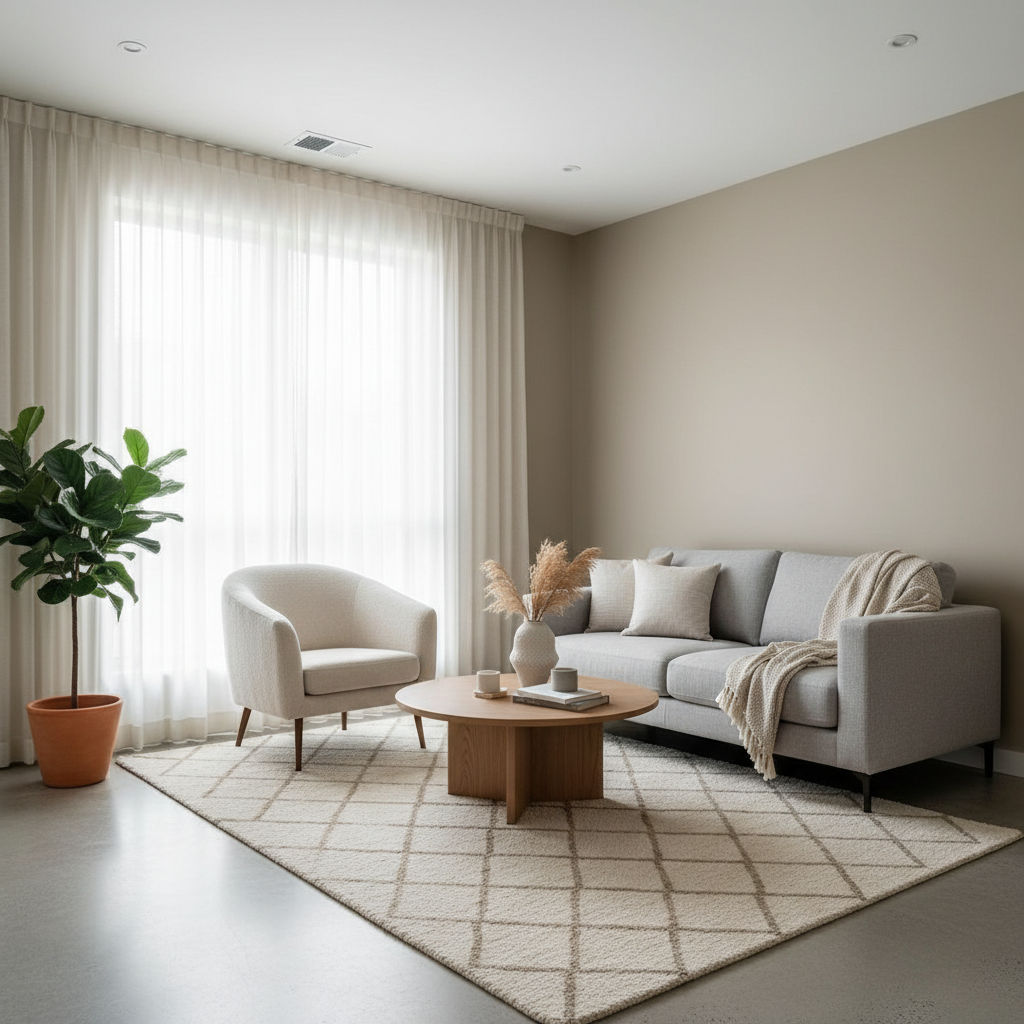
Start with the room’s non-negotiables (traffic, doors, and light)
Before you move anything, decide where people must walk. In many small rooms, the biggest mistake is treating the “path” as leftover space, then wondering why the room feels cramped.
A good rule: protect one primary walkway from entry to the main exit point, and keep it visually calm. That means fewer table corners in the path, fewer pieces that stick out, and less need to zig-zag.
- Mark door swings so furniture doesn’t steal usable floor area.
- Respect natural light, avoid placing tall pieces directly in front of windows unless there’s no alternative.
- Pick the “anchor wall” where the main seating or media piece will live, so everything else can support it.
According to the National Kitchen & Bath Association (NKBA) planning guidelines, comfortable circulation often depends on maintaining clear walking routes. Living rooms aren’t kitchens, but the same idea applies: movement needs a “lane,” not an obstacle course.
Choose your focal point (and keep it honest)
When people search how to arrange furniture in a small living room, they often assume the TV must be the focal point, but plenty of rooms work better around a window, fireplace, or even a conversation zone.
The key is picking one primary focal point. Two focal points in a small room often creates split seating and weird angles, where nobody is fully comfortable.
Common focal points that work
- TV wall (best when glare is manageable and wiring is realistic)
- Fireplace (works well with floating furniture when space allows)
- Large window (great for bright rooms, especially if you don’t watch much TV)
- Conversation center (ideal for entertaining, reading, and flexible use)
If you’re stuck with a TV and a fireplace competing, pick the one you actually use most, and treat the other as a secondary accent.
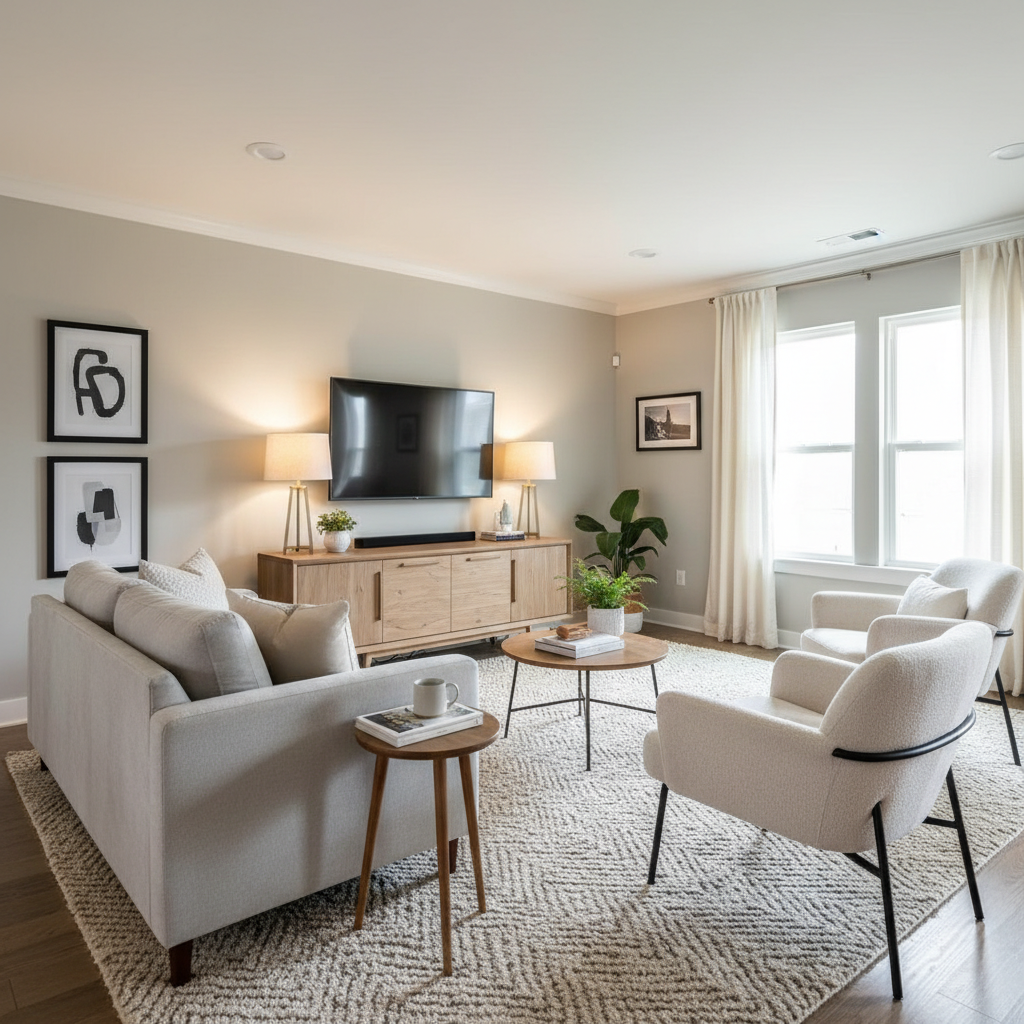
Right-size the furniture (this is where most layouts fail)
You can have a “perfect” layout on paper and still hate the room if one piece is oversized. In small spaces, scale matters more than style.
Two guidelines that help in real homes:
- Pick one hero piece, usually a sofa, and keep everything else visually lighter.
- Prefer legs and air, pieces raised off the floor tend to feel less bulky than skirted or boxy furniture.
Quick sizing table (use as a starting point)
| Room Situation | Better Furniture Choice | Why it Works |
|---|---|---|
| Narrow walkway near seating | Oval/round coffee table or nesting tables | Fewer sharp corners, easier to pass |
| Room feels visually heavy | Sofa with exposed legs + slim side tables | More visible floor, less “block” effect |
| Not enough storage | Ottoman with hidden storage | Adds function without adding another cabinet |
| Need extra seating sometimes | One accent chair + 1-2 poufs | Flexible, easier to move than a loveseat |
| TV wall is short | Low, wider media console | Feels grounded, doesn’t crowd the wall |
If you’re renting or buying online, measure with painter’s tape on the floor. It feels slightly silly, but it prevents expensive mistakes.
A fast self-check: what’s making your room feel smaller?
Before you rearrange, pinpoint the issue. Different problems need different fixes, and guessing wastes time.
- You bump into corners: table shapes or spacing are wrong, not necessarily the furniture count.
- The room looks “busy”: too many small surfaces and decor items, you need fewer, larger visual blocks.
- Seating feels far apart: pieces are hugging walls, leaving an empty “dead zone” in the middle.
- TV viewing is awkward: screen placement or glare makes you twist, squint, or sit too close.
- No place to put stuff: missing one or two high-impact storage choices, like a closed console or baskets.
Once you know the main pain point, the next steps get simpler.
Three small-living-room layouts that work in most US homes
There isn’t one universal plan for how to arrange furniture in a small living room, but these three layouts show up again and again because they solve typical constraints: doors, windows, and TV placement.
1) The “float the sofa” conversation layout
Instead of pushing the sofa against the wall, pull it forward a few inches to a foot, then place a narrow console table behind it if you need a landing zone.
- Sofa faces focal point
- One chair angled in, not square
- Rug defines the seating area, even if it’s modest in size
2) The “L-shape” layout for TV-heavy rooms
Use a compact sectional or a sofa plus chaise, then keep the opposite side lighter with a chair or pouf. This prevents the room from becoming a corridor.
- TV and console on the longest uninterrupted wall
- Chaise end points away from the primary walkway
- Skip oversized recliners unless the room truly supports them
3) The “two small pieces” layout (sofa + loveseat alternative)
Loveseats sound small, but they can be awkward. Many rooms work better with a standard sofa plus two flexible seats.
- One sofa
- One accent chair
- One pouf or slipper chair that can tuck under a table edge
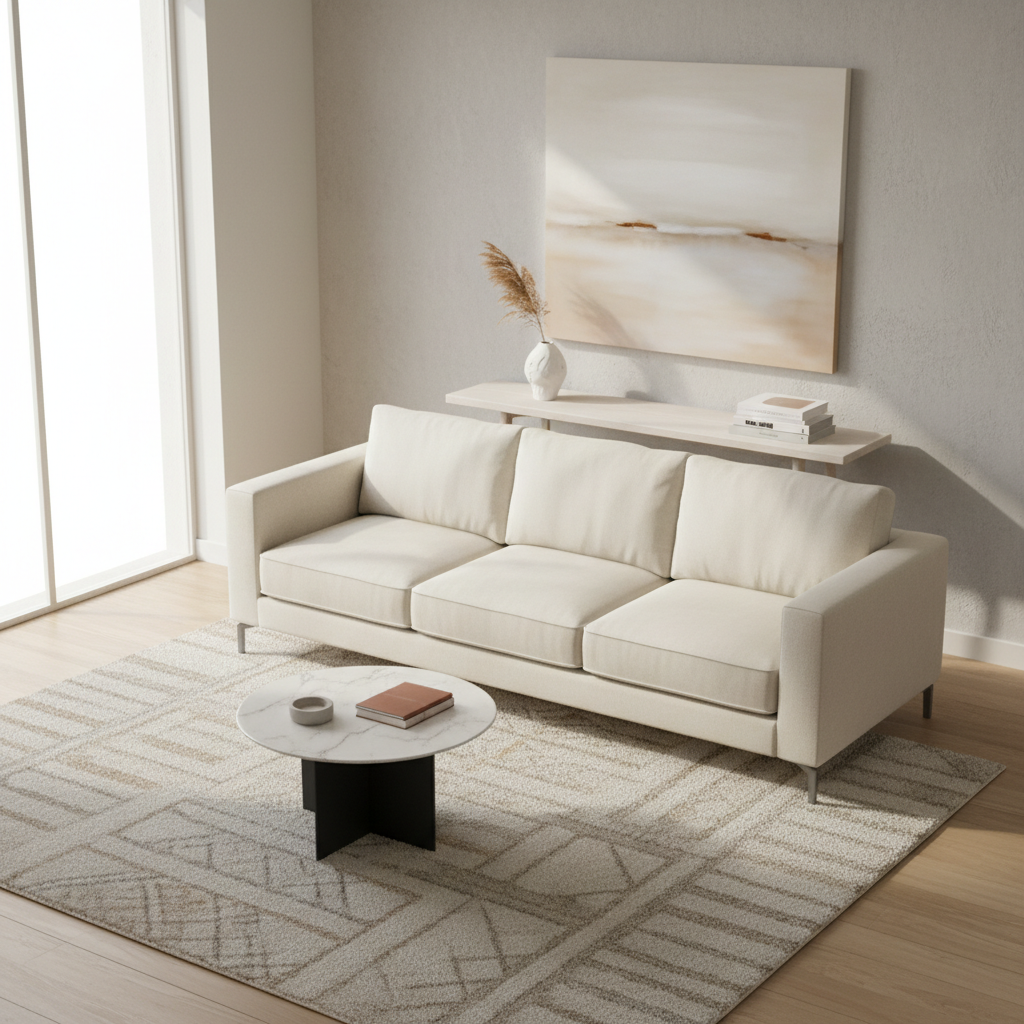
Practical steps to rearrange in one afternoon
This is the part most people skip: a simple order of operations. It keeps you from moving the same heavy items five times.
- Clear the floor: remove small tables, baskets, and floor lamps temporarily.
- Place the largest piece first: usually the sofa, aligned to your focal point.
- Set the rug: if you have one, ensure at least the front legs of seating sit on it to visually “group” pieces.
- Add one secondary seat: angle it, don’t grid it.
- Pick one surface strategy: coffee table OR two small side tables OR nesting tables, not all three.
- Lock in lighting: one floor lamp near seating, then smaller task light if needed.
- Put back only what earns its spot: storage, daily-use items, a few decor pieces, then stop.
If you’re unsure about spacing, prioritize “easy pass-through” and “comfortable reach” over symmetry. Symmetry looks great on Pinterest, but small rooms have real life happening in them.
Mistakes to avoid (that look harmless but wreck the room)
A few habits tend to make small spaces feel tighter, even when the furniture itself is fine.
- Everything against the walls: it often creates a big empty center with no purpose, while seating feels disconnected.
- Too many tiny pieces: three small side tables can look busier than one appropriately sized table.
- Blocking the “eye line”: tall bookcases near entry points can make the room feel like it shrinks as you enter.
- Oversized rugs in the wrong place: a rug shoved under only the coffee table can visually fragment the layout.
- Ignoring wall storage: when floor storage grows, walking space disappears.
According to the American Society of Interior Designers (ASID), thoughtful space planning improves how a room functions for the people living in it. In small living rooms, function is the aesthetic.
When to get help (or at least a second set of eyes)
If you’ve tried two or three layouts and it still feels off, it might not be your taste, it might be constraints you can’t “arrange” away.
- Chronic glare on the TV or a main seating spot, window treatments or screen placement may need a rethink.
- Electrical and safety issues like cords across walkways, which can be a tripping hazard, consider consulting a qualified professional.
- Structural limitations such as baseboard heaters, radiators, or unusual bump-outs that require custom sizing.
A local designer, a reputable furniture store’s space-planning service, or even an experienced contractor can help you avoid spending money on pieces that will never fit the room’s physics.
Conclusion: make the room easy to live in, then make it pretty
If you take one idea from all this, let it be this: how to arrange furniture in a small living room works best when you protect a clear walking path, choose one focal point, and right-size the “supporting” pieces around your main seat.
Pick one layout from the options above, tape out the measurements, and try it for two days before you judge it. Small rooms need a little time for your brain to stop noticing what changed and start noticing what feels better.
Key takeaways:
- Traffic flow first, everything else follows.
- One focal point keeps seating natural.
- Fewer, smarter pieces usually beats “more small stuff.”
If you want a quick win today, remove one unnecessary surface, then pull your sofa off the wall just a bit, those two moves fix more rooms than people expect.