
Small bedroom ideas for teens on budget usually work best when you stop trying to “decorate” and start solving two problems, not enough space and not enough function. The goal is a room that feels like theirs, holds school stuff and hobbies, and still has breathing room.
Most teen rooms get stuck in the same loop, storage bins appear, the floor stays messy, and the room still looks cramped. That is not a motivation problem, it is a layout and storage problem, plus a few choices that make small rooms feel smaller.
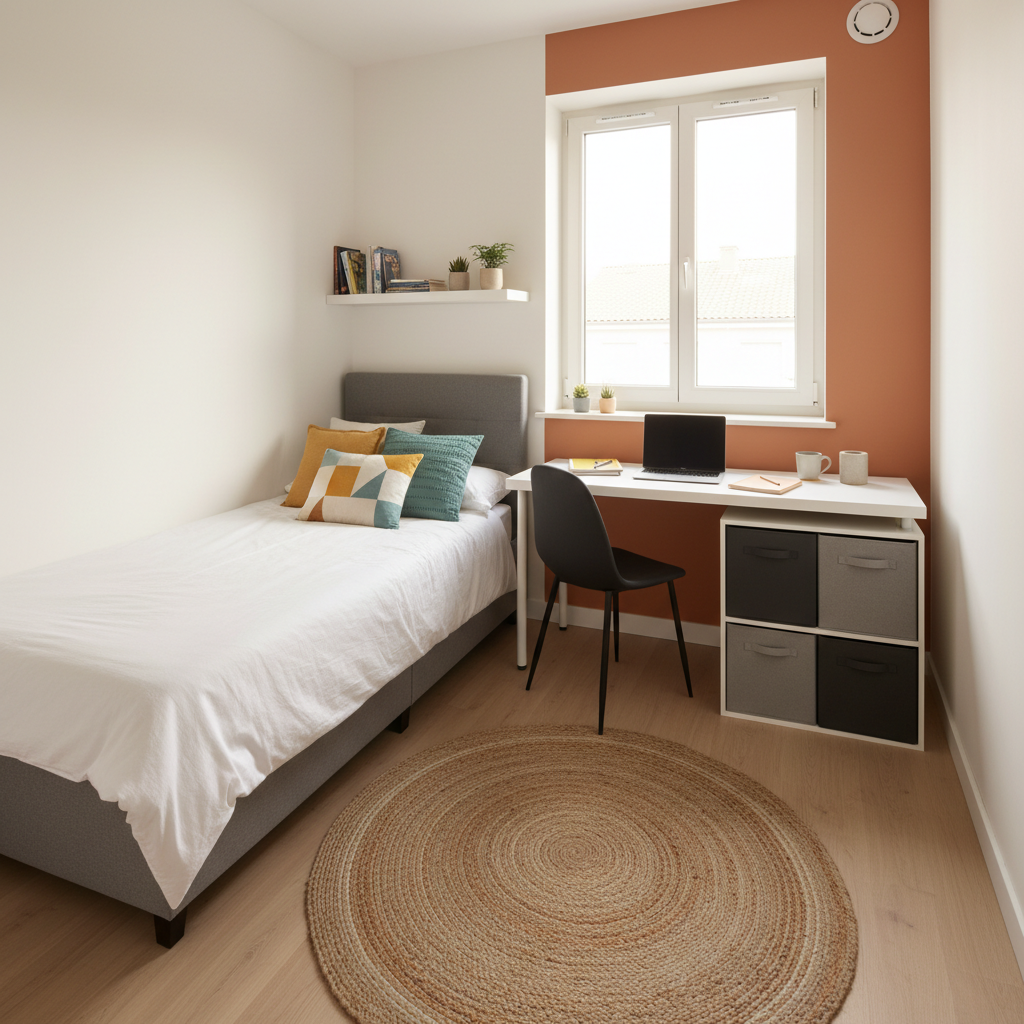
This guide focuses on what actually moves the needle in tight spaces, a quick room audit, a few high-impact swaps, and inexpensive styling that still feels teen-friendly, not like a kid room that never grew up.
Start with a “space audit” before you buy anything
Buying decor first is how budgets disappear, and the room still feels busy. A simple audit gives you a plan, and it also makes it easier to ask for money or help because you can explain what you are fixing.
- Measure the basics: wall lengths, window and door swing, closet width, and bed footprint.
- List the non-negotiables: sleep, study, clothes, hobbies, friends.
- Find the choke points: where you trip, where backpacks pile up, where drawers can’t open.
- Decide on one “daily reset” spot: a basket or hook zone for the stuff that lands on the floor.
According to FTC (Federal Trade Commission) guidance on shopping and advertising, it helps to compare prices and avoid impulse buys, which matters a lot when you are trying to stretch a small room budget.
Layout tricks that make a small room feel bigger
In many rooms, you do not need new furniture, you need the bed and desk to stop fighting each other. A cleaner walkway and one clear focal wall can change the entire feel.
Put the bed where it helps the flow
If the bed blocks the door path or closet access, the room will always feel tight. A common fix is pushing the bed to the longest wall, then keeping one side open for a narrow walkway.
- Keep 24–30 inches as a comfortable path when possible, even if it means a slimmer nightstand.
- If you share a room, consider two twin beds in an L-shape to open the center.
- If you can, avoid placing the bed directly under shelves that feel heavy overhead, especially in earthquake-prone areas.
Build a “study zone” that does not spread
A teen desk becomes a dumping ground fast, so give it boundaries, one lamp, one tray, and one vertical organizer. That keeps homework from taking over the bed and floor.
- Mount a pegboard or wall grid above the desk for supplies.
- Use a rolling cart as a “school caddy,” it can park under the desk.
- Choose a chair that tucks in fully, even a simple armless style.
Budget-friendly furniture swaps that matter
The best small bedroom ideas for teens on budget usually come down to a few pieces doing double duty. You are buying function, not a lookbook set.
| Upgrade | Why it helps | Budget approach |
|---|---|---|
| Bed risers or a higher frame | Creates under-bed storage without adding furniture | Risers + matching bins, label by category |
| Storage ottoman | Seating + hidden storage for throws, gaming gear | Thrift and add a washable cover |
| Wall-mounted shelves | Uses vertical space, clears floor | Basic brackets + affordable boards, paint to match wall |
| Narrow nightstand alternative | Stops clutter stacks, keeps walkway open | Floating shelf as a nightstand |
| Over-the-door organizer | Turns dead space into storage | One for shoes, or one for hair tools and accessories |
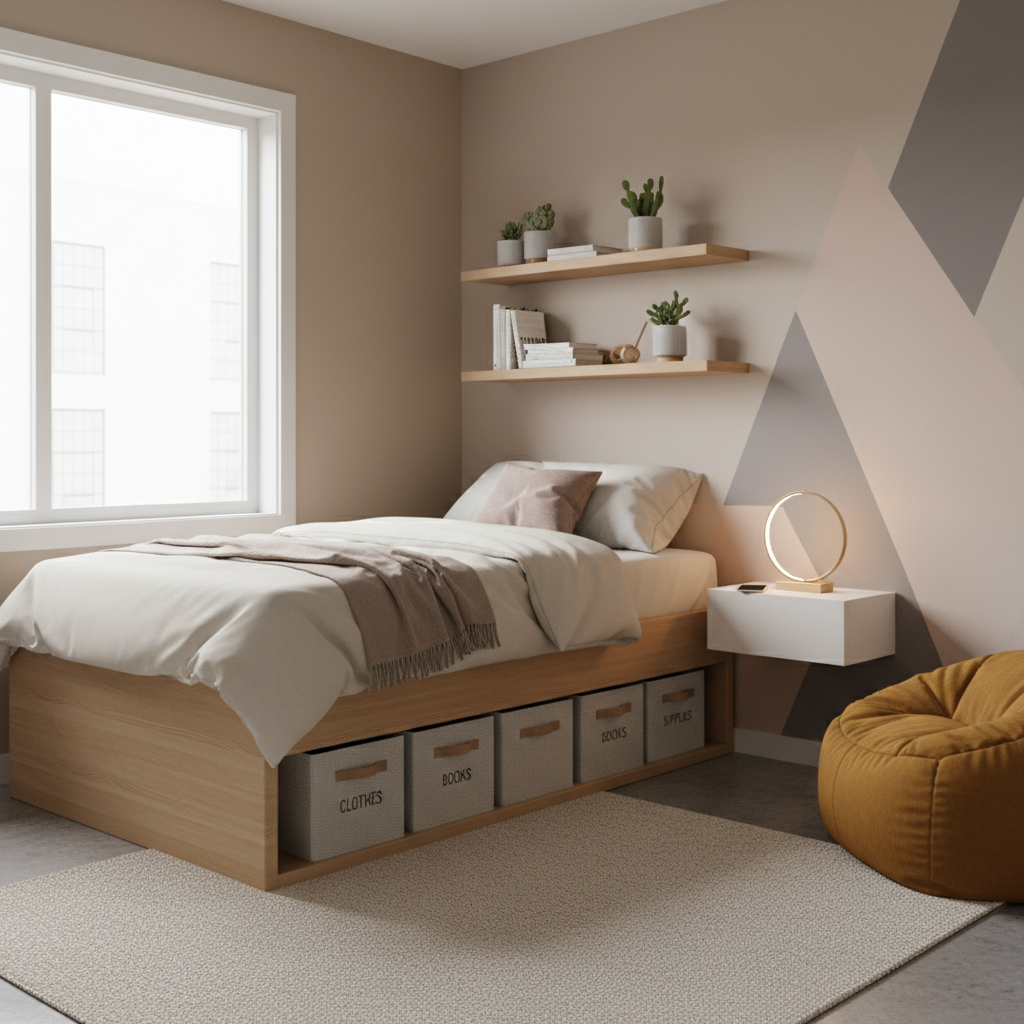
If you are shopping secondhand, focus on pieces that are structurally solid, drawers that glide, and surfaces you can wipe clean. Cosmetic flaws are fine, wobbly frames are not.
Paint, lighting, and textiles: the cheap “visual expanders”
You can make a small room feel calmer without a full remodel. Color and light do most of the heavy lifting, especially when the room is crowded with posters, cords, and laundry baskets.
Color choices that keep it teen, not toddler
- Pick a light base for walls or bedding, then add one stronger accent in pillows, art, or a rug.
- If painting is allowed, a single accent wall can look cool without making the whole room darker.
- Match large surfaces, like curtains and comforter, so the eye reads fewer “blocks.”
Lighting that fixes the “tiny cave” feeling
One ceiling light tends to make corners look gloomy. Add layered lighting with a desk lamp and a small floor lamp, even budget ones make the room feel more intentional.
- Use LED bulbs in a warm-neutral range for a cozy feel, not harsh blue.
- Stick-on puck lights inside closets help mornings feel less chaotic.
- Keep cords managed, a simple cable box or clips reduces visual mess.
Storage that teens actually use (and won’t hate)
The storage system has to match real habits. If your teen drops everything at the door, putting the “drop zone” across the room will fail, every time.
Quick self-check: which clutter type is it?
- Floordrobe: clothes live on the floor because the hamper is too small, too far, or annoying to open.
- Backpack pile: no hook, no shelf, or no charging spot.
- Hobby sprawl: sports, art, beauty, or gaming gear has no dedicated bin or drawer.
- Paper chaos: school papers mix with everything because there is no “inbox.”
Systems that stick
- One hamper rule: put a tall hamper exactly where clothes land, not where it “should” go.
- Hooks at the right height: backpack, hoodie, keys, headphones, done.
- Two-bin method: “daily” bin (open) and “weekly” bin (lid) for random items.
- Under-bed zones: one side for off-season clothes, the other for hobby gear.
According to CPSC (U.S. Consumer Product Safety Commission) safety guidance, anchoring tall furniture can help reduce tip-over risks, which is worth doing in teen rooms where drawers get pulled out and friends hang out.
Cheap DIY decor that still feels personal
Personality matters, teens want their room to feel like a space they chose. The trick is making personal items look curated, not chaotic.
- Gallery strip: one long shelf for frames and prints you can swap out.
- Tape-and-frame posters: put posters in inexpensive frames for an instant upgrade.
- Mirror placement: a mirror opposite a window can bounce light and visually widen the space.
- Peel-and-stick accents: use on a single surface, like the back of a bookcase, to avoid visual overload.
- Textile trick: a throw blanket and two pillows can change the vibe faster than new furniture.
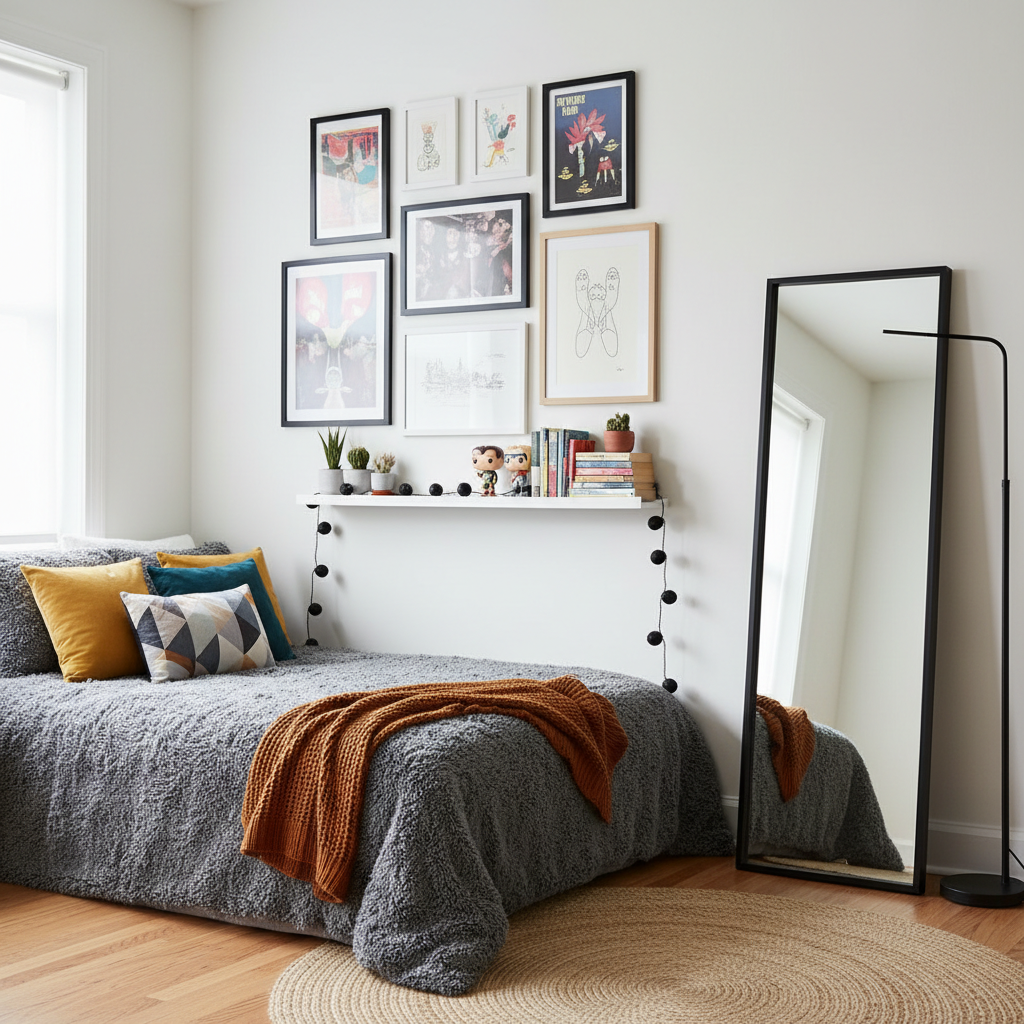
If the room already has a lot of patterns, keep new decor simple. If the room is plain, add one bold element, like a colorful rug or statement bedding, and let the rest stay quiet.
A 2-hour weekend plan (so it actually happens)
Most families do better with a short sprint than a full-day overhaul. Put on a timer, keep decisions simple, and aim for “better,” not perfect.
Step-by-step
- 15 minutes: trash, dishes, obvious stuff out.
- 20 minutes: clear the bed and desk surfaces completely.
- 25 minutes: sort into four piles, keep, donate, relocate, “decide later.”
- 20 minutes: set up the drop zone, hooks, hamper, and one paper inbox.
- 25 minutes: place under-bed bins, label quickly, no fancy label maker required.
- 15 minutes: add one decor win, new pillow covers, framed poster, or a plant.
Key takeaway: If you can only do one thing, clear the floor and create a reliable drop zone, the room will look bigger immediately.
Common mistakes that waste money (and what to do instead)
- Buying tiny organizers for everything: they multiply and become clutter. Use fewer, larger bins with clear categories.
- Too many “cute” surfaces: extra side tables invite piles. Choose one landing surface, keep the rest clear.
- Oversized bedding: bulky comforters can swallow a small bed. Try a slimmer duvet and a throw for style.
- Ignoring the closet: adding shelves outside the closet while the closet is chaos usually backfires. Fix the closet first.
- Over-decorating the walls: visual noise makes rooms feel smaller. Limit wall pieces to one zone.
When it makes sense to get extra help
If there are signs of moisture, moldy smells, frequent allergies, or a room that feels unsafe because furniture wobbles or outlets spark, it is smart to pause decorating and ask a qualified professional to take a look. For electrical work or heavy wall mounting, hiring a licensed pro is often the safer route.
Also, if clutter is tied to stress, attention issues, or conflict at home, a gentler approach helps more than buying storage. Sometimes a simple system plus a supportive routine beats a “perfect” room makeover.
Conclusion: make it functional first, pretty second
Small bedroom ideas for teens on budget work when you prioritize flow, vertical storage, and a few personal details that feel intentional. You do not need to match everything, you need a room that supports how they actually live.
Pick one action for this week, either raise the bed for under-bed storage, or build a simple drop zone with hooks and a bin. Once that sticks, the rest becomes easier and cheaper.